3 citations
,
June 2023 in “Molecules/Molecules online/Molecules annual” The researchers reviewed cepharanthine, a long-used bisbenzylisoquinoline alkaloid, for its antiviral properties, including significant inhibition of SARS-CoV-2. They discussed cepharanthine's other pharmacological actions, highlighted plasma membrane fluidity as a key antiviral mechanism, and examined its safety, bioavailability, and potential for new clinical applications.
13 citations
,
May 2019 in “Archives of dermatological research” In a study using hairless mice, tranexamic acid was found to ameliorate natural skin aging, with stronger effects observed in female mice compared to males.
 12 citations
,
February 2010 in “Tetrahedron Letters”
12 citations
,
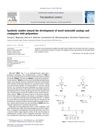
February 2010 in “Tetrahedron Letters” This article describes the synthesis of novel polyamine-modified minoxidil analogs and conjugates to potentially enhance minoxidil's biological activity, selectivity, and water solubility, but reports no new biological results.
![Benzo[c]quinolizin-3-ones: A Novel Class of Potent and Selective Nonsteroidal Inhibitors of Human Steroid 5α-Reductase 1](/images/assets/ff6e6cbe-cb9c-4d11-87ef-671d28ffd4fa/small/15506.jpg) 28 citations
,
September 2000 in “Journal of Medicinal Chemistry”
28 citations
,
September 2000 in “Journal of Medicinal Chemistry” This study identified novel compounds as selective inhibitors of the type 1 isoenzyme of 5α-reductase, displaying promising potential for treating DHT-dependent disorders such as acne and androgenic alopecia.
 June 2006 in “Annales de Dermatologie et de Vénéréologie”
 This review highlights the potential benefits of spironolactone in dermatology, particularly for female acne, supporting its safety over long-term use without extensive testing, but presents no new clinical results.
2 citations
,
October 2025 in “Antimicrobial Agents and Chemotherapy” This study found that cepharanthine may be a promising treatment for enterovirus infections, as it offered full protection to mice against lethal EV71 challenges and reduced viral titers and pathology.
 July 1997 in “The Lancet”
 This abstract reports preliminary data on the antidepressant reboxetine, noted for its different mode of action, discussed at a major psychiatry conference; it provides no new research findings.
1 citations
,
February 2023 in “Russian Journal of Bioorganic Chemistry” In an animal study, researchers observed that a newly synthesized deoxycholic acid derivative showed similar prostate protection effects to finasteride in Wistar rats while being less toxic.
 141 citations
,
September 2016 in “European Journal of Dermatology”
141 citations
,
September 2016 in “European Journal of Dermatology” This review examines dermatological side effects of taxane chemotherapy reported in past studies and highlights the necessity for identifying and managing these conditions to maintain cancer patients' quality of life; it presents no new clinical results.
 9 citations
,
November 2017 in “International Journal of Nanomedicine”
9 citations
,
November 2017 in “International Journal of Nanomedicine” This animal study found that intravenous administration of anionic squarticles, a lipid nanoemulsion, increased survival rates in rats with amitriptyline overdose by mitigating adverse effects and restoring normal blood pressure, highlighting its potential as a detoxifying antidote.
 April 2016 in “Journal of Investigative Dermatology”
 This study found that topical phenylephrine, an α1-AR agonist, significantly reduced hair shedding and increased epilation force threshold in women experiencing traction alopecia during cosmetic procedures.
July 2026 in “International Journal of Molecular Medicine” In this study, cepharanthine showed potent antiviral effects against tick-borne encephalitis virus in vitro by reducing viral replication and inflammation in human lung and neuroblastoma cells.
September 2020 in “Zenodo (CERN European Organization for Nuclear Research)” This study found increased Zyxin expression in affected hair follicles of androgenetic alopecia patients and suggested its potential role in the condition's pathogenesis and as a therapeutic target.
 January 2020 in “bioRxiv (Cold Spring Harbor Laboratory)”
 This study found that the ethyl acetate extract of Semecarpus anacardium leaves demonstrated cytotoxicity against MCF-7 cancer cells and induced apoptosis, suggesting potential as a cancer treatment with fewer side effects.
10 citations
,
June 2022 in “Biomedicine & Pharmacotherapy” This review examines the molecular mechanisms by which the proapoptotic protein ARTS inhibits tumorigenesis and discusses prospects for developing drugs that mimic its function, with no new experimental results reported.
September 2004 in “Inpharma Weekly”  1 citations
,
March 1997 in “Journal of Chromatography B: Biomedical Sciences and Applications”
1 citations
,
March 1997 in “Journal of Chromatography B: Biomedical Sciences and Applications” This study discovered that the disposition of LY191704 enantiomers in rats and dogs is both stereoselective and species specific.
 49 citations
,
October 2017 in “Nutrients”
49 citations
,
October 2017 in “Nutrients” This study observed that the ethyl acetate extract of Equisetum debile showed high activity against 5α-reductase and lipid peroxidation with no cytotoxicity on dermal papilla cells.
 July 2016 in “Dermatologie pro praxi”
 This article discusses the use of Espumil foam base in pharmacies for preparing dermatological medications and reports no new clinical results.
 December 2006 in “The Brown University Psychopharmacology Update”
 This review discusses various psychiatric treatments including antipsychotics, insomnia medication, and mood stabilizers, but reports no new clinical results; the authors comment on existing findings and approvals.
 15 citations
,
September 2008 in “Archives of Dermatological Research”
15 citations
,
September 2008 in “Archives of Dermatological Research” In this study, topical 5% roxithromycin was effective in restoring hair growth in about half of individuals with androgenetic alopecia without causing adverse effects.
 June 2023 in “NILES Journal forGeriatric and Gerontology/NILES Journal for Geriatric and Gerontology”
 In this study, oral tranexamic acid significantly improved melasma in 40 female patients over three months, with no adverse effects like post-inflammatory hyperpigmentation or bleeding, demonstrating its potential as a safe and effective treatment option.
 14 citations
,
January 2017 in “Skin appendage disorders”
14 citations
,
January 2017 in “Skin appendage disorders” This study reported that oral simvastatin/ezetimibe therapy was ineffective for treating alopecia areata, with 67% of participants experiencing no hair regrowth. Additionally, 24% of patients experienced adverse effects, including myalgia, highlighting the need to weigh potential risks against questionable benefits.
27 citations
,
May 2016 in “Integrative Cancer Therapies” In this study, in vitro and in vivo models showed that chrysin enhanced the efficacy of docetaxel and reduced its adverse effects in non–small cell lung cancer treatment.
 17 citations
,
January 2010 in “Acta Dermato Venereologica”
17 citations
,
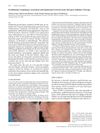
January 2010 in “Acta Dermato Venereologica” This report details a case of a 43-year-old woman developing yellowish papular eruptions alongside typical acneiform skin reactions on her cheeks and chest following a switch from cetuximab to panitumumab treatment.
 65 citations
,
October 2008 in “Journal of Neuroendocrinology”
65 citations
,
October 2008 in “Journal of Neuroendocrinology”  June 2026 in “Digital Commons - PCOM (Philadelphia College of Osteopathic Medicine)”
 This study observed that a 24-hour pre-treatment with MitoQ significantly protected H9c2 myoblasts from doxorubicin-induced damage while enhancing doxorubicin's effectiveness in prostate cancer cells, outperforming dexrazoxane's effects without compromising the anti-cancer efficacy.
4 citations
,
September 2025 in “Journal of the American Academy of Dermatology” The trial helped find the best dose of deuruxolitinib for treating alopecia areata.
In this study, the researchers identified that perturbing both AKT1 and MDM2 significantly reduces epithelial-mesenchymal transition in melanoma, proposing Cialis and Finasteride as potential therapeutic candidates with favorable properties for managing aggressive melanoma.
 6 citations
,
February 2020 in “Journal of Natural Products”
6 citations
,
February 2020 in “Journal of Natural Products” In this chemical investigation, cyclospongiaquinone 1 from the sponge Verongula cf. rigida showed strong steroid 5α-reductase inhibitory activity, comparable to that of finasteride.