 September 2019 in “Journal of Investigative Dermatology”
 This study found that a history of smoking significantly predicted a more refractory course of palmoplantar pustulosis, with associated comorbidities often including hypertension, type 2 diabetes mellitus, and thyroid diseases.
 9 citations
,
November 2000 in “Journal of the American Academy of Dermatology”
9 citations
,
November 2000 in “Journal of the American Academy of Dermatology” This report presents a rare case of a patient with type Wong dermatomyositis who also exhibits clinical and histologic features of porokeratosis, potentially signaling associated malignancies in dermatomyositis patients.
May 2024 in “Regenerative Therapy” This laboratory study found that dendrobium officinale polysaccharide (DOP) stimulated hair follicle and hair growth in mice by activating the WNT signaling pathway.
 February 2023 in “Scientific Reports”
 This study suggests that cold atmospheric microwave plasma treatment may promote hair renewal by activating β-catenin and YAP/TAZ signaling in human dermal papilla cells.
42 citations
,
October 2006 in “Theriogenology” Porcine skin cells are useful for studying wound healing and cancer.
September 2015 in “Turkish Journal of Endocrinology and Metabolism” This case report describes a 27-year-old female with Werner syndrome, highlighting its early onset, severe metabolic disturbances, and congenital deformities, suggesting consideration of WS in early childhood diabetes and hyperlipidemia diagnoses.
January 2022 in “Figshare” In this study, researchers found that dermal papilla cell exosomes can enhance hair follicle stem cell proliferation and reduce apoptosis through the Wnt3a/β-catenin signaling pathway, offering insights for potential hair problem treatments.
9 citations
,
January 1997 in “Horticultura: Revista de industria, distribución y socioeconomía hortícola: frutas, hortalizas, flores, plantas, árboles ornamentales y viveros” In this study, researchers found that the transcriptional program regulated by PRC2 is not necessary for maintaining hair follicle stem cell quiescence and hair regeneration in vivo.
 87 citations
,
July 2018 in “Biochimica et Biophysica Acta (BBA) - Molecular Cell Research”
87 citations
,
July 2018 in “Biochimica et Biophysica Acta (BBA) - Molecular Cell Research” This review discusses the essential roles and complex regulation of PP2A in various physiological processes and reports no clinical results; the authors highlight the need for further mouse model research to explore PP2A's therapeutic potential.
July 2025 in “Journal of Investigative Dermatology” The new anti-aging ingredient improves skin hydration, elasticity, and reduces wrinkles.
2 citations
,
January 2009 in “Human cell culture” June 2026 in “Value in Health”  September 2023 in “International Journal of Science and Research (IJSR)”
 In this case study, PRP and PRF treatments helped achieve complete healing of chronic wounds, including a chemical burn ulcer in three weeks and a pilonidal sinus post-incision in eight weeks, suggesting potential benefits for chronic wound management.
December 2013 in “Pump Industry Analyst” This study found that using particle-based antigen delivery in combination with cyanoacrylate skin surface stripping is an effective needle-free method for targeting HIV-1 p24 protein to skin cells, enhancing transcutaneous vaccination potential.
 April 2023 in “Journal of Investigative Dermatology”
 This study found that PX-12 inhibited the NLRP3 inflammasome and reduced psoriasis-like symptoms in a mouse model, suggesting its potential as a treatment for psoriasis.

In this study, radial shockwave therapy significantly improved muscle spasticity, ankle range of motion, and functional abilities in children with spastic cerebral palsy, suggesting it may help them achieve greater autonomy in daily activities.
14 citations
,
August 2020 in “Journal of cosmetic dermatology” This consensus report provides detailed recommendations for using Polynucleotides Highly Purified Technology™ in aesthetic skin rejuvenation, highlighting its potential as a biostimulatory booster for face and body revitalization.
 13 citations
,
November 2009 in “Journal of Dermatological Science”
13 citations
,
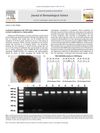
November 2009 in “Journal of Dermatological Science” This article discusses various dermatological studies cited by previous authors and reports no new clinical results.
 August 2010 in “Journal of The American Academy of Dermatology”
 This educational activity reports no new research findings; it aims to help physicians assess and improve their clinical skills through self-evaluation and continued medical education.
70 citations
,
June 1998 in “Polymer” This study found that permanent waving treatment partially disrupts the α-helical structure in human hair microfibrils, primarily during the initial reduction phase, rather than just affecting disulphide bonds.
6 citations
,
January 2013 in “Korean Journal of Pharmacognosy” Wheat bran can boost hair growth by affecting cell cycle proteins and signaling pathways.
97 citations
,
March 2010 in “The American Journal of Human Genetics” A mutation in the KRT74 gene causes tightly curled hair.
12 citations
,
March 2012 in “JEADV. Journal of the European Academy of Dermatology and Venereology/Journal of the European Academy of Dermatology and Venereology” This study observed that some patients with homozygous c.736T>A mutation in LIPH may have mild hypotrichosis with long hairs in adulthood.
26 citations
,
June 2010 in “Electrophoresis” This study reported advances in identifying low-abundance proteins in wool by using fractionation techniques to reduce the dominance of intermediate filament proteins, improving the understanding of the wool proteome.
 May 1999 in “Hair transplant forum international”
 This abstract describes the editor's work and decisions on an issue of the Forum, but it does not report new research findings.
13 citations
,
February 2024 in “Clinical Cosmetic and Investigational Dermatology” This study demonstrated that intradermal treatment with a medical device using Polynucleotides High Purification Technology (PN HPT) significantly improved skin surface, firmness, pigmentation, and radiance in 30 Asian subjects, with benefits lasting up to six months and no adverse events reported.
November 2018 in “Journal of Investigative Dermatology” Lichen Planopilaris causes irreversible hair loss due to immune attacks on hair stem cells, but modulating PPAR-γ might help treat it.
 36 citations
,
January 2021 in “Scientific Reports”
36 citations
,
January 2021 in “Scientific Reports” This study identified key genes and signaling pathways involved in the growth phases of Pashmina goat hair follicles, highlighting the role of several gene families and transcription factors in fiber quality and growth regulation.
 January 2023 in “Dermatologic Therapy”
 In this randomized controlled trial, the nutritional supplement PPT5 α was associated with increased terminal hair percentages and improved self-assessed hair parameters in women with early-stage androgenetic alopecia.
5 citations
,
January 2025 in “Burns & Trauma” This study suggests that activating the PPARs/SHH-mitochondrial axis may enhance diabetic wound healing by improving endothelial cell metabolism and angiogenesis, indicating potential for PPAR agonists in treating diabetic foot ulcers.