 4 citations
,
March 2013 in “InTech eBooks”
4 citations
,
March 2013 in “InTech eBooks” Confocal Laser Scanning Microscopy (CLSM) is a useful tool for studying how drugs interact with skin and diagnosing skin disorders, despite some limitations.
 April 2026 in “International Journal of Drug Delivery Technology”
 This study found that Lactobacillus acidophilus cell-free supernatant caused significant cytotoxicity, reduced migratory ability, and induced apoptosis in cervical cancer cell lines, suggesting its potential as a non-toxic adjunct therapy for cervical cancer.
September 2021 in “Journal of the American Academy of Dermatology” This study found that reported stress and hair growth changes related to facial/body hair excess or scalp hair loss differ among ethnic gender minority groups, with black and other ethnic respondents experiencing more stress compared to Caucasians, particularly in relation to facial/body hair excess.
5 citations
,
November 2005 This review discusses the applications of confocal laser scanning microscopy in visualizing fluorescent compounds within the skin, noting its potential for tracking drug carriers and enhancing penetration studies, but reports no new results.
 December 2025 in “Frontiers in Veterinary Science”
 This study found that PT-LCG extends hair follicle activity and promotes continuous cashmere growth by enhancing lipid synthesis, remodeling the extracellular matrix, and modulating inflammatory signaling, offering insights into improving cashmere yield and quality through molecular breeding.
 6 citations
,
January 2017 in “British Journal of Dermatology”
6 citations
,
January 2017 in “British Journal of Dermatology” This article reviews frontal fibrosing alopecia, exploring its characteristics, demographics, and associated conditions, and calls for controlled trials due to an increase in worldwide cases; it reports no new findings.
February 2026 in “Toxicology Letters” This study used an in silico/in vitro approach to identify potential inhibitors of the enzyme SRD5A2, finding that the androgen receptor modulator MK-0773 is a moderate inhibitor, although it does not act as a covalent inhibitor like finasteride.
31 citations
,
January 2016 in “Skin Appendage Disorders” This study observed two cases of frontal fibrosing alopecia developing on preexisting vitiligo, suggesting a potential causal link between the two conditions.
 22 citations
,
July 2019 in “PLOS ONE”
22 citations
,
July 2019 in “PLOS ONE” This study found that lymphatic vessels promote hair follicle growth in mice and may represent new therapeutic targets for hair loss conditions.
 October 2007 in “Clinical Biochemistry”
 This study identified a new genotype, V281+I172N/V281L, linked to non-classical 21-hydroxylase deficiency, suggesting it should be considered in genetic panels for the condition.
April 2019 in “Journal of Investigative Dermatology” This study found that blocking LFA-1 signaling completely prevented the development of alopecia areata in C3H/HeJ mice, suggesting that LFA-1 plays a crucial role in the disease's pathogenesis and could be a target for new therapies.
3 citations
,
August 2024 in “Skin Research and Technology” In this study, LC-OCT imaging was found to noninvasively identify specific features of cicatricial alopecia due to lupus erythematosus, such as hyperreflective collagen fibers, which may aid in distinguishing it from other types of scarring alopecia.
5 citations
,
October 2020 in “Veterinary record case reports” In this case report, a 15-year-old golden retriever with calcinosis cutis showed accelerated improvement in FLE-treated skin infections compared to untreated areas, highlighting FLE's potential as a treatment adjunct.
19 citations
,
September 2010 in “Journal of the European Academy of Dermatology and Venereology” This study found that while the CLASI is generally useful for assessing disease activity and damage in cutaneous lupus erythematosus, it may not accurately reflect all subtypes, indicating a need for revision.
 31 citations
,
April 2010 in “British journal of dermatology/British journal of dermatology, Supplement”
31 citations
,
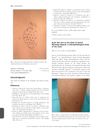
April 2010 in “British journal of dermatology/British journal of dermatology, Supplement” This report describes two patients with frontal fibrosing alopecia who developed acute hair loss on their limbs, revealing that the limb alopecia had similar histological features to scalp alopecia.
5 citations
,
October 2019 in “JAAD Case Reports” This case report describes a young man with rapidly progressive cicatricial alopecia that shows features overlapping several other types, suggesting these conditions may exist on a spectrum.
 November 2018 in “Chin J Clin Lab Mgt (Electronic Edition)”
 This paper introduces Concentration Growth Factor (CGF) as a potential treatment for androgenetic alopecia, but reports no clinical findings on its effectiveness in promoting hair growth.
June 2026 in “British Journal of Dermatology” This study found that individuals with frontal fibrosing alopecia have increased odds of thyroid disease, lupus erythematous, vitiligo, and heart disease, supporting the consideration of FFA as a systemic disorder.
 3 citations
,
September 2024 in “BMC Oral Health”
3 citations
,
September 2024 in “BMC Oral Health” This study found that low-level laser therapy effectively reduced relapse rates, while functional appliances did not; combining them offered no additional benefits.
 6 citations
,
January 2023 in “Medical Mycology Journal”
6 citations
,
January 2023 in “Medical Mycology Journal” In this case study of a 64-year-old woman with kerion celsi caused by Microsporum canis, treatment with the oral antifungal fosravuconazole resulted in symptom resolution without scarring or side effects over 12 weeks, suggesting its potential effectiveness for various dermatomycoses.
2 citations
,
March 2019 in “PubMed” This report presents the early development of the Lupus Foundation of America's LFA-REAL™ patient-reported instrument, designed to enhance evaluation of lupus disease activity by combining patient and physician assessments.
 12 citations
,
January 2017 in “Skin appendage disorders”
12 citations
,
January 2017 in “Skin appendage disorders” This study reports cases of histopathologically proven cutaneous lupus erythematosus manifesting as frontal fibrosing alopecia, with improvement following treatment with oral hydroxychloroquine and/or intralesional triamcinolone acetonide.
12 citations
,
January 2016 in “Skin Appendage Disorders” This study reports an association between frontal fibrosing alopecia and lupus erythematosus, noting progressive alopecia in the frontotemporal hairline despite treatment with hydroxychloroquine.
 April 2019 in “The journal of investigative dermatology/Journal of investigative dermatology”
 In this study, researchers found that CCCA in women of African descent is associated with molecular changes, including dysregulation of fatty acid metabolism and fibrosis pathways, suggesting potential targets for new treatments.
2 citations
,
June 2021 in “Sultan Qaboos University medical journal” This case report presents three sisters with familial frontal fibrosing alopecia, making it the 25th documented familial case, with treatment results observed in one sister.
1 citations
,
February 2019 in “bioRxiv (Cold Spring Harbor Laboratory)” This study identified lymphatic vessels as crucial components of the hair follicle stem cell niche, coordinating connections and contributing to hair follicle regeneration in mice.
 April 2018 in “The journal of investigative dermatology/Journal of investigative dermatology”
 This study found that in a mouse model of Focal Dermal Hypoplasia, treatment with lithium carbonate improved skin disease symptoms compared to controls, though disease severity varied and posed interpretation challenges.
9 citations
,
August 2002 in “British journal of ophthalmology” This case report describes a young man diagnosed with encephalocraniocutaneous lipomatosis who had unique bilateral optic disc colobomas, a previously unreported association with this syndrome.
 44 citations
,
September 2019 in “The EMBO Journal”
44 citations
,
September 2019 in “The EMBO Journal” This study found that lymphatic vessels in mice are important for hair follicle development and organization, as their depletion blocks hair growth.
 1 citations
,
April 2016 in “The American Journal of the Medical Sciences”
1 citations
,
April 2016 in “The American Journal of the Medical Sciences” This article discusses the characteristics of lichen planus pigmentosus and frontal fibrosing alopecia but reports no new clinical findings; the authors review existing knowledge.