 10 citations
,
December 2015 in “International Journal of Molecular Sciences”
10 citations
,
December 2015 in “International Journal of Molecular Sciences” This study suggests that PDCD4 regulates keratinocyte proliferation and contact inhibition, playing a role in epidermal homeostasis and wound healing.
 8 citations
,
February 2014 in “Stem cells translational medicine”
8 citations
,
February 2014 in “Stem cells translational medicine” This study found that human mesenchymal stem cells overexpressing JAM-A improved hair follicle structure and hair formation in mice by reducing abnormalities such as curved and zigzagged follicles.
 6 citations
,
October 2011 in “International Journal of Pharmaceutical Sciences and Drug Research”
6 citations
,
October 2011 in “International Journal of Pharmaceutical Sciences and Drug Research” This study investigates the pharmacognostic properties of jojoba roots, focusing on microscopic characteristics, physico-chemical constants, fluorescence analysis, and preliminary phytochemical evaluation, but it does not report new clinical findings.
 5 citations
,
May 2020 in “Life science alliance”
5 citations
,
May 2020 in “Life science alliance” This study found that epidermal-specific deletion of integrin α3β1 significantly reduces papilloma formation in a skin carcinogenesis model by modulating HB stem cell behavior and CCN2 expression.
 5 citations
,
August 2003 in “British Journal of Dermatology”
5 citations
,
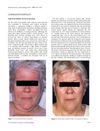
August 2003 in “British Journal of Dermatology” This article discusses the association between chronic diffuse telogen hair loss in women and iron deficiency, supporting the view that iron's role is unclear and often overstated, but reports no new clinical results.
 3 citations
,
May 2025 in “Cell Death and Disease”
3 citations
,
May 2025 in “Cell Death and Disease” This study found that METTL1 is upregulated in papillary thyroid cancer tissues and promotes cancer cell proliferation and metastasis through its tRNA methyltransferase activity.
 2 citations
,
January 2015 in “Elsevier eBooks”
2 citations
,
January 2015 in “Elsevier eBooks” The document says biodegradable cosmetics and packaging are better for the environment and user experience.
 1 citations
,
January 2019 in “Advances in Medical Sciences”
1 citations
,
January 2019 in “Advances in Medical Sciences” This study found that a combination of azelaic acid, minoxidil, and caffeine significantly reduced skin flap necrosis in rats, likely by increasing nitric oxide content and iNOS expression, compared to individual treatments.
 1 citations
,
May 2002 in “British Journal of Dermatology”
1 citations
,
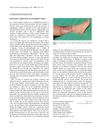
May 2002 in “British Journal of Dermatology” This article provides an overview of hair density, hair diameter, and the prevalence of female pattern hair loss but reports no new clinical findings.
 1 citations
,
April 1953 in “Acta Radiologica”
1 citations
,
April 1953 in “Acta Radiologica” Irradiating the whole central nervous system can lead to over 50% of patients with cerebellar medulloblastoma surviving three years.
 June 2026 in “Dermatology and Therapy”
 This review provides an analysis of topical treatments with clinically proven efficacy for managing hyperpigmentation and concludes that the most effective approach is using combined therapies that target multiple aspects of skin pigmentation physiology.
 October 2025 in “Scientific Reports”
 This study found that the extracts of Serenoa repens, when evaluated through chemical, biological, and in silico methods, demonstrated anti-inflammatory, pro-apoptotic, and anti-androgenic activities against prostate cancer cell lines, suggesting potential therapeutic benefits and directing future pharmaceutical development.
 December 2024 in “Mağallaẗ ʻulūm al-rāfidayn”
 In this study, zinc oxide nanoparticles were synthesized using a sustainable method from the Lepidium sativum L. plant, and incorporating these nanoparticles into Sunblock Lotion significantly increased its sun protection factor.
 April 2024 in “Research Square (Research Square)”
 This study found that extracts of mesenchymal stem cells (MSC-extract) and their protein components (MSC-protein) enhanced the proliferation and migration of periodontal ligament cells and induced significant periodontal tissue regeneration, showing potential as a new cell-free treatment for periodontal disease.
 October 2023 in “Cognizance journal”
 This study explores using agent-based modeling and nutrition science to predict and treat oral and dental diseases as alternatives to traditional incarceration for managing criminal behavior, but results are not reported.
 August 2022 in “International journal of research in pharmacy and chemistry”
 This review summarizes the chemical composition and pharmacological properties of Teak (Tectona grandis) but presents no new research findings, emphasizing its use in traditional medicine and therapeutic potentials.
 January 2020 in “Research Portal Denmark”
 This study concludes that anti-androgenic chemicals causing short anogenital distance in male fetuses also induce a feminized transcriptional profile in the perineum, implicating Wnt and estrogen signaling in the process.
 January 2017 in “Springer eBooks”
 The document explains various skin conditions and their treatments.
 January 2016 in “Research Explorer (The University of Manchester)”
 Activating the Eda/Edar pathway improves wound healing by enhancing hair follicle growth.
 April 2012 in “KSBB Journal”
 This study suggests that specific structural features of minoxidil analogs, such as hydrophobic and hydrogen bond field contributions, are key to enhancing lysyl hydroxylase inhibitory activity, which could inform future hair growth treatments.
 January 2012 in “Human health handbooks”
 This article explores the role of ethno-medicinal plants in hair growth and loss treatments but reports no new clinical findings, highlighting Ayurveda's long-standing use in addressing hair-related issues.
 May 2002 in “British Journal of Dermatology”
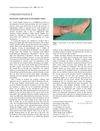
 A pregnant woman's skin condition improved after giving birth, possibly due to high estrogen levels during pregnancy.
 April 1955 in “Archives of pediatrics & adolescent medicine”
 This article discusses prevalent skin diseases in children, including alopecia areata, and reports no new clinical results; it outlines conditions and treatment options without presenting original data.
 April 1940 in “Archives of dermatology”
 This abstract presents a case of arsenical dermatitis with pigmentation and alopecia developed during treatment with arsphenamine for a positive Wassermann reaction.
 May 2002 in “British Journal of Dermatology”
 This brief article is a response from the authors about hair density, hair diameter, and female pattern hair loss, and it reports no new clinical findings.
 441 citations
,
May 2008 in “British Journal of Pharmacology”
441 citations
,
May 2008 in “British Journal of Pharmacology” This article reviews the potential clinical use of anabolic steroids in treating muscle loss from chronic diseases and aging and highlights both the benefits and risks of these substances in sports.
 152 citations
,
January 2004 in “Current anthropology”
152 citations
,
January 2004 in “Current anthropology” Humans lost body hair relatively recently in evolution.
 21 citations
,
May 1988 in “Journal of The American Academy of Dermatology”
21 citations
,
May 1988 in “Journal of The American Academy of Dermatology” This article reviews the challenges of providing dermatology care in prisons and reports no new clinical findings, highlighting common skin conditions like tinea pedis, pruritus, and alopecia areata linked to stress and the environment.
 20 citations
,
October 2003 in “The Journal of Dermatology”
20 citations
,
October 2003 in “The Journal of Dermatology” This study observed that while dexamethasone-cyclophosphamide pulse therapy is relatively free from hypertension and diabetes compared to conventional steroids in pemphigus patients, it frequently causes generalized weakness and flushing.
 1 citations
,
January 2019 in “Springer eBooks”
1 citations
,
January 2019 in “Springer eBooks” Hidradenitis Suppurativa is a chronic skin condition best treated early with surgery for better outcomes and less recurrence.