45 citations
,
July 2025 in “Journal of Medicinal Chemistry” This article discusses the development and clinical progress of PROTAC technology, particularly focusing on the New Drug Application for vepdegestrant, an estrogen receptor-targeting PROTAC, marking significant advancements in targeted protein degradation therapies.
October 2025 in “Influenza and Other Respiratory Viruses” This study found that bis-benzylisoquinoline and Amaryllidaceae alkaloids, especially aromoline, show potential as antiviral agents, suggesting they could serve as foundations for developing new treatments against coronaviruses by enhancing the understanding of their structure-activity relationships.
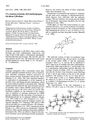 December 1998 in “Acta Crystallographica Section C-crystal Structure Communications”
 This study describes the molecular conformation and intermolecular interactions in the crystalline structure of the compound C24H31BrO4.

This study found that CPA-loaded nanoparticles, particularly SLN formulations, increased CPA epidermal penetration compared to a conventional cream and may reduce side effects in treating androgen-dependent conditions.
 January 2010 in “Yearbook of Endocrinology”
 Two new compounds can block androgen receptor activity in different ways and may lead to new treatments for androgen-related diseases.
6 citations
,
August 2024 in “Advanced Science” This study presents a Cu-catalyzed atroposelective method achieving high stereoselectivity for synthesizing chiral biaryl N-oxides, with product 3e showing promising therapeutic efficacy against triple-negative breast cancer in cell lines MDA-MB-231 and MDA-MB-468.
2 citations
,
October 2025 in “Antimicrobial Agents and Chemotherapy” This study found that cepharanthine may be a promising treatment for enterovirus infections, as it offered full protection to mice against lethal EV71 challenges and reduced viral titers and pathology.
This study reports on a new semantic annotation approach used to identify substances in MEDLINE abstracts responsible for adverse drug reactions, with promising performance shown by a prototype system.
 11 citations
,
August 2007 in “Bioorganic & Medicinal Chemistry Letters”
11 citations
,
August 2007 in “Bioorganic & Medicinal Chemistry Letters” This study found that among the tested analogs, compound 4e was the most effective in inhibiting wax esters in vivo in the Golden Syrian hamster ear model.

In this study, VB-1 was reported to promote human hair follicle growth by enhancing Wnt/β-catenin signaling and increasing human dermal papilla cell proliferation in vitro.
This study introduces a novel visible light-mediated intramolecular [2+2] cycloaddition process that forms 6-azabicyclo[3.1.1]heptanes, offering a new synthesis route for bioisosteric mimetics used in drug discovery, potentially expanding medicinal chemistry applications beyond traditional limitations.
 7 citations
,
March 2013 in “Tetrahedron Letters”
7 citations
,
March 2013 in “Tetrahedron Letters” This study reports a new one-pot method for synthesizing chromeno-pyrimidine-N-oxides with high yield from 4-chloro-3-formylcoumarin and aromatic carboximide oximes, confirmed by X-ray analysis.

In this study, researchers successfully synthesized a rigid 3a-arylhexahydropentalene-1,6-dione from the easily accessible starting material cyclopent-2-en-1-one, highlighting a structural motif common in natural products and pharmaceuticals.
 13 citations
,
May 2011 in “Bioorganic & Medicinal Chemistry”
13 citations
,
May 2011 in “Bioorganic & Medicinal Chemistry” This study identified certain benzopyran derivatives with a bulky tert-butyloxycarbonylamino group as effective KATP channel openers that inhibit insulin secretion in rat pancreatic islets.
![Synthesis, Biological Evaluation, and Molecular Docking of 4-Amino-2H-benzo[h]chromen-2-one Analogs Containing the Piperazine Moiety](/images/assets/2ecf4eed-7dbe-4f1a-83db-739625546cdd/small/31808.jpg) 7 citations
,
August 2019 in “Bioorganic & medicinal chemistry”
7 citations
,
August 2019 in “Bioorganic & medicinal chemistry” This study identified novel 4-Amino-2H-benzo[h]chromen-2-one analogs as potent androgen receptor antagonists that show strong antiproliferative activity against prostate cancer cells, suggesting them as potential lead compounds for therapy development.
 February 2026 in “Nature Synthesis”
 In this study, researchers introduced a visible-light-mediated intramolecular cycloaddition method that selectively forms 6-azabicyclo[3.1.1]heptanes, suggesting these structures could offer promising new scaffolds for drug discovery and medicinal chemistry.
This compilation details various potential side effects and interactions of vitamin A, but it reports no new research findings.
 February 1999 in “Analytical Sciences”
 A new antiandrogen compound was made and its detailed three-dimensional shape was described.
 79 citations
,
January 1982 in “The American Journal of Medicine”
79 citations
,
January 1982 in “The American Journal of Medicine” This study reports that VP-16-213 (etoposide) shows significant therapeutic activity in several cancers including small cell bronchogenic carcinoma and certain leukemias, with hematologic toxicity being the primary side effect.
 4 citations
,
January 2014 in “RSC Advances”
4 citations
,
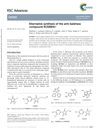
January 2014 in “RSC Advances” A new, less toxic and more efficient method to create the anti-baldness compound RU58841 was developed in 2014.
 3 citations
,
January 2018 in “Reproduction, Fertility and Development”
3 citations
,
January 2018 in “Reproduction, Fertility and Development” This study concluded that cyproterone acetate alone produced antiandrogenic effects on the female gerbil prostate, while ethinyloestradiol alone stimulated estrogenic activity, and their combination led to prostatic lesions.
9 citations
,
June 2021 in “Journal of Inflammation Research” This study found that Euph E and Euri A showed strong anti-inflammatory activity and modulated cytokine and immune functions in macrophages, related to specific signaling pathways.
 August 2008 in “European Neuropsychopharmacology”
 RY-023, a specific drug, can improve early stage memory learning without affecting general activity in rats, but it's less effective for later learning stages and doesn't impact memory recall.
 17 citations
,
May 2018 in “PeerJ”
17 citations
,
May 2018 in “PeerJ” This study found that VB-1, a vitexin compound, may promote hair follicle growth by enhancing Wnt/β-catenin signaling in human dermal papilla cells in vitro.
 August 2002 in “Analytical Sciences”
 The document concludes that a compound with potential for treating prostate cancer and hair loss was successfully made and its detailed structure was confirmed.
 12 citations
,
March 2016 in “Life Sciences”
12 citations
,
March 2016 in “Life Sciences” This review discusses the potential of combined therapy with WP 631 and epothilone B for ovarian cancer, but reports no new clinical results.
18 citations
,
December 2005 in “Journal of Medicinal Chemistry” In this study, novel substituted benzoyl benzoic acids and phenylacetic acids were potent and selective inhibitors of human steroid 5alpha-reductase type 2, with one compound showing promising bioavailability in rats for potential clinical evaluation.
23 citations
,
December 2013 in “Molecular cancer therapeutics” This study found that AR-positive breast cancer cell lines are more sensitive to the dual PI3K/mTOR inhibitor NVP-BEZ235 compared to AR-negative cells.
 5 citations
,
March 2017 in “Natural Product Research”
5 citations
,
March 2017 in “Natural Product Research” This study identified and characterized eight compounds, including furanocoumarins and pterocarpans, from the aerial parts of Bituminaria basaltica, with β-caryophyllene and germacrene D as main constituents of its essential oil.
 April 2025 in “Advances in Traditional Medicine”
 In this study, a film-forming spray with rosemary essential oil increased hair density in volunteers over 16 weeks, suggesting it has potential efficacy for treating androgenetic alopecia by enhancing hair density restoration.