In this study, human hair dermal papilla cells were incubated with varying concentrations of umbilical cord-derived mesenchymal stem cell exosomes or minoxidil, and cell proliferation was assessed, showing significant results compared to the control.
January 2023 in “Indian Dermatology Online Journal” This case report describes a novel association between uncombable hair syndrome and Zellweger syndrome due to a homozygous mutation in the PEX12 gene.
 August 2025 in “BMC Pregnancy and Childbirth”
 In this study, prenatal ultrasonography was found to be a valuable tool for screening ectodermal dysplasia during pregnancy, and a new EDA gene variant associated with X-linked hypohidrotic ectodermal dysplasia was identified, aiding in more accurate diagnoses and reproductive decision-making.
September 2018 in “Journal of Society of Cosmetic Chemists of Japan” This study found that applying a solution containing oil-soluble vitamin C to damaged hair improved hair cuticle condition and water repellency, suggesting a new cosmetic function beyond its known skin whitening effects.
 January 2021 in “Indian Journal of Paediatric Dermatology”
 Topical tretinoin 0.025% cream is an effective treatment for Eruptive Vellus Hair Cysts in children.
September 2015 in “OUKA (Osaka University Knowledge Archive) (Osaka University)” Poly(ethylene-co-vinyl alcohol) monoliths can be made using heat separation for various uses.
This policy paper explores the potential of using nanoscale carriers to deliver chemotherapy drugs directly to breast cancer tumors in the UAE, aiming to minimize harmful side effects and improve quality of life for patients by targeting only cancerous cells.
 5 citations
,
January 2018 in “Annals of Dermatology”
5 citations
,
January 2018 in “Annals of Dermatology” A 308 nm excimer laser successfully treated a boy with a rare skin condition after about a year of weekly sessions.
47 citations
,
October 2015 in “Dermatologic surgery” This review discusses the applications of the 308-nm excimer laser in treating various dermatologic conditions and suggests treatment is generally well tolerated, but calls for larger long-term studies.
 1 citations
,
May 2026 in “bioRxiv (Cold Spring Harbor Laboratory)”
1 citations
,
May 2026 in “bioRxiv (Cold Spring Harbor Laboratory)” In laboratory studies on mice, Abstract UT-018, a stem cell chemoattractant formulation, was reported to significantly enhance wound healing and promote hair regeneration through mechanisms involving improved tissue formation, collagen organization, and follicular development.
April 2025 in “Journal of Cosmetic Dermatology” Combining radiofrequency and ultrasound significantly boosts skin's natural hyaluronic acid production.
99 citations
,
March 2013 in “Journal of Investigative Dermatology” This study identified ABCB6 as the first gene linked to dyschromatosis universalis hereditaria (DUH) in a large Chinese family, suggesting it plays a role in skin pigmentation.
8 citations
,
April 2014 in “Clinical and Experimental Dermatology” This study suggests that eruptive vellus hair cysts often have atypical pathological changes and likely originate from the infrainfundibulum and sebaceous duct based on keratin expression analysis.
August 2026 in “Clinical Cosmetic and Investigational Dermatology” This study highlights the potential of stem cell-derived extracellular vesicles to treat UV-induced skin damage by modulating key signaling pathways, though challenges like EV composition variability and skin barrier penetration remain, underscoring the need for further research into optimized delivery methods for effective therapies.
1 citations
,
July 2024 in “Australasian Journal of Ultrasound in Medicine” In this study, researchers reported that cutaneous ultrasound may be a valuable tool in diagnosing and assessing inflammatory activity in tinea capitis, potentially guiding treatment decisions, especially in severe cases not apparent through clinical symptoms alone.

This study introduced a new laser-only method called EKA for acne treatment, which is reported to be safe, painless, and heat-free, showing promising results for both acne and scar repair in initial sessions without combining with LED light.
 September 2025 in “Clinical Cosmetic and Investigational Dermatology”
 In this randomized, placebo-controlled study, Kūlaris supplementation significantly improved quality of life for participants with mild-to-severe acne over 12 weeks, though no significant changes in general skin health measures were observed compared to placebo.
2 citations
,
August 2022 in “Viruses” This study found that cutaneous squamous cell carcinomas in mice infected with murine papillomavirus preferentially arise from Lgr5+ progenitor cells, while squamous cell dysplasia does not.
 18 citations
,
September 2003 in “The journal of investigative dermatology/Journal of investigative dermatology”
18 citations
,
September 2003 in “The journal of investigative dermatology/Journal of investigative dermatology” This study suggests that vitamin D-upregulated protein 1 (VDUP1) might play a unique role in regulating the differentiation of epidermal cells.
1 citations
,
November 2016 in “Experimental and Therapeutic Medicine” In this study using guinea pigs, the low-dose 800 nm semiconductor laser was found to effectively treat skin blackheads and coarse pores by promoting hair follicle cell apoptosis, while maintaining PCNA expression levels in sebaceous glands.
41 citations
,
November 2019 in “Journal of Ultrasound in Medicine” This study found that 70-MHz ultrasound can detect early signs of hidradenitis suppurativa linked to severity, including hair follicle abnormalities and keratin fragmentation, aiding in diagnosis and management.
July 2024 in “Journal of Investigative Dermatology” Versican in dermal papilla cells is crucial for healthy hair growth.
September 1998 in “Journal of the European Academy of Dermatology and Venereology” 30 citations
,
January 2014 in “Journal of Controlled Release” This study concluded that combining cyanoacrylate skin surface stripping with particle-based antigen delivery effectively targets HIV-1 p24 protein to skin cells, supporting its potential for needle-free transcutaneous vaccination.
105 citations
,
December 1995 in “British journal of dermatology/British journal of dermatology, Supplement” This retrospective study concluded that PUVA treatment is generally ineffective for alopecia areata, with low effective success rates for partialis, totalis, and universalis types.
 12 citations
,
January 2011 in “Photodermatology, photoimmunology & photomedicine”
12 citations
,
January 2011 in “Photodermatology, photoimmunology & photomedicine” This study found that phototoxic psoralen and ultraviolet A therapy with topical 8-MOP was effective in treating alopecia areata resistant to other treatments, improving hair regrowth with minimal side effects.
October 2022 in “Hair Transplantation” This article reviews the importance of quality control and quality assurance in hair transplant practice and emphasizes their potential to improve procedural outcomes, yet it reports no new clinical data.
6 citations
,
February 2023 in “Genes” This study found that overexpression of the CUX1 protein promotes proliferation of Hu sheep dermal papilla cells and affects key genes in the Wnt/β-catenin signaling pathway.
2 citations
,
November 2025 in “Healthcare” This study found that among young patients with acne vulgaris, combining a 675 nm red-light laser with isotretinoin led to more rapid and pronounced improvement in lesion severity compared to laser treatment alone, without adverse events.
 9 citations
,
May 2013 in “JAMA Dermatology”
9 citations
,
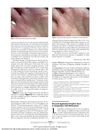
May 2013 in “JAMA Dermatology” This report documents two cases of eruptive nevi occurring in the skin folds of children with Langerhans cell histiocytosis.