 19 citations
,
January 2018 in “Scientific Reports”
19 citations
,
January 2018 in “Scientific Reports” This study provided the first proteome dataset for alopecia areata, revealing novel pathways in the disease mechanisms that may lead to new therapeutic targets.
 16 citations
,
August 2022 in “Nature Communications”
16 citations
,
August 2022 in “Nature Communications” In this study, researchers discovered that ROR2, a Wnt receptor, plays a crucial role in regulating hair follicle stem cell self-renewal and maintenance, compensating for the absence of β-catenin.
 11 citations
,
November 2019 in “Clinical Case Reports”
11 citations
,
November 2019 in “Clinical Case Reports” This study highlights that while there are no FDA- or ANVISA-approved treatments for children with alopecia areata, JAK inhibitors are emerging as a promising therapeutic option for this population.
 December 2024 in “Frontiers in Neurology”
 In this pilot randomized clinical trial, TRT combined with finasteride increased lean mass, muscle size, and bone mineral density without prostate enlargement in men with spinal cord injury, suggesting potential benefits for body composition and musculoskeletal health.
 271 citations
,
May 2019 in “Cells”
271 citations
,
May 2019 in “Cells” This review discusses the therapeutic potential of MSC-derived secretomes for treating degenerative and inflammatory diseases, reporting no new clinical results but highlighting their proposed mechanisms and advantages over direct MSC transplantation.
 207 citations
,
March 2012 in “Development”
207 citations
,
March 2012 in “Development” In this mouse study, researchers found that dermal Wnt signaling/β-catenin activity is essential for fibroblast proliferation and initiating hair follicle formation by interacting with epidermal Wnt ligands.
 36 citations
,
November 2018 in “BMC plant biology”
36 citations
,
November 2018 in “BMC plant biology” This study suggests that ROXYs and reactive oxygen species are likely involved in the signaling pathways plants use to respond to nitrate deprivation.
 72 citations
,
January 2003 in “American Journal of Pathology”
72 citations
,
January 2003 in “American Journal of Pathology” This study found that the co-activator CBP enhances the agonistic action of hydroxyflutamide on androgen receptors, suggesting a mechanism for therapy resistance in prostate cancer.
 59 citations
,
April 2016 in “Cell Reports”
59 citations
,
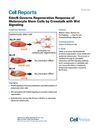
April 2016 in “Cell Reports” This study demonstrated that EdnrB signaling promotes melanocyte stem cell proliferation and differentiation, enhancing hair and epidermal melanocyte regeneration, especially under conditions of active Wnt signaling.
 21 citations
,
January 2021 in “Therapeutic Advances in Endocrinology and Metabolism”
21 citations
,
January 2021 in “Therapeutic Advances in Endocrinology and Metabolism” The researchers suggest that testosterone levels might influence COVID-19 susceptibility and severity, with low levels potentially protecting against infection but possibly worsening severe disease due to cytokine storm activation.
 19 citations
,
September 2010 in “The American journal of pathology”
19 citations
,
September 2010 in “The American journal of pathology” This study demonstrated that elevated glucocorticoid levels in transgenic mice led to pancreatic exocrine cells transforming into hepatocyte-like cells, resulting in pancreatic dysfunction.
 12 citations
,
December 2021 in “Frontiers in Medicine”
12 citations
,
December 2021 in “Frontiers in Medicine” This study observed that dermatological patients using certain immunosuppressants, like azathioprine and high-dose prednisolone, had a reduced humoral immune response to the Sinovac-CoronaVac COVID-19 vaccine compared to those without such treatments.
7 citations
,
January 2025 in “Frontiers in Microbiology” In this study, researchers investigated the immunohistopathological characteristics of the skin in individuals during the acute phase of chikungunya infection, revealing CHIKV antigens and inflammatory infiltrates in various skin components and highlighting the role of cytokines/chemokines in the disease's skin manifestations.
 22 citations
,
December 2018 in “British Journal of Clinical Pharmacology”
22 citations
,
December 2018 in “British Journal of Clinical Pharmacology” This study found that most adverse events reported for HPV vaccines in the VAERS system were non-serious and already known, although less common events suggest the need for further examination.
 7 citations
,
January 2021 in “Evidence-based complementary and alternative medicine”
7 citations
,
January 2021 in “Evidence-based complementary and alternative medicine” This study suggests that porphyra-334 may have antiaging properties, promoting collagen synthesis, improving periorbital wrinkles, and supporting hair follicle growth through gene regulation.
 March 2026 in “Frontiers in Immunology”
 In this study, a 49-year-old female with metastatic adrenocortical carcinoma experienced an abscopal effect following pulse electric field ablation, suggesting potential as an adjunct to systemic immunotherapy for liver tumors.
 22 citations
,
October 2011 in “Bone”
22 citations
,
October 2011 in “Bone” This study found that androgen signaling has complex effects on bone formation in male AR3.6-transgenic mice, with varying impacts based on the embryonic lineage of cells.
 21 citations
,
June 2017 in “Journal of The American Academy of Dermatology”
21 citations
,
June 2017 in “Journal of The American Academy of Dermatology” This study reviewed existing articles to assess the efficacy of topical diphenylcyclopropenone immunotherapy for alopecia areata, but it did not report new clinical results.
170 citations
,
May 1979 in “The journal of pediatrics/The Journal of pediatrics” This report describes two sisters with rickets and alopecia unresponsive to high doses of vitamin D2, where oral phosphorus supplements led to significant clinical improvement.
April 2022 in “JAAD case reports” In this case report, researchers found that alitretinoin was an effective treatment for a case of generalized granuloma annulare that was previously unresponsive to multiple other therapies.
119 citations
,
December 2008 in “The journal of investigative dermatology/Journal of investigative dermatology” In this study, transcutaneously applied nanoparticles and viral vectors were shown to penetrate murine hair follicles, internalize in antigen-presenting cells, and induce immune responses, suggesting a promising approach for vaccine delivery.
 August 2025 in “Journal of the Korean Society of Cosmetology”
 This study examined 201 Korean academic articles on scalp and hair research from 1994 to 2024, finding a shift from technique-driven studies to more interdisciplinary, application-oriented research, reflecting broader industrial, medical, and psychological interests over time.
 2 citations
,
March 2024 in “PubMed”
2 citations
,
March 2024 in “PubMed” This bibliometric analysis identified the top 100 most cited articles on alopecia areata from the past 50 years, highlighting key research trends, with treatment studies being the most common focus and the Journal of the American Academy of Dermatology as the most published journal.
 12 citations
,
April 2015 in “InTech eBooks”
12 citations
,
April 2015 in “InTech eBooks” Platelet Rich Plasma (PRP) shows promise for tissue repair and immune response, but more research is needed to fully understand it and optimize its use.
December 2021 in “IP Indian journal of clinical and experimental dermatology” This case study reports that PRP therapy resulted in significant hair growth and increased pigmentation in a 21-year-old with diffuse alopecia areata unresponsive to other treatments, with sustained results at 1.5-year follow-up.
16 citations
,
June 1992 in “PubMed” In this case report, high-dose intravenous methylprednisone followed by oral prednisolone improved painful muscle cramps in a young man unresponsive to other treatments, suggesting an autoimmune mechanism may be involved.
3 citations
,
December 2019 in “Lupus” In this report, researchers describe a case of scalp discoid lupus erythematosus unresponsive to topical treatments, where hydroxychloroquine administered at 200 mg/day led to complete resolution of skin lesions in five months.
 October 2025 in “International Journal of Risk & Safety in Medicine”
 In this case study, a 5-year-old girl with alopecia areata and atopic dermatitis that were unresponsive to previous treatments achieved substantial improvement with long-term tofacitinib, highlighting its potential safety and efficacy in managing both conditions concurrently.
March 2023 in “Journal of Cosmetic Dermatology” This case report describes successful treatment with low-dose oral minoxidil for endocrine therapy-induced alopecia in a breast cancer patient unresponsive to topical minoxidil.
 1 citations
,
April 2019 in “Acta Medica Philippina”
1 citations
,
April 2019 in “Acta Medica Philippina” This review discusses emerging evidence on azathioprine's efficacy and safety for severe alopecia areata, reporting sustained response in many patients but emphasizing the need for controlled trials.