12 citations
,
June 2020 in “The anatomical record” This study found that miR-203a-3p downregulates Smad1, promoting the differentiation of loureirin A-induced hair follicle stem cells, suggesting it could be a potential therapeutic target for skin wound healing.
 March 2025 in “ACS Applied Materials & Interfaces”
 This study found that using an ultrasound hollow microneedle array enhanced transdermal delivery of finasteride, accelerating hair regrowth in mice with androgenetic alopecia compared to other delivery methods.
47 citations
,
April 2012 in “Analytical and Bioanalytical Chemistry” 5 citations
,
May 2001 in “Proceedings of SPIE, the International Society for Optical Engineering/Proceedings of SPIE” This study developed a double-wavelength laser scanning microphotometer to measure hair shaft and follicle absorbance, improving spatial resolution and reducing light scattering effects in vitro.
 3 citations
,
December 2021 in “Dermatology reports”
3 citations
,
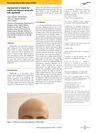
December 2021 in “Dermatology reports” This study presents a reported case where dupilumab treatment for atopic dermatitis led to improvement in alopecia universalis.
 April 2023 in “Journal of Investigative Dermatology”
 This study found that dimethyl fumarate improved delayed wound healing in Il36rn-/- mice by reducing neutrophil extracellular trap formation and oxidative stress.
 December 2023 in “Biological & pharmaceutical bulletin”
 This study found that combining lecithin reverse wormlike micelles with isopropyl myristate enhanced the skin permeability of a model hydrophilic drug, facilitated by interactions with sebum in hair follicles.
5 citations
,
May 2022 in “Diagnostics” This study found that certain lncRNA gene polymorphisms in HOTAIR and MALAT1 are associated with increased susceptibility to systemic lupus erythematosus, potentially informing clinical applications.

In this reported case, a 30-year-old man with a long history of alopecia universalis experienced limited regrowth of eyebrows and eyelashes after six months of deuruxolitinib, despite unchanged scalp hair, suggesting site-specific potential for hair regrowth in challenging cases.
1 citations
,
October 2025 in “PLoS ONE” In this study, researchers found that overexpression of LncRNA RP11-818O24.3 in hair follicle stem cells promotes their proliferation, self-renewal, and differentiation while inhibiting apoptosis through the FGF2-mediated PI3K/AKT signaling pathway, suggesting potential therapeutic applications for hair loss treatment.
 31 citations
,
October 2010 in “Progress in lipid research”
31 citations
,
October 2010 in “Progress in lipid research” This review discusses the role of LPA(3) in embryo implantation and its genetic connection with prostaglandin signaling, but reports no new clinical results.
75 citations
,
July 2016 in “New phytologist” This study found that RSL4 in Arabidopsis thaliana regulates genes necessary for root hair elongation by controlling proteins involved in cell signaling, cell wall modification, and secretion.
March 2026 in “World Rabbit Science” This study found that overexpression and knockdown of DKK4 influence genes involved in hair follicle growth and development in Angora rabbits and identified specific SNPs in DKK4 associated with wool quality, notably showing that the TT/GG haplotype combination relates to higher fibre diameters.
January 2010 in “Acta Laboratorium Animalis Scientia Sinica” This research reports that the ultra-high sulfur keratin promoter acts as a tissue-specific promoter in mouse hair follicles, as shown by induced expression of GFP and β-gal in that region post-transfection.
 1 citations
,
January 2021
1 citations
,
January 2021 In this study, CD4+ non-haematopoietic, skin-resident stem cell-like populations were identified in both murine and human epidermis, suggesting they may serve as potential basal cell carcinoma precursors.
 3 citations
,
September 2015 in “Journal of Vascular Surgery”
3 citations
,
September 2015 in “Journal of Vascular Surgery” This study found that chemical lumbar sympathectomy with 5% phenol effectively treated idiopathic livedo reticularis in most patients, offering a potential long-lasting solution with repeatable efficacy upon recurrence.
28 citations
,
May 2015 in “Molecular Neurobiology” LSD1 is crucial for regenerating hair cells in zebrafish.
 August 2019 in “Journal of Invertebrate Pathology”
 This study observed that different alkaline buffers had a significant impact on the volume of liquid consumed by fall armyworm larvae, emphasizing the importance of measuring imbibed volumes to reduce dose errors in bioassays.
52 citations
,
September 2012 in “Oncogene”  December 2023 in “Natural product research”
 This study found that compound 4 from Urtica triangularis subsp. pinnatifida exhibited stronger anti-BPH activity against BPH-1 cells with an IC50 of 79.75 μM compared to finasteride's IC50 of 91.8 μM, while compounds 1, 2, and 5 showed moderate activity.
3 citations
,
December 2024 in “Stem Cell Reports” In this study, researchers observed that low levels of fucose-binding lectin staining characterize limbal epithelial progenitor cells, which maintain a high proliferative capacity and may be enhanced by inhibiting fucosylation, offering insights for regenerative therapy of the limbal stem cell niche.
 November 2022 in “The journal of investigative dermatology/Journal of investigative dermatology”
 This study suggests that allergens like linalool found in personal care products may contribute to the pathobiology of frontal fibrosing alopecia by affecting immune responses and stem cell function in hair follicles.
222 citations
,
August 2014 in “Cell Metabolism” In this study, researchers found that mitochondrial complex I plays a crucial role in regulating innate immunity and bone remodeling, with Ndufs4 deletion causing systemic inflammation and osteopetrosis through various metabolic shifts and cellular mechanisms.
 October 2023 in “Frontiers in Medicine”
 In a reported case, researchers observed full hair regrowth on the scalp, eyebrows, and eyelashes of a 4-year-old with alopecia universalis after 10 months of treatment with dupilumab, following resistance to baricitinib.
 November 2022 in “bioRxiv (Cold Spring Harbor Laboratory)”
 This study found that conditional deletion of Mof in mice resulted in severe defects in skin development, including compromised epidermal differentiation and hair growth, leading to perinatal lethality.
 November 2023 in “bioRxiv (Cold Spring Harbor Laboratory)”
 This study used a novel fluorescent tagging method in mice to observe collagen IV dynamics during hair follicle development, revealing that alterations in basement membrane turnover can influence epithelial progenitor cell behavior and organ morphology by affecting cell proliferation and movement.
 2 citations
,
January 2004 in “Elsevier eBooks”
2 citations
,
January 2004 in “Elsevier eBooks” This article reviews historical uses of the term "lupus" for various skin disorders but provides no new clinical findings.
This study utilized 3D ultra-high frequency ultrasound to effectively detect different disease phases of alopecia areata by visualizing hair follicle structures and identifying unique pathological signs, offering a promising non-invasive diagnostic tool that surpasses conventional methods.
 11 citations
,
October 2001 in “Dermatologic Clinics”
11 citations
,
October 2001 in “Dermatologic Clinics” In this study, subcutaneous recombinant human IL-12 showed a 43% partial response rate in early-stage mycosis fungoides patients refractory to previous treatments, with generally mild to moderate adverse events reported.
This chapter summarizes the efficacy of NB-UVB monotherapy for vitiligo and notes that patients treated with tacrolimus showed significantly better repigmentation.