16 citations
,
June 2018 in “JAAD case reports” This article reviews the differences in inflammatory processes between alopecia universalis and atopic dermatitis, focusing on type 1 and type 2 immune responses, but it reports no new results.
October 2023 in “Journal of cystic fibrosis” 14 citations
,
August 2014 in “Journal of the American Academy of Dermatology” This study found that topical diphenylcyclopropenone is an effective treatment for extensive alopecia areata, with significant hair regrowth reported in most patients, though effectiveness varied with disease characteristics.
 146 citations
,
July 2003 in “Journal of the American Academy of Dermatology”
146 citations
,
July 2003 in “Journal of the American Academy of Dermatology” In this study, clobetasol propionate 0.05% ointment was found to induce hair regrowth in 28.5% of patients with severe alopecia areata under occlusive conditions, though long-term benefit was limited to 17.8%.
January 2009 in “Yearbook of Endocrinology” DHEA therapy improves pubic hair growth and psychological well-being in young females with central adrenal insufficiency.
 March 2025 in “Clinical Cosmetic and Investigational Dermatology”
 In this study, researchers found that the "U" allele of the Tru9I variant may be associated with low vitamin D levels and altered VDR gene activity in alopecia areata patients, while the "u" allele might have a protective role against developing the condition.
 December 2010 in “Actas Urológicas Españolas”
 This abstract outlines a study evaluating dutasteride's effect on perioperative bleeding during transurethral resection of the prostate, but does not report any new clinical results.
20 citations
,
February 2004 in “Clinical & Experimental Immunology” This study suggests that long-term treatment with the contact sensitizer SADBE in mice may reduce leucocyte traffic in alopecia areata through impaired leucocyte extravasation.
 March 2022 in “Research Square (Research Square)”
 This case report describes a 15-year-old girl with Alopecia Universalis and psychiatric conditions experiencing hair regrowth after self-medicating with cannabis, suggesting it may have therapeutic potential.
3 citations
,
December 2017 in “Journal of Psychiatric Research” This study found that hair cortisol did not indicate expected hypercortisolism in acutely underweight anorexia nervosa patients and did not change significantly during short-term weight restoration.
 8 citations
,
January 2008 in “Annals of Dermatology”
8 citations
,
January 2008 in “Annals of Dermatology” This study concluded that combining systemic cyclosporine A with low-dose corticosteroids effectively treats severe alopecia areata while maintaining safe cyclosporine A levels in the blood.
8 citations
,
May 2016 in “Indian Journal of Pharmacology” This case report describes an atypical postfinasteride syndrome in a patient treated with both dutasteride and finasteride for androgenic alopecia, highlighting its multisystem involvement and irreversible nature.
18 citations
,
January 2015 in “International Journal of Trichology” This study found that intralesional steroid treatment led to significantly more hair regrowth in alopecia areata patients than narrow band ultraviolet B therapy, while their combination did not enhance effectiveness.
This abstract reviews published cases indicating a potential association between alopecia areata and Down syndrome, with no new clinical results.
1 citations
,
September 2024 in “Actas Dermo-Sifiliográficas” In this retrospective study from five Colombian cities, researchers detailed the clinical characteristics of 562 alopecia areata patients, noting that multiple plaques and the patchy subtype were common, with steroid injections frequently used as treatment.
 3 citations
,
December 2021 in “Dermatology reports”
3 citations
,
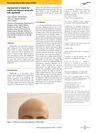
December 2021 in “Dermatology reports” This study presents a reported case where dupilumab treatment for atopic dermatitis led to improvement in alopecia universalis.
 7 citations
,
December 2017 in “Journal of the European Academy of Dermatology and Venereology”
7 citations
,
December 2017 in “Journal of the European Academy of Dermatology and Venereology” This study found that dutasteride use is associated with increased reports of sexual dysfunction, based on data from the U.S. Food and Drug Administration Adverse Event Reporting System.
5 citations
,
November 2013 in “Case reports in dermatology” This case report details a 57-year-old woman with frontal fibrosing alopecia who developed hyperpigmentation after treatment with dutasteride and pimecrolimus, highlighting no previously reported hyperpigmentation association with this combination.
 7 citations
,
December 2020 in “Endocrine-related Cancer”
7 citations
,
December 2020 in “Endocrine-related Cancer” This article discusses the potential role of oral DHEA, available as a 'dietary supplement' in the US, in COVID-19 morbidity and mortality, calling for clinical trials to assess its safety.
May 2023 in “Reactions Weekly” January 2013 in “Reactions Weekly”  November 2024 in “Cureus”
 This case report describes a patient who developed dissecting cellulitis of the scalp after follicular unit extraction, showing significant improvement with isotretinoin, dutasteride, and steroids.
11 citations
,
September 2021 in “American Journal of Medical Genetics Part A” This study reports that newly diagnosed patients with Bachmann-Bupp syndrome exhibit a broader phenotype than previously documented, including late-onset seizures, and suggests a possible universal biochemical mechanism involving elevated ODC activity.
15 citations
,
June 2019 in “Biochemical Journal” This study identified a heterozygous de novo mutation in the ODC1 gene causing a new disorder characterized by overgrowth and developmental delay, and suggests that DFMO treatment may help manage elevated ODC activity and putrescine levels.
October 2019 in “Asian College of Neuropsychopharmacology” 15 citations
,
July 2021 in “Anais Brasileiros de Dermatologia” This report describes a rare case of alopecia areata-like psoriasis, associated with skin lesions, following the use of dupilumab in a patient with atopic dermatitis.
September 2024 in “Journal of the American Academy of Dermatology” Alopecia areata often recurs after treatment with diphenylcyclopropenone.
 January 2025 in “Geneesmiddelenbulletin”
 This 104-week follow-up trial found that baricitinib is effective and safe for treating severe alopecia areata but requires continuous use to sustain hair regrowth. The drug is included in the NVDV guidelines and reimbursed by Dutch insurers for this purpose.
 3 citations
,
July 2021 in “International journal of environmental research and public health/International journal of environmental research and public health”
3 citations
,
July 2021 in “International journal of environmental research and public health/International journal of environmental research and public health” This study reports two cases of Alopecia Universalis as a secondary autoimmune manifestation following Alemtuzumab treatment, highlighting the importance of screening and monitoring for such autoimmune responses.

This study found that dermoscopy combined with calcium fluorescent white staining effectively aided in the early diagnosis and treatment evaluation of tinea capitis by highlighting specific hair changes and fluorescent patterns associated with different dermatophyte infections in a sample of 20 patients.