 September 2021 in “Physiology News”
 This abstract contains only graphical design information and does not report any research findings or conclusions.
1 citations
,
April 2013 in “Journal of Investigative Dermatology”  February 2010 in “Journal of The American Academy of Dermatology”
 This study found that nonobese women with idiopathic hirsutism exhibited lower nitrite/nitrate concentrations and higher fibrinogen levels compared to control subjects, but these were similar to levels in women with polycystic ovary syndrome.

This study found significant correlations between scalp and nail involvement and laboratory findings in Korean patients with chronic cutaneous lupus erythematosus, highlighting their importance for diagnosis and management.
July 2021 in “JOURNAL OF THE MEDICAL ASSOCTATION OF THAILAND” In this study, young Thai men with androgenetic alopecia reported poorer quality of life compared to older men, as indicated by higher DLQI scores.
This study revealed that Thai youths who are more worried about androgenetic alopecia tend to experience higher severity of the condition, poorer quality of life, and increased use of multiple hair styling products.
1 citations
,
January 2025 in “JEADV Clinical Practice” This study reported that the AAPPO tool effectively distinguishes between patients with alopecia areata based on scalp hair loss severity, whereas the EQ‐5D‐5L may underestimate the specific disease burden, particularly in psychological and social aspects.
June 2024 in “British Journal of Dermatology” This study found that alopecia areata significantly impacts patients' quality of life irrespective of hair loss severity, and concluded that the newer assessment tools AAPPO and AASIS better capture this impact compared to the traditional SALT measure.
 April 2024 in “JMIR infodemiology”
 This study found that TikTok provides valuable insights into experiences with lupus erythematosus, highlighting distress from symptoms, negative perceptions of pharmacologic treatments, and issues with feeling "medically gaslighted.
 17 citations
,
July 2017 in “International Journal of Behavioral Medicine”
17 citations
,
July 2017 in “International Journal of Behavioral Medicine” This study validated the Egyptian Arabic version of the Skindex-16 and found that skin conditions significantly impacted patients' quality of life, particularly in the emotional domain.
January 2005 in “Digital Commons - University of South Florida (University of South Florida)” This research identified distinct attitudes influencing sunbathing and tanning salon use among female university students, with general attractiveness and skin aging concerns being strong predictors of sun exposure and protection intentions.
 January 2018 in “Turkiye Klinikleri Journal of Medical Sciences”
 This study observed that while alopecia treatment in patients showed some improvements in quality of life and anxiety scores at six months, these changes were not statistically significant.
8 citations
,
January 2017 in “Acta Dermato Venereologica” Thorough clinical examination is crucial for diagnosing unusual alopecia.
January 1995 in “Expert Systems with Applications” 
This study by Arthritis Ireland highlights that individuals living with lupus in Ireland face widespread impacts on daily life, work, and mental health, with 70% experiencing frequent flares despite 93% being on medication; 45% also reported significant medication side effects.
 April 2023 in “Journal of Investigative Dermatology”
 This study found that short-term NB-UVB treatment significantly reduced anxiety levels in psoriasis patients, but not depression.
 May 2018 in “Actas Dermo-Sifiliográficas”
 This study validated a Spanish version of the Hair Specific Skindex 29 scale for assessing quality of life in women with female androgenetic alopecia, showing similar psychometric properties to the original.
January 2020 in “AYBU AVESIS” This study found no significant difference in 2D:4D ratios and autism questionnaire scores between acne vulgaris patients and healthy controls, despite investigating potential links in this novel context.
 April 2023 in “Journal of Investigative Dermatology”
 In this systematic review, researchers found that individuals with lichen sclerosus have a higher prevalence of comorbidities like vitiligo, alopecia areata, and cardiovascular diseases compared to non-affected controls, and suggest screening all LS patients for cardiovascular risk factors and other diseases.
This study used TikTok videos to explore experiences of individuals with lupus erythematosus, revealing that mucocutaneous symptoms significantly impact mental health and body image, while pharmacologic treatments are often viewed negatively, leading to important implications for clinical interactions and validation.
 January 2025 in “The Atlantic Journal of Medical Science and Research”
 This study observed that anxiety and depression affect 21.7% and 38.7% of dermatology outpatients, respectively, with higher prevalence linked to demographics like female gender for anxiety, being single, unemployed, and having lower education, and specific conditions such as psoriasis and acne.
June 2026 in “Value in Health” October 2024 in “Dermatology Practical & Conceptual” This study found that trichoscopy is a valid and sensitive tool for diagnosing and evaluating eyebrow involvement in lichen planopilaris and frontal fibrosing alopecia.
 December 2025 in “Reports of Vinnytsia National Medical University”
 This study examined the relationships between the Dermatology Life Quality Index and trichoscopic and clinical-anamnestic characteristics in young Ukrainian men with alopecia areata, finding varying strengths of mostly non-significant correlations, especially in those with grade I and III alopecia.
 39 citations
,
November 2017 in “Journal of The American Academy of Dermatology”
39 citations
,
November 2017 in “Journal of The American Academy of Dermatology” This review presents standardized methods for assessing and tracking hair loss in alopecia areata but reports no clinical results, with the authors noting time limitations in clinical practice.
 167 citations
,
January 2006 in “Gynecological Endocrinology”
167 citations
,
January 2006 in “Gynecological Endocrinology” This study found that women with polycystic ovary syndrome reported a poorer health-related quality of life compared to women in the general population and patients with other medical conditions.
 24 citations
,
December 2019 in “PLoS ONE”
24 citations
,
December 2019 in “PLoS ONE” This study validated the Black Identity, Hair Product Use, and Breast Cancer Scale (BHBS) as a tool to measure social and cultural factors related to hair product use and perceived breast cancer risk in Black women.
5 citations
,
February 2023 in “Skin Health and Disease” In this study, the Swedish Hairdex-S was well-received by alopecia areata patients and demonstrated strong psychometric properties and consistency with the original version, supporting its use for patient quality of life evaluation and research.
 April 2013 in “The Journal of Urology”
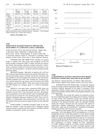
 Researchers created a simple tool to predict bladder blockage from prostate enlargement using urine flow rate and prostate volume.
 19 citations
,
November 2021 in “Lupus Science & Medicine”
19 citations
,
November 2021 in “Lupus Science & Medicine” This study found that Black patients with discoid lupus erythematosus had significantly worse CLASI damage scores and higher odds for dyspigmentation, scalp involvement, and scarring alopecia compared to non-Black patients.