31 citations
,
September 1999 in “Molecular Carcinogenesis” This study in a transgenic mouse model found that repressing overexpression of ornithine decarboxylase reduced papilloma development, indicating its role in tumor promotion sensitivity.
 86 citations
,
August 2011 in “Toxicological sciences”
86 citations
,
August 2011 in “Toxicological sciences” In this study, researchers found that TCDD exposure accelerated differentiation and altered gene expression in human epidermal cells, indicating the epidermal barrier as a target of TCDD-activated AHR.
 16 citations
,
June 2009 in “Dermatologic Surgery”
16 citations
,
June 2009 in “Dermatologic Surgery” This abstract does not contain research results or findings.
June 2020 in “Faculty Opinions – Post-Publication Peer Review of the Biomedical Literature” This study found a specific T cell receptor that may be key in carbamazepine-induced Stevens-Johnson syndrome and toxic epidermal necrolysis, suggesting potential therapeutic targets.
 November 2022 in “Journal of Investigative Dermatology”
 This study found that Cyclosporin A may prolong the anagen phase of hair growth in cultured dermal papilla cells by decreasing TGF-β2 expression, similar to its mechanism in immunosuppression.
 April 2017 in “The journal of investigative dermatology/Journal of investigative dermatology”
 This study identified intramembrane proteolysis as a key feature of Astrotactin2 maturation, providing insights into its role in planar cell polarity hair patterning.
 2 citations
,
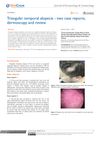
February 2018 in “Journal of dermatology & cosmetology”
2 citations
,
February 2018 in “Journal of dermatology & cosmetology” This article discusses triangular temporal alopecia, highlighting dermoscopy's role in diagnosis and the limited therapeutic options, without reporting new clinical results.
 18 citations
,
January 2008 in “Sen'i Gakkaishi”
18 citations
,
January 2008 in “Sen'i Gakkaishi” This study observed that repeated perm treatments decrease disulfide bonds in hair due to their conversion largely into cysteic acid, affecting the waving efficiency depending on the reduction agent used.
8 citations
,
October 2020 in “Clinical Psychopharmacology and Neuroscience” This case series found that low-frequency repetitive transcranial magnetic stimulation may benefit some patients with trichotillomania, although one of five patients experienced worsening symptoms after treatment.
15 citations
,
May 2022 in “Journal of Investigative Dermatology” This study found that endothelial TLR2 is crucial for effective angiogenesis and timely wound healing, whereas TLR2 in hair follicle stem cells is not essential for skin regeneration.
May 2023 in “The Journal of Immunology” In this study, treatment with IL-2C to expand Tregs effectively halted hair loss progression in a murine model of alopecia areata.
 24 citations
,
July 2016 in “Revue Neurologique”
24 citations
,
July 2016 in “Revue Neurologique” This review discusses treatment options for tics in Gilles de la Tourette syndrome, highlighting existing therapies and potential future advancements, but reports no new clinical findings.
October 2025 in “Diagnostics” In this case study, an 18-year-old woman's triangular alopecic patch diagnosed as temporal triangular alopecia was considered non-progressive and had no impact on her quality of life, so no treatment was initiated.
July 2025 in “Journal of Investigative Dermatology” Three molecular subtypes of advanced skin T-cell lymphoma were identified, with potential biomarkers for predicting treatment response and disease progression.
August 2002 in “British journal of ophthalmology” This article reports that while surgical excision is often the best treatment for SCC, intralesional cidofovir also showed success without systemic toxicity in the case discussed.
33 citations
,
June 2007 in “Gene Expression Patterns” This study found that CTIP2 is highly expressed in mouse skin during embryogenesis and adulthood, suggesting it may play a role in skin development and homeostasis.
321 citations
,
January 2012 in “Cell stem cell” This study identified TGF-β2 as a crucial signal in hair follicle stem cell regeneration, highlighting its role in counteracting BMP signaling to promote tissue regeneration.
 1 citations
,
November 2024 in “Cureus”
1 citations
,
November 2024 in “Cureus” This case report describes a rare aggressive variant of squamous cell carcinoma on the scalp of a non-immunosuppressed older male, highlighting its high biological risk for metastasis and poor outcomes.
3 citations
,
July 2022 in “Brain and Behavior” This study observed that a CARASIL mouse model demonstrated abnormal behavior, vascular and cellular changes, and upregulation of the TGF-β/Smad signaling pathway, indicating its potential involvement in CARASIL pathogenesis.
This study found that the Arabidopsis cation chloride cotransporter (CCC1) is crucial for regulating pH and processes in the trans-Golgi-network/early endosome, impacting plant growth and stress responses.
 April 2016 in “Journal of The American Academy of Dermatology”
 The study found that Temporal Triangular Alopecia often starts in early childhood, mainly affects the left side of the scalp, and has no effective treatment except surgery.
 1 citations
,
April 2017 in “Journal of Investigative Dermatology”
1 citations
,
April 2017 in “Journal of Investigative Dermatology” This study found that teledermatology significantly reduced wait times and increased appointment availability for uninsured Latino immigrants, effectively triaging 70% of cases without in-person visits.
November 2022 in “Journal of Investigative Dermatology” This study reported that an HS-associated NCSTN mutation in iPSC-derived skin organoids led to altered hair follicle stem cell differentiation and increased expression of proteins linked to HS inflammation.
1 citations
,
November 2021 in “International Journal of Dermatology and Venereology” This paper highlights a case where a 2-year-old boy with temporal triangular alopecia was initially misdiagnosed with alopecia areata, emphasizing the importance of dermoscopy for accurate early diagnosis to avoid unnecessary treatments.
 55 citations
,
June 2014 in “Nature Communications”
55 citations
,
June 2014 in “Nature Communications” This study found that overexpression of the transcription factor Tcf3 accelerates keratinocyte migration and skin wound healing in mice, highlighting its potential as a therapeutic target for wound repair.
75 citations
,
September 2016 in “EMBO journal” This study found that PRC2 plays a crucial role in maintaining intestinal homeostasis by supporting progenitor cell proliferation and limiting secretory lineage differentiation.
 11 citations
,
March 2024 in “Cell and Tissue Research”
11 citations
,
March 2024 in “Cell and Tissue Research” In this review, researchers summarize the methods for characterizing telocytes, outline their physiological roles and implications in diseases, and discuss potential future studies including precise markers and targeted therapies.
 1 citations
,
August 2024 in “Journal of Cutaneous and Aesthetic Surgery”
1 citations
,
August 2024 in “Journal of Cutaneous and Aesthetic Surgery” In this study, 65% TCA showed better improvement for acne scars compared to 50% GA, but GA may be a safer alternative with fewer adverse effects.
 140 citations
,
March 2013 in “The journal of immunology/The Journal of immunology”
140 citations
,
March 2013 in “The journal of immunology/The Journal of immunology” This study found that IL-7 is crucial for the survival of memory regulatory T cells in the skin of mice, whereas IL-2 is essential for their initial generation but not for their maintenance.
70 citations
,
December 2008 in “Cancer Research” This study found that activating CXCR2 on ras-transformed keratinocytes promotes migration and tumor development in a mouse skin model.