 2 citations
,
August 2021 in “Skin appendage disorders”
2 citations
,
August 2021 in “Skin appendage disorders” This case report describes a successful treatment of scalp hair white piedra caused by T. ovoides with oral itraconazole and topical ketoconazole, using a combination of clinical, trichoscopic, microbiologic, and molecular methods for diagnosis.
 February 2011 in “Annales de dermatologie et de vénéréologie”
 This study found that tofacitinib was well tolerated and led to clinical improvement in 77% of potential responders with severe alopecia areata, alopecia totalis, or alopecia universalis.
9 citations
,
November 2022 in “Journal of Cosmetic Dermatology” Among patients treated at Thomas Jefferson University, this study found that adding cryotherapy to intralesional triamcinolone acetonide (IL TAC) was more effective at reducing keloid size compared to IL TAC alone, although both treatments similarly eased pruritus and pain.
 3 citations
,
January 2015 in “Journal of clinical and diagnostic research”
3 citations
,
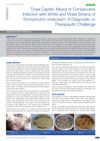
January 2015 in “Journal of clinical and diagnostic research” This case report described a seven-year-old with tinea capitis, which improved clinically after six weeks of griseofulvin treatment, changing the fungal strain from Trichophyton violaceum white variant to violet strain.
 1 citations
,
January 2015 in “Indian journal of dermatology, venereology, and leprology”
1 citations
,
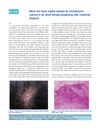
January 2015 in “Indian journal of dermatology, venereology, and leprology” A woman's scalp infection caused by a fungus led to permanent hair loss and was hard to treat but responded to a specific antifungal.
60 citations
,
September 2001 in “British journal of dermatology/British journal of dermatology, Supplement” This review discusses the use of contact sensitizers in topical immunotherapy for conditions like alopecia areata and viral warts, focusing on treatment methods, efficacy, and potential adverse effects, and reports no new clinical results.
 13 citations
,
November 2021 in “Pediatric Dermatology”
13 citations
,
November 2021 in “Pediatric Dermatology” This study found that oral tofacitinib was effective and well tolerated for treating alopecia areata in most pediatric patients, with nearly 73% experiencing hair regrowth.
 5 citations
,
December 2022 in “Toxins”
5 citations
,
December 2022 in “Toxins” This review discusses the structural properties, pharmacological effects, and clinical applications of neurotoxins on synapses, reporting no new experimental results.
3 citations
,
August 2022 in “International Journal of Molecular Sciences” This study demonstrated that 5-azacytidine treatment may reduce TSC lesion-related hair follicles in mice, suggesting chromatin remodeling agents could be effective for tuberous sclerosis cutaneous lesions lacking tuberin.
1 citations
,
January 2007 in “Side effects of drugs annual” This chapter reviews dermatological treatments, noting that botulinum toxin A is associated with a higher occurrence of focal weakness compared to controls, and reports on adverse effects of finasteride and PUVA therapy.
25 citations
,
November 1994 in “The Journal of Dermatologic Surgery and Oncology” In this study, acetone was not superior to other degreasers for enhancing the efficacy of trichloroacetic acid peels, and its higher flammability suggests using alternative degreasers to reduce workplace hazards.
35 citations
,
November 2021 in “Journal of nanobiotechnology” This study reported that thymol-loaded nanoparticles showed promise as an antibiotic-free treatment for acne by effectively targeting the infection without disrupting healthy skin microbiota.
5 citations
,
August 2002 in “Veterinary Dermatology” In this study, a combination of terbinafine and mitotane was used to treat a dog with pituitary-dependent hyperadrenocorticism and dermatophytosis, showing regrowth of hair and negative fungal cultures without detectable adverse effects.
 November 2025 in “Archives of Dermatological Research”
 Using a higher concentration of triamcinolone acetonide leads to faster hair regrowth in scalp patchy alopecia areata.
 44 citations
,
October 2017 in “Journal of the American Academy of Dermatology”
44 citations
,
October 2017 in “Journal of the American Academy of Dermatology” In this study, tofacitinib monotherapy was effective in achieving hair regrowth in over half of Korean patients with moderate-to-severe and refractory alopecia areata, though treatment discontinuation typically led to hair loss recurrence.
 January 2015 in “Journal of evolution of medical and dental sciences”
 In this study, topical tacrolimus 0.03% cream showed good to excellent response in treating alopecia areata in 70% of participants, with no cutaneous or systemic side effects observed.
May 2025 in “Pakistan Armed Forces Medical Journal” This study found that topical Dithranol 0.5% is more effective than topical Tacrolimus 0.1% for hair regrowth in patients with alopecia areata, with 40% of Dithranol-treated patients showing over 80% hair regrowth compared to 23.33% for Tacrolimus-treated patients.
38 citations
,
September 2017 in “Journal of zoo and wildlife medicine” This study describes the successful management of Andean bear alopecia syndrome in three female bears using oclacitinib, leading to rapid pruritus resolution and fur regrowth without adverse effects.
11 citations
,
January 2020 in “Journal of Drugs in Dermatology” This study found that intralesional triamcinolone acetonide injections effectively increased hair density in African American women with traction alopecia, showing promise as a safe treatment option.
December 2012 in “http://isrctn.org/>” 
This study found that subcutaneous administration of Botulinum toxin type A significantly reduced histamine-induced itch intensity and neurogenic inflammation in human skin compared to saline.
 September 2024 in “Cermin Dunia Kedokteran”
 This article reviews Frambusia, a skin-contact-spread tropical infection, and stresses improving medical professionals' diagnostic and treatment skills to achieve the WHO's eradication target by 2030, without reporting new results.
January 2023 in “Figshare” This meta-analysis found that a combination of clobetasol, hydroxychloroquine, and N-acetylcysteine may be the most effective treatment approach for lichen planopilaris compared to other therapies.
23 citations
,
October 2008 in “Journal of medicinal chemistry” This study suggests that PF-0998425 is an effective androgen receptor antagonist for sebum control and androgenetic alopecia with rapid metabolism reducing the risk of systemic side effects.
24 citations
,
July 2005 in “Journal of the American Academy of Dermatology” In this case report, the authors suggest that topiramate, used for treating bipolar disorder, may cause trichomegaly, or excessive eyelash growth, in patients.

This study demonstrated that de novo designed bifunctional proteins can target and degrade BCL-xL, leading to cell apoptosis, suggesting a new approach to targeted protein degradation therapy.
34 citations
,
June 2022 in “Viruses” This study found that the natural alkaloid cepharanthine effectively inhibited porcine epidemic diarrhea virus infection in newborn piglets.
1 citations
,
June 1999 in “American Journal of Contact Dermatitis” In this study, tazarotene 0.1% gel showed greater efficacy than tretinoin 0.025% gel in reducing acne lesions and demonstrated similar efficacy to adapalene 0.1% gel when used less frequently.
January 2006 in “Benzina: Revista d'excepcions culturals” This study observed that new trienone compounds consistently showed higher 5alpha-reductase inhibitory activity compared to corresponding dienones across various biological models.
 June 2023 in “NILES Journal forGeriatric and Gerontology/NILES Journal for Geriatric and Gerontology”
 In this study, oral tranexamic acid significantly improved melasma in 40 female patients over three months, with no adverse effects like post-inflammatory hyperpigmentation or bleeding, demonstrating its potential as a safe and effective treatment option.