
This study found that injecting growth factor concentrates into the scalp of five patients with androgenic alopecia led to notable improvements in hair density and quality over eight weeks, with patients reporting satisfaction and minimal side effects.
April 2024 in “International Journal of Women’s Dermatology” This study suggests that lichen planopilaris should be considered as a potential diagnosis in African American women with scarring alopecia, often displaying an "arrowhead" distribution pattern, which may guide treatment strategies.
 December 2022 in “Himi, himijn tehnologijn hùrèèlèngijn èrdèm šinžilgèènij bùtèèl”
 This study found that using the "Khalgai" hair care products enriched with copper and zinc for 28 days led to increased hair density, diameter, and follicular unit count in women, indicating improved hair morphology.
 July 2022 in “Al-Mağallaẗ al-ʻirāqiyyaẗ li-l-ṣaydalaẗ”
 This study found that among women with hirsutism, the most common type of non-scarring alopecia observed was androgenetic alopecia with telogen effluvium.
 April 2021 in “The journal of investigative dermatology/Journal of investigative dermatology”
 This study found that 6.1% of new patients seeking PRP therapy for hair loss had undiagnosed cicatricial alopecia, highlighting the importance of proper diagnosis by trained dermatologists to optimize treatment outcomes.
June 2026 in “Indian Journal of Postgraduate Dermatology” In this study, trichoscopy significantly improved diagnostic accuracy in non-cicatricial alopecia, identifying alopecia areata as the most common cause and effectively aiding diagnosis in 28.2% of ambiguous cases.
 April 2026 in “American Journal of Dermatopathology”
 This study identified a new dermoscopic feature, plexiform erythema, in lichen planopilaris lesions, suggesting it may indicate active disease and the potential need for more aggressive treatment.
April 2026 in “Actas Dermo-Sifiliográficas” This study reports that scalp cooling therapies and minoxidil may promote hair regrowth in patients experiencing persistent chemotherapy-induced alopecia, with trichoscopy aiding in treatment assessment.
 March 2026 in “Frontiers in Medicine”
 This study reported that two male patients with diffuse unpatterned alopecia exhibited donor-area involvement in both the vertex and occiput, challenging the assumption of occipital stability for hair transplantation, and showed partial improvement following treatment with oral finasteride and topical minoxidil.

This study reviews female hair loss conditions with a focus on diagnosis and treatment. It highlights female pattern hair loss as the most common form and emphasizes the need for personalized therapy, including topical minoxidil and, when appropriate, antiandrogen treatments.
 January 2026 in “Forum Dermatologicum”
 This study observed that 2.5% of patients with mycosis fungoides or Szary syndrome experienced alopecia, predominantly within skin lesions, with scalp metastases from other cancers also potentially causing hair loss, highlighting the diagnostic value of trichoscopy in differentiating alopecia types.
 December 2025 in “Journal of Mycology and Infection”
 In this case report, a 2-month-old girl with tinea capitis showed significant improvement after treatment with oral griseofulvin and topical ketoconazole. The study emphasizes the importance of layered diagnostics and systemic therapy for effective management of this fungal scalp infection in infants.
December 2025 in “JURNAL ILMU KEDOKTERAN DAN KESEHATAN” This study reported that a 29-year-old woman with telogen effluvium experienced improved hair growth and reduced hair loss through 12 sessions of plum blossom acupuncture combined with electroacupuncture, as evidenced by new hair growth, improved hair-pull test results, and decreased telogen phase hair percentage.
December 2025 in “International Journal of Cosmetic Science” A new tool helps better assess and treat hair loss in Chinese men.
December 2025 in “Skin Appendage Disorders” Patients found AI helpful for alopecia diagnosis but want it to support, not replace, doctors.
 September 2025 in “Scientific periodicals of Ukraine”
 This study reports on a 46-year-old patient with pseudopelades of Brocq, highlighting the effectiveness of early diagnosis and treatment in preventing atrophy and controlling hair loss, as positive clinical outcomes were noted after prescribed therapy.
September 2025 in “International Journal of Medical Informatics” A machine learning model can predict scarring in lichen planopilaris using factors like vitamin D levels and diagnostic delay.
 July 2025 in “Journal of the European Academy of Dermatology and Venereology”
 In this study, experts propose a diagnostic and treatment guideline for folliculitis decalvans, emphasizing the role of trichoscopy and introducing a therapeutic algorithm tailored to disease activity, which is significant for clinical management given the lack of specific clinical trials.
July 2025 in “Indian Dermatology Online Journal” This study reports a unique case of trichotillomania incognita in an adult female that mimicked female pattern hair loss, highlighting the importance of trichoscopy and histology for accurate diagnosis.
July 2025 in “International Journal of Trichology” This study reported six pediatric cases of temporal triangular alopecia and highlighted the use of trichoscopy to distinguish it by detecting a distinctive carpet of vellus hair, helping to differentiate TTA from other hair loss conditions.
 March 2025 in “Journal of Cutaneous and Aesthetic Surgery”
 In this study, three different hair serums were tested for their impact on Telogen effluvium in adult females, finding all effective in reducing hair shedding, with the cytokine-based serum showing the most significant improvement, reducing hair fall by 54.6% without adverse effects.
 December 2024 in “Texila international journal of public health”
 In this study conducted from September to November 2023, researchers used trichoscopy to accurately diagnose cicatricial alopecias by revealing unique patterns, reducing the need for biopsies, and proving to be a valuable non-invasive diagnostic method.
This study highlights the complexity of diagnosing scalp fungal infections, emphasizing how clinical evaluation, trichoscopy, and cultural samples are essential in distinguishing tinea capitis from similar conditions like piedra, seborrheic dermatitis, and psoriasis, due to overlapping symptoms like scaling and hair changes.
 August 2024 in “International Journal of Science and Research (IJSR)”
 In this study, 10 men with androgenetic alopecia who did not respond to standard treatments showed significant hair regrowth and satisfaction after being treated with polydioxanone scalp threads, suggesting a potential therapeutic advantage for this approach.

In this observational study, researchers found that acute telogen effluvium, a form of temporary hair loss, occurred in 80 patients following COVID-19 infection, with 70 showing a significant decrease in hair density and trichoscopic signs like peripilar sign and yellow dots.
 May 2024 in “Indian Dermatology Online Journal”
 This study reports a case of trichobacteriosis pubis, a rare bacterial infection causing malodour in the pubic region, which improved with hair trimming and topical clindamycin, subsequently enhancing the patient's sexual relationship.
 February 2024 in “Acta dermato-venereologica”
 This study reports that folliculitis decalvans and lichen planopilaris phenotypic spectrum is an underdiagnosed form of cicatricial alopecia, potentially treatable with anti-inflammatory drugs used for lichen planopilaris.
This study outlines treatment strategies for autoimmune alopecia areata, detailing that while mild cases may resolve on their own, severe cases often require intervention, with new JAK inhibitors like baricitinib and ritlecitinib emerging as promising treatments for those not responding to traditional therapies.
December 2023 in “International Journal of Dermatology” This study reports that trichoscopy and histopathology can effectively diagnose alopecia areata incognito and differentiate it from telogen effluvium or androgenetic alopecia, aiding clinicians in better hair regrowth management.
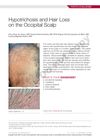 September 2023 in “Cutis”
 This study presents a case of a 6-month-old infant girl with hypotrichosis and an alopecic plaque in the occipital region, characterized by broken and dystrophic hairs with follicular papules and perifollicular hyperkeratosis, suggesting a diagnostic consideration.