 December 2023 in “International Journal of Medical Sciences And Clinical Research”
 This article discusses trichoscopy as a tool for differential diagnosis in female-type androgenetic alopecia and reports on three patient cases without providing new clinical results.

This study aims to describe the trichoscopic pattern of chemotherapy-induced alopecia and its changes during different phases of chemotherapy.
 January 2022 in “Clinical Cases in Dermatology”
 This review describes lichen planopilaris diffuse pattern and recommends topical corticosteroids as a first-line treatment, but reports no new clinical results.

This article discusses various causes and prevention methods for male pattern baldness but reports no new research findings.
 40 citations
,
December 2014 in “Indian Journal of Dermatology”
40 citations
,
December 2014 in “Indian Journal of Dermatology” This study found that trichoscopy can effectively differentiate scalp psoriasis from seborrheic dermatitis by identifying specific trichoscopic patterns such as hidden hairs, signet ring vessels, and comma vessels.
 4 citations
,
January 2020 in “Skin appendage disorders”
4 citations
,
January 2020 in “Skin appendage disorders” This case report describes a unique presentation of frontal fibrosing alopecia characterized by a hair loss pattern that resembles the Greek letter upsilon, supported by trichoscopic and histological findings.

This article provides physician associates with an evidence-based approach to diagnosing and treating alopecia, focusing on recognizing patterns, identifying triggers, and applying targeted interventions to improve patient outcomes in hair loss.
 September 2021 in “CRC Press eBooks”
 This article discusses alopecia areata incognito, highlighting its diffuse hair loss pattern and favorable response to steroid treatment, but it reports no new clinical data.
11 citations
,
July 2019 in “Pediatric dermatology” In this study, empty follicular openings and pigtail hairs were more frequently observed in children with alopecia areata compared to adults, while yellow dots were less common in children.
39 citations
,
May 2019 in “Journal of the American Academy of Dermatology” This study found that nonscarring alopecia in patients with systemic lupus erythematosus may indicate higher disease activity, as evidenced by specific histological and immunofluorescence changes.
31 citations
,
October 2018 in “Journal of the European Academy of Dermatology and Venereology” In this study, trichoscopic examination found distinct hair characteristics for diagnosing eyebrow loss: alopecia areata is marked by features like exclamation mark hairs, while frontal fibrosing alopecia shows dystrophic hairs and distinctive regrowth patterns.
24 citations
,
August 2020 in “JAMA dermatology” In this study, researchers observed a dose-dependent occurrence of persistent radiation-induced alopecia in patients with primary CNS tumors or head and neck sarcomas, noting distinctive patterns and features, and suggesting potential benefits of topical minoxidil and procedural interventions for treatment.
 1 citations
,
September 2021 in “CRC Press eBooks”
1 citations
,
September 2021 in “CRC Press eBooks” This chapter reviews trichoscopic-pathologic correlations in Frontal Fibrosing Alopecia and reports no new clinical results; the authors discuss genetics, clinical patterns, and unusual variants associated with this condition.
 1 citations
,
November 2017 in “International Journal of Research in Medical Sciences”
1 citations
,
November 2017 in “International Journal of Research in Medical Sciences” In this study, hair follicle effacement was identified as a key dermoscopic feature of cicatricial alopecia, and dermoscopy proved useful in distinguishing cicatricial from non-cicatricial alopecias.
 December 2024 in “Texila international journal of public health”
 In this study conducted from September to November 2023, researchers used trichoscopy to accurately diagnose cicatricial alopecias by revealing unique patterns, reducing the need for biopsies, and proving to be a valuable non-invasive diagnostic method.
April 2024 in “International Journal of Women’s Dermatology” This study suggests that lichen planopilaris should be considered as a potential diagnosis in African American women with scarring alopecia, often displaying an "arrowhead" distribution pattern, which may guide treatment strategies.
September 2021 in “CRC Press eBooks” This article discusses trichotillomania and trichoteiromania, focusing on their clinical presentation, main trichoscopic features, and similarities in hair loss patterns but reports no new research findings.
 June 2018 in “The Medical Journal of Cairo University/The Medical Journal of Cairo University”
 This study found that dermoscopy is effective for distinguishing Tinea Capitis from Alopecia Areata by identifying unique trichoscopic features specific to each condition.
 13 citations
,
June 2012 in “Journal of Dermatological Case Reports”
13 citations
,
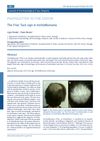
June 2012 in “Journal of Dermatological Case Reports” This report describes an 8-year-old male with trichotillomania, confirmed by trichoscopy showing characteristic hair damage and patterns.
 69 citations
,
January 2015 in “Current problems in dermatology”
69 citations
,
January 2015 in “Current problems in dermatology” This review discusses trichoscopy as a noninvasive, effective technique for diagnosing various hair loss conditions and monitoring treatment, highlighting its potential to reduce scalp biopsy necessity.
 36 citations
,
August 2018 in “Dermatologic Clinics”
36 citations
,
August 2018 in “Dermatologic Clinics” This article reviews various hair abnormalities observable through trichoscopy in conditions like monilethrix, trichorrhexis nodosa, and ectodermal dysplasias, with no new clinical findings reported.
 18 citations
,
July 2018 in “Skin appendage disorders”
18 citations
,
July 2018 in “Skin appendage disorders” This review discusses trichoscopic features of hair disorders in individuals with dark skin phototypes and reports no new clinical results; the authors emphasize the need for more specific diagnostic criteria for these populations.
 7 citations
,
January 2013 in “Dermatology Research and Practice”
7 citations
,
January 2013 in “Dermatology Research and Practice” This review discusses the usefulness of trichoscopy in diagnosing and managing scalp and hair disorders, reporting it as a valuable tool for linking clinical and histological findings.

In this study, a Monte Carlo-generated synthetic cohort analysis found that higher simulated cannabis exposure was linked to increased self-assessed hair loss severity and reduced follicular density, suggesting potential connections worth exploring in further clinical research.
 178 citations
,
December 2011 in “Journal of Dermatological Case Reports”
178 citations
,
December 2011 in “Journal of Dermatological Case Reports” This review discusses the application of trichoscopy in diagnosing various hair and scalp diseases and reports no new clinical results; the authors emphasize its role as a non-invasive diagnostic tool.
35 citations
,
September 2011 in “The Journal of Dermatology” This article discusses the trichoscopic diagnosis of temporal triangular alopecia, but reports no new clinical results.
24 citations
,
August 2023 in “Journal of the American Academy of Dermatology” Trichoscopy helps diagnose and manage different types of hair loss effectively.
 7 citations
,
January 2018 in “International Journal of Dermatology”
7 citations
,
January 2018 in “International Journal of Dermatology” Syphilis can cause hair loss without other symptoms and should be considered when diagnosing unexplained hair loss.
4 citations
,
April 2024 in “Clinical Cosmetic and Investigational Dermatology” This review examines the trichoscopic characteristics of scalp DLE and LPP, correlating these findings with histopathological data, but provides no new clinical results.
 August 2024 in “Journal of Cutaneous and Aesthetic Surgery”
 This study found significant hair growth improvement with microneedling radiofrequency treatment in most patients with patterned hair loss, with minimal short-term adverse effects.