 November 2025 in “Journal of Skin and Sexually Transmitted Diseases”
 In this case study, researchers reported a rare instance of trichofolliculoma on the scalp in a 31-year-old male with constriction band syndrome, marking the first known association with amniotic band syndrome.
August 2015 in “Han'gug dongmul jawon gwahag hoeji/Han-guk dongmul jawon gwahak hoeji/Journal of animal science and technology” This study reported variable expression levels of TRα and CRABPII genes during the prenatal development of cashmere goats, contributing to an understanding of hair follicle formation in these animals.
November 2023 in “Pakistan Journal of Medical & Health Sciences” In this cross-sectional study, researchers observed that patients undergoing hair transplant procedures showed significant improvements in hairline patterns, with most reverting to lower Norwood-Hamilton grades, after treatment at a tertiary care center in Balochistan, Pakistan.
 December 2021 in “International Journal of Research in Dermatology”
 This study found that while female pattern hair loss in young to middle-aged women was commonly associated with markers of hyperandrogenism and specific histopathological features, its exact causes and treatment remain unclear.
 July 2021 in “Indian journal of dermatopathology and diagnostic dermatology”
 In this study, researchers documented several trichoscopic features that were statistically significant indicators of alopecia and scalp disorders compared to healthy controls.
124 citations
,
December 1988 in “Differentiation” This study found that T cytokeratins appear more gradually and with complex coexpression patterns in developing nail structures compared to the more abrupt transition in hair follicles.
December 2025 in “International Journal of Advanced Biochemistry Research” In this study, researchers analyzed hair from different regions of Malvi cattle and found significant variations in color, shape, and band pattern, although the medullary index remained consistent between 0.50 and 0.60 across the samples.
11 citations
,
January 2017 in “Skin Appendage Disorders” This study associated ivory-colored areas observed through trichoscopy with steroid deposits in the dermis among patients with steroid-induced atrophy on the scalp.
 September 2023 in “Zenodo (CERN European Organization for Nuclear Research)”
 In this study, researchers examined trichoscopic features in 80 patients with androgenetic alopecia and found that hairshaft thickness heterogeneity was the most common feature, highlighting trichoscopy as a useful, non-invasive diagnostic tool for assessing this condition.
 January 2022 in “Journal of Dermatology and Dermatologic Surgery”
 This study found that trichoscopy is a valuable tool for diagnosing various hair disorders by identifying specific trichoscopic patterns, such as hair diameter diversity in androgenetic alopecia and exclamatory marks in alopecia areata.
7 citations
,
September 2017 in “Advances in Clinical and Experimental Medicine” This study found that lanugo hair appears earlier on the posterior wall of the trunk than on the anterior wall in human fetuses, with a nearly two-week difference in development time.
 25 citations
,
April 2007 in “Journal of The American Academy of Dermatology”
25 citations
,
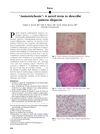
April 2007 in “Journal of The American Academy of Dermatology” This article introduces the term "anisotrichosis" to describe the significant variation in hair shaft diameters observed in pattern alopecia, drawing a parallel to anisocytosis seen in blood smears, but reports no new research findings.
2 citations
,
May 2020 in “Journal of the American Academy of Dermatology” Hair shaft changes may be linked to CCCA, but their role is unclear.
October 2022 in “International Journal of Research in Dermatology” This study suggests that hormonal disturbances play a role in female pattern hair loss and that trichoscopy may be a useful tool for diagnosis and differentiation from other conditions.
 5 citations
,
January 1985 in “Facial Plastic Surgery”
5 citations
,
January 1985 in “Facial Plastic Surgery” Flap surgery is effective for treating male baldness, offering immediate results with dense hair growth.
 31 citations
,
September 2016 in “PLoS ONE”
31 citations
,
September 2016 in “PLoS ONE” The researchers reported that in hairless mice, epidermal cell division orientations and epidermal thickness varied by body site, with dorsal and ear epidermis primarily dividing parallel to the basement membrane, unlike hind paw and tail epidermis.
 16 citations
,
June 2009 in “Dermatologic Surgery”
16 citations
,
June 2009 in “Dermatologic Surgery” This abstract does not contain research results or findings.
April 2022 in “Dermato Mag” Triphasic Progressive is more effective against hair loss.
 16 citations
,
January 2015 in “Annals of Dermatology”
16 citations
,
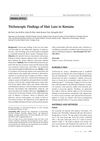
January 2015 in “Annals of Dermatology” In this study, trichoscopic features aiding differential diagnosis of alopecia in Korean patients were found to be similar to those in Caucasians, but pigment pattern frequencies differed due to racial characteristics.
1 citations
,
November 2021 in “International Journal of Dermatology and Venereology” This paper highlights a case where a 2-year-old boy with temporal triangular alopecia was initially misdiagnosed with alopecia areata, emphasizing the importance of dermoscopy for accurate early diagnosis to avoid unnecessary treatments.
January 2026 in “Pattern Recognition” This study found that their newly developed ADRL framework significantly improved the accuracy of scalp tissue layer segmentation in HR-MR images compared to existing methods.
 January 2015 in “Hair therapy & transplantation”
 This review updates on various methods for hair and scalp examination, encompassing non-invasive, semi-invasive, and invasive techniques, and reports no new results.
12 citations
,
December 2021 in “Dermatology” This study found that trichoscopy can differentiate between dermatomyositis, systemic lupus erythematosus, and systemic sclerosis by identifying distinctive features and may help assess disease activity.
 January 2011 in “International Journal of Trichology”
 The document concludes that doctors should recognize congenital triangular alopecia to avoid unnecessary treatments, as it does not respond to steroids like alopecia areata does.
January 2024 in “Muller Journal of Medical Sciences and Research” This study found that trichoscopy was 73.77% concordant with histopathology in diagnosing patchy alopecia, highlighting its usefulness as a diagnostic tool for conditions like alopecia areata, lichen planus pigmentosus, and discoid lupus erythematosus.
 1 citations
,
February 2014 in “Hair therapy & transplantation”
1 citations
,
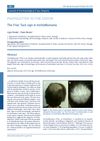
February 2014 in “Hair therapy & transplantation” This case report describes a one-year-old boy with combined occipito-linear and triangular fronto-temporo-parietal alopecia and discusses the possibility of these lesions being a variant of neonatal occipital alopecia.
 13 citations
,
June 2012 in “Journal of Dermatological Case Reports”
13 citations
,
June 2012 in “Journal of Dermatological Case Reports” This report describes an 8-year-old male with trichotillomania, confirmed by trichoscopy showing characteristic hair damage and patterns.
 September 2023 in “Cureus”
 This case report describes a four-month-old infant with atypical alopecia areata following a cultural head-shaving ritual, who showed improvement with topical triamcinolone treatment, though not full symptom resolution, highlighting the rarity and complexity of managing AA in infants.
15 citations
,
June 2020 in “Journal of the American Academy of Dermatology” Shiny white structures in trichoscopy can indicate long-standing discoid lupus erythematosus alopecia.
2 citations
,
November 2023 in “Skin Research and Technology” This study found that RCM combined with dermoscopy can differentiate disease states between alopecia areata, tinea capitis, nevus sebaceous, and linear scleroderma of the scalp by identifying distinct dermal and follicular patterns.