 September 2018 in “Gynecology & Obstetrics”
 In a meta-analysis of 210 hair tourniquet syndrome cases, this study reported that 44.2% involved the penis, 40.4% the toes, and 8.6% fingers, highlighting the condition's potential severity and underreporting, especially in infants and some adults with cognitive impairments.
 1 citations
,
December 2018 in “Journal of genetic medicine”
1 citations
,
December 2018 in “Journal of genetic medicine” In this case report, a 20-year-old male with tricho-rhino-phalangeal syndrome was found to have a de novo frameshift mutation in the TRPS1 gene, highlighting the challenges in diagnosing this rare disorder.
 6 citations
,
October 2012 in “Journal of Heredity”
6 citations
,
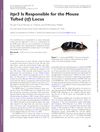
October 2012 in “Journal of Heredity” This study identified the Itpr3 gene as responsible for the tufted hair loss phenotype in the BTBR mouse strain.
12 citations
,
January 2001 in “Der Hautarzt” This report on a 37-year-old patient found that trichorhinophalangeal syndrome type I is associated with hair abnormalities, including fine and brittle hair with altered biomechanical properties, but no treatment exists for the hair defects.
1 citations
,
April 2018 in “Journal of Investigative Dermatology” The Trichodysplasia spinulosa virus protein can cause abnormal hair growth in mice.
 48 citations
,
May 1991 in “The journal of investigative dermatology/Journal of investigative dermatology”
48 citations
,
May 1991 in “The journal of investigative dermatology/Journal of investigative dermatology” This study found that trichohyalin, a protein previously thought to be restricted to hair and tongue, is also present in isolated cells within the granular layer and stratum corneum of normal human epidermis.
103 citations
,
February 1972 in “Proceedings of the National Academy of Sciences” This study found that a unique transglutaminase in guinea pig hair-follicles, distinct from liver transglutaminase, likely plays a role in forming protein cross-links via ε(γ-glutamyl)lysine bonds.
September 2017 in “Journal of Investigative Dermatology” LRIG1 protein affects hair growth by regulating skin receptors, leading to hair loss when overexpressed.
 5 citations
,
November 2015 in “Turk Pediatri Arsivi-turkish Archives of Pediatrics”
5 citations
,
November 2015 in “Turk Pediatri Arsivi-turkish Archives of Pediatrics” This report highlights a preterm newborn with hair-thread tourniquet syndrome affecting multiple toes, emphasizing the importance of early identification and removal to prevent severe complications.
 28 citations
,
January 2012 in “Case Reports in Medicine”
28 citations
,
January 2012 in “Case Reports in Medicine” This article discusses Hair-thread Tourniquet Syndrome in children, emphasizing the need for prompt examination and intervention to prevent severe complications, but reports no new clinical results.
34 citations
,
July 2003 in “Archives of Facial Plastic Surgery” This article discusses strategies for planning face-lift incisions to avoid visible scars and other aesthetic issues, particularly for male patients and correction of prior surgeries, and reports no new clinical results.
 November 2025 in “Journal of Skin and Sexually Transmitted Diseases”
 In this case study, researchers reported a rare instance of trichofolliculoma on the scalp in a 31-year-old male with constriction band syndrome, marking the first known association with amniotic band syndrome.
2 citations
,
September 2016 in “Journal of Dermatological Science” Reduced TRPS1 leads to increased STAT3 and SOX9 in hair follicles, affecting hair growth.
March 2016 in “Cairn.info” This abstract discusses the potential link between unexplained infant crying and tourniquet syndrome, noting the importance of considering underlying causes such as abuse, but reports no new clinical findings.
August 2015 in “Han'gug dongmul jawon gwahag hoeji/Han-guk dongmul jawon gwahak hoeji/Journal of animal science and technology” This study reported variable expression levels of TRα and CRABPII genes during the prenatal development of cashmere goats, contributing to an understanding of hair follicle formation in these animals.
106 citations
,
February 2014 in “eLife” This study concluded that terminal Schwann cells are essential for the maintenance and regeneration of mechanosensory lanceolate complexes at hair follicles in adult mice.
12 citations
,
February 2017 in “Graefe s Archive for Clinical and Experimental Ophthalmology” This study compared open and closed surgical techniques for severe congenital ptosis using Gore-Tex slings and found that the closed approach offered better functional outcomes, while the open method provided superior cosmetic results.
52 citations
,
July 2011 in “PubMed” This review discusses the diverse roles of the TRPS1 gene in regulating cartilage, kidney, and hair follicle development, highlighting its functions and interactions, but provides no new experimental results.
 November 2013 in “International Journal of Medical and Health Sciences”
 This review discusses hair tourniquet syndrome, highlighting its potential for delayed diagnosis and the association with maternal telogen effluvium, but reports no new clinical results.

In this study, researchers analyzed over 5,000 T cells per sample using scRNA+TCR-seq technology and found that dual TCR Tregs are present in high proportions across various mouse tissues, showing unique TCR pairing patterns, V(D)J usage, and mRNA expression compared to single TCR Tregs.
September 2017 in “The journal of investigative dermatology/Journal of investigative dermatology” The researchers reported that TGM2 appears to play a crucial role in sebocyte differentiation and may act as a negative regulator of lipid metabolism in sebaceous glands.
This study demonstrates that the trichohyalin gene is located at chromosomal region 1q21, where several other genes related to epidermal differentiation also map.
 9 citations
,
January 2017 in “Annals of Dermatology”
9 citations
,
January 2017 in “Annals of Dermatology” In this study of a TRPS type I patient, many genes related to keratin and hair development were down-regulated in balding scalp areas, providing new insights into TRPS and hair morphogenesis.
 8 citations
,
May 2024 in “PLoS Biology”
8 citations
,
May 2024 in “PLoS Biology” This study on feather pattern formation in chicken skin found that inhibiting gap junctional intercellular communication can lead to the emergence of new feather buds in specific spatial patterns, suggesting that GJIC may facilitate Turing-type periodic patterning by propagating inhibitory signals over long distances.
26 citations
,
February 1991 in “PubMed” This case report highlights trichotillomania's distinguishing "tonsure pattern" and nail-biting, emphasizing the need to differentiate it from other hair loss types due to differing treatments.
1 citations
,
January 2008 3 citations
,
November 2015 in “International Journal of Dermatology” This study found that trichostasis spinulosa is a common condition primarily affecting the face across all ages, with a higher prevalence in women than men.
 April 2023 in “The journal of investigative dermatology/Journal of investigative dermatology”
 This study suggests that tissue transglutaminase (TG2) may play a role in sebum production by regulating autophagy in sebaceous glands, offering potential targets for dermatological interventions.
 10 citations
,
March 2015 in “Journal of dermatology”
10 citations
,
March 2015 in “Journal of dermatology” This case report describes a 12-year-old boy with severe skin scaling due to novel compound heterozygous null truncation mutations in the TGM1 gene, resulting in loss of transglutaminase 1 activity.
April 2019 in “The journal of investigative dermatology/Journal of investigative dermatology” This study in mice suggests that defects in hair follicles with mesenchymal TSC2 disruption may result from an impaired TGFβ1 response, indicating a potential novel treatment approach for tuberous sclerosis complex.