21 citations
,
November 2018 in “Journal of the European Academy of Dermatology and Venereology” In this study, encorafenib combined with binimetinib was well tolerated in melanoma patients, resulting in relatively few cutaneous adverse events compared to other BRAF and MEK inhibitors.
 June 2026 in “Open Access Research Journal of Biology and Pharmacy”
 This study used molecular docking simulations to identify approved drugs, including Bedaquiline and Telmisartan, with potential to treat Onchocerca volvulus infections by inhibiting key protein targets, suggesting these drugs could be repurposed for onchocerciasis treatment with further validation.
 2 citations
,
May 2021 in “bioRxiv (Cold Spring Harbor Laboratory)”
2 citations
,
May 2021 in “bioRxiv (Cold Spring Harbor Laboratory)” In this study, hydrophilic EG7 PTK-UR foams promoted better wound healing and tissue integration in a porcine model compared to more hydrophobic PTK-UR variants and a polyester-based alternative, while matching a collagen-based standard.
 20 citations
,
June 2022 in “Molecules”
20 citations
,
June 2022 in “Molecules” This review discusses three classes of thiazole-bearing compounds in drug development and presents preclinical findings but reports no new experimental results, highlighting the need for further drug discovery.
 January 2024 in “Wiadomości Lekarskie”
 This study reviews modern treatment techniques for large, life-threatening pulmonary emboli and concludes that pulmonary artery thrombectomy is a safe and effective method, though it remains underutilized. Results are not reported in the abstract.
 1 citations
,
June 2001 in “Annals of Internal Medicine”
1 citations
,
June 2001 in “Annals of Internal Medicine” This letter to the editor discusses data from a study on troglitazone for lipodystrophy, noting significant increases in subcutaneous fat without dietary changes.
22 citations
,
November 2002 in “Clinical journal of oncology nursing” This article discusses arsenic trioxide as a treatment for refractory or relapsed acute promyelocytic leukemia, noting its effectiveness and manageable side effects.
2 citations
,
September 2024 in “Journal of the American Academy of Dermatology” Deuruxolitinib significantly helps regrow scalp hair in adults with moderate to severe alopecia areata.
 5 citations
,
January 2021 in “Inflammatory Bowel Diseases”
5 citations
,
January 2021 in “Inflammatory Bowel Diseases” In this report, a female patient with ulcerative colitis, alopecia areata, and pyoderma gangrenosum showed improvement in all three conditions after being treated with tofacitinib.
1 citations
,
January 2022 in “Burns” This study found that taurine and apocynin together created a synergistic effect by significantly reducing burn area damage and enhancing tissue recovery in the burn zone of stasis in rats by day 21.
April 2026 in “SSRN Electronic Journal”  2 citations
,
December 2023 in “Journal of clinical immunology”
2 citations
,
December 2023 in “Journal of clinical immunology” This study describes the positive effects of the JAK inhibitor ruxolitinib in treating autoimmune manifestations in three patients with autoimmune polyendocrine syndrome type-1 over a period of at least 30 months, with excellent tolerance and no adverse events observed.
 1 citations
,
June 2021 in “Journal of dermatology and dermatitis”
1 citations
,
June 2021 in “Journal of dermatology and dermatitis” This review explores the promising but varied effectiveness of tyrosine kinase inhibitors for treating different skin diseases, indicating their potential in dermatology while acknowledging the need for more evidence.
14 citations
,
January 2023 in “Engineered Regeneration” In this study, researchers highlighted the potential of antioxidative nanozymes as a promising treatment for ischemic stroke, due to their stability, cost-effectiveness, and ability to regulate ROS-induced inflammation, positioning them as a noteworthy alternative to natural enzymes like catalase and superoxide dismutase.
October 2025 in “Figshare” This meta-analysis found that deuruxolitinib significantly improved hair regrowth and patient satisfaction in those with moderate to severe alopecia areata compared to placebo, though it was associated with manageable side effects such as elevated creatinine kinase levels, headaches, and acne, especially at higher doses.
June 2026 in “Khyber Journal Of Medical Sciences” This study found that among adults with severe alopecia areata, alopecia totalis, or alopecia universalis, oral tofacitinib was more effective than methotrexate in reducing hair loss over a 12-week period, though long-term safety and efficacy remain unestablished.
19 citations
,
April 2023 in “Antibiotics” This study found that azelaic acid entrapped in transethosomes exhibited enhanced antidermatophyte activity and improved treatment outcomes in guinea pig models of dermatophytosis compared to free azelaic acid.
 June 2023 in “BMC Pharmacology and Toxicology”
 This study is investigating the efficacy and safety of proxalutamide, an androgen receptor antagonist, in treating severe or critically ill patients with COVID-19, aiming to provide new insights into potential therapeutic options. Results are not reported yet.
September 2023 in “Journal of the American Academy of Dermatology” CTP-543 significantly improved eyebrow and eyelash regrowth and patient satisfaction in adults with alopecia areata.
![Discovery of 7-Methoxy-6-[4-(4-Methyl-1,3-Thiazol-2-yl)-1H-Imidazol-5-yl]-1,3-Benzothiazole (TASP0382088): A Potent and Selective Transforming Growth Factor-β Type I Receptor Inhibitor as a Topical Drug for Alopecia](/images/assets/9620bd26-3366-4f2a-bcac-f511697bbc41/small/35997.jpg) 6 citations
,
January 2013 in “Chemical & pharmaceutical bulletin/Chemical and pharmaceutical bulletin”
6 citations
,
January 2013 in “Chemical & pharmaceutical bulletin/Chemical and pharmaceutical bulletin” In this study, TASP0382088 showed potent selective inhibition of the ALK5 receptor, significantly reducing Smad2 phosphorylation in mouse skin following topical application.
 8 citations
,
October 2022 in “Dermatology practical & conceptual”
8 citations
,
October 2022 in “Dermatology practical & conceptual” This source reports that tofacitinib and ruxolitinib showed potential efficacy and acceptable safety profiles in treating various autoimmune disorders, including alopecia areata and psoriasis, based on a review of clinical studies, while recommending physicians consider the individual risks and benefits.
4 citations
,
January 2023 in “Marine Drugs” This review explores enzyme inhibitors from gorgonians and soft corals and highlights their potential industrial and biomedical applications, but it reports no new experimental results.
September 2004 in “Inpharma Weekly”  December 2023 in “Magna Scientia Advanced Research and Reviews”
 This study proposes that combining trazodone and clomiphene citrate could potentially restore libido synaptic circuits and treat post-finasteride syndrome, which involves persistent sexual dysfunction after discontinuing finasteride treatment.
5 citations
,
September 2020 in “Proceedings - Baylor University. Medical Center” In this case report, a 39-year-old woman's symptoms from dermatomyositis–systemic lupus erythematosus overlap syndrome improved only after she was treated with tofacitinib.
 January 2024 in “Wiadomości Lekarskie”
 This source provides an overview of diagnostic and treatment innovations for gastrointestinal disorders, such as wireless capsule technology for motility assessment and new methods for treating constipation and nausea, highlighting both current and emerging techniques.
 41 citations
,
December 2015 in “JAMA Dermatology”
41 citations
,
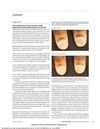
December 2015 in “JAMA Dermatology” Tofacitinib citrate improved nail dystrophy and pain in patients with alopecia universalis without causing side effects.
1 citations
,
January 1997 in “ACP journal club” This study found that terazosin, finasteride, or their combination were effective in treating symptoms of benign prostatic hyperplasia.
32 citations
,
March 2013 in “EMBO journal” This review discusses auxin's role in regulating plant growth through TOR activation and translation reinitiation but reports no new experimental findings.
 49 citations
,
August 2018 in “International Journal of Dermatology”
49 citations
,
August 2018 in “International Journal of Dermatology” In this phase I study, partial hair regrowth was observed in patients with alopecia universalis using topical JAK inhibitors, though more research is needed to confirm potential as a treatment alternative to clobetasol.