36 citations
,
February 1998 in “Journal of Anatomy” This study used fibre optic confocal imaging to visualize subsurface structures in live mouse skin, revealing cellular details and blood vessel networks that dynamic events could be studied in vivo.
April 2026 in “Case Reports in Dermatology” In this case report, a woman with Graham-Little-Piccardi-Lassueur Syndrome and hidradenitis suppurativa showed significant improvements in both conditions after six months of treatment with tofacitinib, a Janus Kinase inhibitor, with no recurrence or adverse events noted during a two-year follow-up.
 April 2018 in “Journal of Investigative Dermatology”
 In this study, topical tofacitinib significantly promoted hair regrowth in mice, outpacing both minoxidil and controls over 21 days, with findings suggesting increased VEGF levels and decreased inflammation as possible mechanisms.
 17 citations
,
December 2010 in “Journal of Investigative Dermatology”
17 citations
,
December 2010 in “Journal of Investigative Dermatology” This study found that higher levels of the protein Flii were associated with enhanced hair follicle regeneration and longer hair fibers in a mouse model.
 February 2022 in “Journal of Cosmetic Dermatology”
 This study suggests that systemic oxidative stress in female pattern hair loss may be related to NRF2 deficiency, and NRF2 activators might assist in treatment.
189 citations
,
May 1999 in “Microscopy Research and Technique” This review discusses the multifaceted roles of neurotrophins, especially nerve growth factor (NGF), in the development and function of nociceptors and reports no new clinical results.
 September 2022 in “Journal of the American Academy of Dermatology”
 This study observed that tofacitinib therapy over about 16 weeks had a positive effect in children with alopecia areata, reducing the SALT index significantly in some patients.
 26 citations
,
March 2014 in “Rheumatology”
26 citations
,
March 2014 in “Rheumatology” This study confirms an association between TNF-α antagonist exposure and alopecia, indicating a class effect among the medications examined.
January 2016 in “DSpace - FIRAT (Fırat University)”  45 citations
,
October 2009 in “Dermatology”
45 citations
,
October 2009 in “Dermatology” This study observed that long-term recombinant interferon alpha-2b therapy was associated with considerable hair loss in some patients, indicated by a telogen effluvium pattern on trichograms.
 23 citations
,
September 2017 in “The journal of investigative dermatology/Journal of investigative dermatology”
23 citations
,
September 2017 in “The journal of investigative dermatology/Journal of investigative dermatology” In this mouse study, NF-κB was shown to play a role in hair follicle cycling and morphogenesis, with specific activity patterns differing by hair type and involving noncanonical signaling for zigzag hair bending.
4 citations
,
February 2008 in “Cell stem cell” NFATc1 is crucial for keeping hair follicle stem cells inactive.
 April 2025 in “International Journal of General Medicine”
 This study found that among COVID-19 patients, a higher presence of the G allele in the IFITM3 rs12252 polymorphism correlates with increased inflammatory markers and disease severity, noting higher ESR, CRP, Fibrinogen, LDH, and D-dimer levels in severe cases compared to mild ones.
28 citations
,
January 2009 in “Cellular & Molecular Biology Letters” This study concluded that finasteride-induced DHT deficiency intensified constitutive iNOS expression in rat testicular and epididymal cells, suggesting a complex regulatory relationship needing further investigation.
December 2022 in “Zenodo (CERN European Organization for Nuclear Research)” In this report, a 14-year-old female with stubborn alopecia areata was successfully treated with oral tofacitinib, indicating its potential effectiveness for severe cases.
21 citations
,
January 1999 in “Molecular and Cellular Biochemistry” Niacin deficiency makes rats more sensitive to cancer-causing chemicals.
October 2024 in “Journal of Pakistan Association of Dermatologists” This study reports that a 21-year-old male with alopecia totalis responded positively to the JAK inhibitor tofacitinib, achieving complete hair regrowth after six months of treatment without significant side effects, though further research is needed to evaluate long-term efficacy.
 1 citations
,
July 2016 in “Livestock science”
1 citations
,
July 2016 in “Livestock science” This study suggests that nerve growth factor may support hair follicle growth in Liaoning cashmere goats through pathways involving its receptor, TrkA, particularly during the anagen phase.
 11 citations
,
September 2011 in “Biochemical journal”
11 citations
,
September 2011 in “Biochemical journal” This study found that neurotrophin-4 regulates Cav3.2 T-current expression in D-hair neurons via TrkB receptor activation, highlighting its role in mechanosensitive function.
 7 citations
,
March 2021 in “Journal of the American Academy of Dermatology”
7 citations
,
March 2021 in “Journal of the American Academy of Dermatology” This study observed that some children and young adults with alopecia areata experienced flares during long-term tofacitinib treatment, despite initial successful hair regrowth.
 32 citations
,
April 2006 in “The Journal of Urology”
32 citations
,
April 2006 in “The Journal of Urology” Using finasteride with TIP extends time off period for prostate cancer patients.
1 citations
,
August 2025 in “Australasian Journal of Dermatology” This case series highlights that anti-TNF agents, though beneficial for autoimmune conditions, can cause a rare adverse reaction of psoriasiform alopecia areata, stressing the importance of specific histopathological features for accurate diagnosis and better management to avoid unnecessary drug discontinuation.
 15 citations
,
November 2020 in “Pharmaceutics”
15 citations
,
November 2020 in “Pharmaceutics” In this ex vivo and mouse model study, Tofacitinib-loaded nanoparticles demonstrated enhanced delivery of the drug into hair follicles and reduced inflammatory effects compared to conventional forms, indicating potential for safer, topical use in treating alopecia areata.
 70 citations
,
April 2016 in “Experimental Dermatology”
70 citations
,
April 2016 in “Experimental Dermatology” In this study, oral tofacitinib treatment led to significant hair regrowth and changes in skin and blood biomarkers in a patient with alopecia areata.
 41 citations
,
December 2015 in “JAMA Dermatology”
41 citations
,
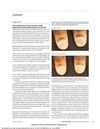
December 2015 in “JAMA Dermatology” Tofacitinib citrate improved nail dystrophy and pain in patients with alopecia universalis without causing side effects.
 1 citations
,
August 2018 in “bioRxiv (Cold Spring Harbor Laboratory)”
1 citations
,
August 2018 in “bioRxiv (Cold Spring Harbor Laboratory)” This study reports that a novel gain-of-function mutation in TMEM173, combined with polymorphisms in TMEM173 and IFIH1, results in a distinct clinical phenotype with features of SAVI, including alopecia and photosensitivity.
 August 2018 in “Journal of the American Academy of Dermatology”
 Tofacitinib is a potential alternative treatment for alopecia totalis, especially in patients with a shorter duration of the condition and more preserved hair follicles, but the overall response rate is low.
 3 citations
,
May 2018 in “Biochemical and Biophysical Research Communications”
3 citations
,
May 2018 in “Biochemical and Biophysical Research Communications” In this study, researchers found that inhibiting inducible nitric oxide synthase (iNOS) promoted hair growth in diabetic mice, suggesting iNOS-derived nitric oxide contributes to hair loss under diabetic inflammatory conditions.
December 2024 in “European journal of medical research” This study suggests that the NCSTN knockout mouse could serve as an HS animal model, with tamoxifen potentially used for gene deletion in mice.
September 2025 in “Development” In this study, deleting the transcriptional pause factor Nelfb in mouse preadipocyte lineages led to defective dermal fat formation and lethal outcomes, while interventions targeting Pparg could rescue adipocyte differentiation and promote dermal white adipose tissue formation, underscoring Nelfb's critical role in adipogenesis.