 21 citations
,
January 2021 in “Therapeutic Advances in Endocrinology and Metabolism”
21 citations
,
January 2021 in “Therapeutic Advances in Endocrinology and Metabolism” The researchers suggest that testosterone levels might influence COVID-19 susceptibility and severity, with low levels potentially protecting against infection but possibly worsening severe disease due to cytokine storm activation.
18 citations
,
June 2021 in “Endocrinology” This review discusses the link between androgen receptor action and TMPRSS2 expression in severe COVID-19, exploring the potential of anti-androgens to mitigate disease severity in men and notes ongoing trials.
 17 citations
,
May 2021 in “Journal of Assisted Reproduction and Genetics”
17 citations
,
May 2021 in “Journal of Assisted Reproduction and Genetics” This study reviews the mechanisms by which SARS-CoV-2 may impact male fertility, noting potential disruptions in spermatogenesis and hormone secretion, and underscores the need for follow-up in recovered men.
 15 citations
,
April 2022 in “Immunology”
15 citations
,
April 2022 in “Immunology” This review discusses sex differences in immune responses to COVID-19 and highlights that males tend to experience more severe symptoms and higher mortality but reports no new clinical findings.
 15 citations
,
December 2020 in “Pharmacology Research & Perspectives”
15 citations
,
December 2020 in “Pharmacology Research & Perspectives” This review discusses targeting host cell proteases as a novel approach to inhibit SARS-CoV-2 infection, highlighting transcriptional modulation and enzymatic inhibition as promising therapeutic strategies, but it reports no new clinical findings.
 14 citations
,
July 2021 in “Reviews in endocrine and metabolic disorders”
14 citations
,
July 2021 in “Reviews in endocrine and metabolic disorders” This study explores how SARS-CoV-2 interacts with endocrine organs and highlights specific endocrine molecules that help explain the progression and outcomes of COVID-19, especially in patients with certain metabolic conditions.
 12 citations
,
August 2020 in “Annals of Oncology”
12 citations
,
August 2020 in “Annals of Oncology” This study found that androgen deprivation therapy in prostate cancer patients was associated with fewer SARS-CoV-2 infections but did not reduce COVID-19 disease severity or hospitalizations.
 12 citations
,
January 2020 in “touchREVIEWS in Endocrinology”
12 citations
,
January 2020 in “touchREVIEWS in Endocrinology” Testosterone may both worsen and protect against COVID-19 effects in men.
 8 citations
,
January 2022 in “Infectious diseases News Opinions Training”
8 citations
,
January 2022 in “Infectious diseases News Opinions Training” This review discusses gene polymorphisms in COVID-19 patients but reports no new clinical findings.
 6 citations
,
September 2020 in “Journal of The American Academy of Dermatology”
6 citations
,
September 2020 in “Journal of The American Academy of Dermatology” This letter discusses how severe baldness in men is associated with higher risk of severe COVID-19, and highlights research suggesting antiandrogen medications may improve outcomes.
5 citations
,
December 2022 in “Viruses” This review highlights recent insights into using antiandrogens as preventive and therapeutic measures against COVID-19, emphasizing their role in blocking viral infection by modulating androgen-mediated host protease TMPRSS2 and cell entry protein ACE2, with varying success in clinical trials.
2 citations
,
October 2020 in “Annals of Oncology” Androgen deprivation therapy might help prevent severe COVID-19, but more research is needed.
 2 citations
,
October 2020 in “Annals of Oncology”
2 citations
,
October 2020 in “Annals of Oncology” This analysis discusses the role of genetic factors, particularly male hormones and specific gene variants, in influencing sex differences and potential susceptibility to severe COVID-19 outcomes, but notes that conclusive evidence is lacking, highlighting the need for larger studies.
 1 citations
,
September 2020 in “Journal of the Endocrine Society”
1 citations
,
September 2020 in “Journal of the Endocrine Society” Men have worse COVID-19 outcomes than women due to genetic and hormonal differences.
 1 citations
,
June 2020 in “Dermatologic Therapy”
1 citations
,
June 2020 in “Dermatologic Therapy” COVID-19 can cause various skin issues, including rashes and 'COVID toes', and may worsen autoimmune diseases or affect men with baldness more severely.
 November 2025 in “Scientific Reports”
 In this study, researchers linked SARS-CoV-2 infection to telogen effluvium in some COVID-19 patients by observing the accumulation of viral proteins in hair follicle cells, which may trigger stress responses and cell death, suggesting hair follicles as a potential target in COVID-19.

This review discusses recent research on how sex hormones influence COVID-19 progression by affecting viral receptors, immune responses, and disease complications, and explores potential therapeutic uses based on clinical and assay studies.
July 2023 in “International Journal of Molecular Sciences” In this study, Trapa bispinosa Roxb. pericarp extract demonstrated inhibitory effects on 5α-reductase activity both in vitro using LNCaP cells and in vivo in a mouse model of benign prostatic hyperplasia, suggesting its potential role in managing the condition.
 June 2023 in “SPIRE - Sciences Po Institutional REpository”
 This study suggests that extracellular vesicles from prostate cancer cells could aid in identifying tumor heterogeneity and serve as biomarkers, while also playing a role in SARS-CoV-2 infection in nasopharyngeal mucus.
 January 2023 in “Health Sciences”
 The authors concluded that while increased androgens in men may link androgenetic alopecia with severe COVID-19, further research on a larger population is needed to verify this association.
 December 2022 in “International Journal of Biomedicine”
 This review discusses the potential role of androgens in COVID-19's pathophysiology and their possible link to hair disorders, but reports no new clinical results.

This review summarizes the latest updates on using antiandrogens as potential prophylactic and therapeutic options for COVID-19, highlighting that androgen-mediated regulation of factors like TMPRSS2 and ACE2 is involved in SARS-CoV-2 infection, suggesting a strategy to block viral entry into cells.
 April 2022 in “Brazilian Medical Students”
 This review synthesizes existing evidence on the link between androgenic alopecia and severe COVID-19 outcomes, noting a potential role for anti-androgenic therapies in treating SARS-CoV-2 infections.
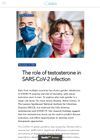 November 2021 in “Research Outreach”
 Low testosterone levels may lead to more severe COVID-19 outcomes.
 October 2020 in “Проблемы эндокринологии”
 This review discusses the potential roles of androgens and antiandrogens in COVID-19 outcomes, noting unresolved questions about their effectiveness and safety for treatment.
 January 2021 in “International Journal of Dermatology”
 This correspondence explores potential links between SARS-CoV-2 and androgenic alopecia, reporting no new clinical findings and suggesting a need for further investigative studies.
 4 citations
,
April 2021 in “Experimental and Molecular Medicine”
4 citations
,
April 2021 in “Experimental and Molecular Medicine” This review examines host factors like ACE2 and TMPRSS2 in SARS-CoV-2 infection, exploring how genetic variants and advanced cellular analyses might clarify COVID-19's severity and heterogeneity; it reports no new results.
 38 citations
,
September 2021 in “Signal Transduction and Targeted Therapy”
38 citations
,
September 2021 in “Signal Transduction and Targeted Therapy” This review discusses genetic factors contributing to susceptibility and outcomes in COVID-19, including ACE, ACE2, TMPRSS2 variants, HLA genotype, and ABO blood group, but reports no new experimental results.
6 citations
,
December 2022 in “Journal of Infection” In this study, the ACE1 rs1799752 polymorphism was not found to predispose COVID-19 survivors to long-COVID symptoms, supporting previous findings that ACE2 and TMPRSS2 variants also do not influence post-COVID conditions.
 27 citations
,
November 2021 in “Scientific Reports”
27 citations
,
November 2021 in “Scientific Reports” This study used bioinformatics to explore molecular differences in testicular and ovarian responses to SARS-CoV-2, identifying genes that could be associated with sex differences in infection outcomes.