2 citations
,
June 2025 in “Preprints.org” This review highlights the potential of amphiregulin as a therapeutic target, noting its role in both fibrotic and malignant diseases, and discusses promising early findings but reports no new clinical results.
2 citations
,
November 2024 in “JAAD reviews.” This review reported that certain systemic drugs, including antiepileptics and anticancer drugs, can lead to changes in hair pigmentation, such as hypopigmentation or hyperpigmentation, with varied prevalence and clinical characteristics.
2 citations
,
May 2024 in “Australasian Journal of Dermatology” Early diagnosis, innovative treatments, and considering systemic conditions are crucial in dermatological care.
2 citations
,
December 2023 in “Pharmaceutics” This review highlights that direct drug delivery to the lungs for treating lung cancer may offer more precise targeting while reducing side effects compared to traditional methods.
2 citations
,
February 2021 in “Indian Dermatology Online Journal” This case report describes the first instance of classical lichen planopilaris with atrophic lichenoid plaques developing in a Blaschko-linear pattern due to imatinib treatment in a patient with chronic myeloid leukemia.
1 citations
,
January 2026 in “Science Advances” This study developed a 3D bioprinted skin model to mimic pemphigus vulgaris, providing a tool to study disease mechanisms and test targeted therapies by reproducing the architecture and pathogenic disruptions of native skin.
1 citations
,
October 2025 in “International Journal of Molecular Sciences” This narrative review highlights the potential of naturally occurring compounds to target specific molecular pathways and overcome resistance in advanced and recurrent papillary thyroid cancer, offering new therapeutic possibilities beyond traditional treatments like surgery and lifelong hormone replacement.

This case study documents a 55-year-old male with advanced NSCLC who experienced toe-predominant paronychia and a papulopustular rash following dacomitinib treatment, with the causality tools indicating a "probable" link, yet the therapy continued successfully without dosage alteration.
May 2025 in “Dermatology Online Journal” This report describes a rare case of eyelash overgrowth and eyelid irritation in a woman treated with erlotinib for lung adenocarcinoma, highlighting a potential side effect of the drug.
 March 2024 in “BMC cancer”
 This study reports that high expression of proteins ST14 and TMEFF1 in ovarian cancer correlates with higher tumor malignancy and worse prognosis, and reveals an interaction where ST14 regulates TMEFF1 to promote cancer cell proliferation, migration, and invasion.
 December 2025 in “TURKDERM”
 This article discusses Trikostazis spinuloza (TS), a dermatological condition often misdiagnosed, and reviews its demographic, clinical, and dermoscopic features, but reports no new clinical results.
37 citations
,
November 2007 in “Journal of Biological Chemistry” This study found that increased intracellular expression of thymosin β4 is necessary and sufficient to induce PAI-1 gene expression in endothelial cells, potentially mediated through Ku80 as a novel receptor.
This study found that Tianqi trichogen promoted hair growth in tested animals, with no observed photoallergic reactions or significant skin allergies.
 October 2023 in “Jurnal Ilmu Kesehatan Hewan”
 This report describes the successful treatment of dermatophytosis due to Trychophyton spp. in a 2-month-old kitten using ketoconazole cream, fish oil, multivitamin syrup, and sulfur soap, resulting in significant improvement in the skin condition after four weeks.

In this study, researchers identified specific gene polymorphisms in Subo Merino sheep that significantly affect wool traits, suggesting these genetic markers could aid in breeding high-quality fine-wool sheep.
 73 citations
,
October 2003 in “Journal of Pharmacology and Experimental Therapeutics”
73 citations
,
October 2003 in “Journal of Pharmacology and Experimental Therapeutics” This study found that hair depigmentation in mice and humans can be a dynamic indicator of KIT inhibition by the drug SU11248, correlating with treatment periods.
August 2019 in “Wiedza Medyczna” This article discusses the importance of differential diagnosis and adequate treatment for tinea capitis, a common scalp infection in children, and reports no new results.
 2 citations
,
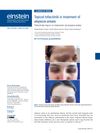
January 2020 in “Einstein (São Paulo)”
2 citations
,
January 2020 in “Einstein (São Paulo)” This review discusses the potential of Janus kinase inhibitors as a promising new treatment for alopecia areata, suggesting they could become a first-line therapy in the future, but reports no new clinical results.
July 2025 in “International Journal of Trichology” This study reported six pediatric cases of temporal triangular alopecia and highlighted the use of trichoscopy to distinguish it by detecting a distinctive carpet of vellus hair, helping to differentiate TTA from other hair loss conditions.
15 citations
,
May 2014 in “Journal of Biological Chemistry” In this study, targeting the expression of a keratin KRT5/KRT8 chimeric cDNA in keratin-deficient mice partially restored structural defects in epidermal cells, but did not fully normalize skin health.
18 citations
,
January 2024 in “Regenerative Biomaterials” This study developed and tested a new injectable hydrogel for chronic diabetic wounds, reporting significant improvements in wound healing through enhanced angiogenesis, epithelization, and reduction of inflammation and infection in animal models.
30 citations
,
August 2008 in “The journal of investigative dermatology/Journal of investigative dermatology” This study suggests that TGase 3 may contribute to hair fiber scaffolding by forming specific isopeptide bonds between keratin intermediate filaments and keratin-associated proteins.
 24 citations
,
April 2017 in “Oncology Reports”
24 citations
,
April 2017 in “Oncology Reports” In this study, full-size KRT81 was expressed in both normal breast epithelial and breast cancer cells, and contributed to the migration and invasion abilities of breast cancer cells.
91 citations
,
December 2000 in “The journal of cell biology/The Journal of cell biology” This study reports that expressed mouse type Ia and type IIa trichocyte keratins were successfully assembled into intermediate filaments in vitro, while also suggesting that disulfide bond cross linking enhances their stability.
13 citations
,
July 1994 in “PubMed” This study found that TPA treatment induced expression of keratins K6 and K16 in mouse epidermis, with K6 expressed across all cell layers and K16 only in post-mitotic cells.
January 2011 in “Anhui nongye kexue” This study reports that the recombinant expression vector pcDNA3.1-KK demonstrates specific expression in the skin of newborn mice.
33 citations
,
December 2005 in “British Journal of Clinical Pharmacology” This study found that the Transdermal Delivery System efficiently delivers testosterone systemically and showed bioequivalent hormone concentrations to a known topical gel in healthy males.
1 citations
,
December 2016 This review discusses the approved uses and adverse reactions of JAK inhibitors, noting their importance in treating various conditions but highlighting significant hematological and immunological risks.
January 2014 in “Max Planck Digital Library” This research describes mouse models to explore Kindlin-1's role in skin disorders, including Kindler syndrome, revealing novel integrin-independent pathways potentially leading to skin tumors.
54 citations
,
June 2008 in “Planta Medica” This study found that hinokitiol effectively suppressed TNF-α production in activated macrophage-like cells, suggesting it may help alleviate hair loss by mitigating factors that promote follicular apoptosis.