2 citations
,
January 2018 in “International Journal of Trichology” This case report describes trichothiodystrophy in two sisters with only hair fragility, illustrating the condition's variable presentation and the importance of regular monitoring for potential associated impairments.
 1 citations
,
January 2017 in “Social Science Research Network”
1 citations
,
January 2017 in “Social Science Research Network” This paper suggests that to better protect traditional and indigenous knowledge, TKDL should expand its database or establish a separate confidential resource for indigenous, tribal, and nomadic communities.
 73 citations
,
October 2003 in “Journal of Pharmacology and Experimental Therapeutics”
73 citations
,
October 2003 in “Journal of Pharmacology and Experimental Therapeutics” This study found that hair depigmentation in mice and humans can be a dynamic indicator of KIT inhibition by the drug SU11248, correlating with treatment periods.
13 citations
,
July 1994 in “PubMed” This study found that TPA treatment induced expression of keratins K6 and K16 in mouse epidermis, with K6 expressed across all cell layers and K16 only in post-mitotic cells.
 32 citations
,
April 2006 in “The Journal of Urology”
32 citations
,
April 2006 in “The Journal of Urology” Using finasteride with TIP extends time off period for prostate cancer patients.
215 citations
,
November 2000 in “Journal of Investigative Dermatology” This study found that the tetracycline-regulated transcription system effectively controls conditional gene expression in the mouse epidermis, allowing suppression and activation of specific genes with doxycycline.
 7 citations
,
March 2012 in “Journal of Investigative Dermatology”
7 citations
,
March 2012 in “Journal of Investigative Dermatology” This study presents evidence that specific thymus-derived peptides affect human hair follicle growth, identifying thymulin as a potential hair growth stimulator despite interindividual response variations.
 November 2025 in “Zenodo (CERN European Organization for Nuclear Research)”
 This review highlights Croton tiglium's dual therapeutic and toxic properties, noting its potential for hair growth promotion through PKC-mediated pathways, while emphasizing the challenges posed by its toxicity for safe clinical use.
 6 citations
,
November 2023 in “Clinical Pharmacokinetics”
6 citations
,
November 2023 in “Clinical Pharmacokinetics” This research discusses the parallel clinical development of ritlecitinib, an oral Janus kinase 3/tyrosine kinase inhibitor, for treating conditions such as alopecia areata, vitiligo, ulcerative colitis, Crohn's disease, and rheumatoid arthritis. Results are not reported in the abstract.
 1 citations
,
February 2022 in “Clinical, Cosmetic and Investigational Dermatology”
1 citations
,
February 2022 in “Clinical, Cosmetic and Investigational Dermatology” In this study, researchers found that the thyroxine receptor agonist TDM10842 accelerated the onset of anagen, a hair growth phase, in C3H mice, potentially through activation of the Wnt/beta-catenin and Hedgehog pathways, with Pclaf playing a key role in this process.
 18 citations
,
February 2019 in “Scientific Reports”
18 citations
,
February 2019 in “Scientific Reports” This study found that TSA restored the hair-inductive capacity of skin-derived precursors in mice by enhancing BMP gene expression and signaling through histone acetylation.
 August 2024 in “Advanced Healthcare Materials”
 In this study, water-soluble recombinant keratins, specifically RK81, were developed and used in microneedles to investigate their effect on hair growth, discovering that more than 40% of the hair follicles responded, demonstrating the potential for hair growth promotion.
1 citations
,
January 2008  February 2026 in “Oncology Reviews”
 This review highlights the promising clinical outcomes of sacituzumab tirumotecan (sac-TMT), an antibody-drug conjugate for breast cancer that targets TROP2, demonstrating improved response rates and progression-free survival, with manageable safety concerns including primarily mild-to-moderate nausea and alopecia.
November 2025 in “Journal of Investigative Dermatology” Ritlecitinib effectively treats severe Alopecia Areata by reducing harmful immune activity in the skin.
227 citations
,
April 2023 in “The Lancet” Ritlecitinib effectively treats alopecia areata and is well-tolerated.
 5 citations
,
February 2010 in “Drug development and industrial pharmacy”
5 citations
,
February 2010 in “Drug development and industrial pharmacy” This study found that vesicles formed with behenyltrimethylammonium chloride, stearic acid, and hinokitiol significantly improved skin permeation of hinokitiol in vitro, which may aid in hair growth promotion.
 March 2023 in “JIIS (Jurnal Ilmiah Ibnu Sina): ilmu farmasi dan kesehatan”
 This study concluded that the optimum biotin microemulsion hair tonic composition involves span 80 (20%), tween 80 (9.47%), and PEG 400 (5%), providing favorable viscosity and globule size.
5 citations
,
February 2025 in “Pediatric Dermatology” In this study, ritlecitinib was generally well tolerated in pediatric alopecia areata patients aged 6 to <12 years, with no severe or serious adverse events reported, and the drug's pharmacokinetic parameters were successfully characterized.
 November 2025 in “Zenodo (CERN European Organization for Nuclear Research)”
 This review consolidates evidence on Croton tiglium's bioactive compounds and effects, discussing its potential uses in treatments like hair-growth formulations, yet emphasizes the significant safety challenges due to the plant's inherent toxicity.
January 2014 in “Max Planck Digital Library” This research describes mouse models to explore Kindlin-1's role in skin disorders, including Kindler syndrome, revealing novel integrin-independent pathways potentially leading to skin tumors.
 24 citations
,
April 2017 in “Oncology Reports”
24 citations
,
April 2017 in “Oncology Reports” In this study, full-size KRT81 was expressed in both normal breast epithelial and breast cancer cells, and contributed to the migration and invasion abilities of breast cancer cells.
![Discovery of 7-Methoxy-6-[4-(4-Methyl-1,3-Thiazol-2-yl)-1H-Imidazol-5-yl]-1,3-Benzothiazole (TASP0382088): A Potent and Selective Transforming Growth Factor-β Type I Receptor Inhibitor as a Topical Drug for Alopecia](/images/assets/9620bd26-3366-4f2a-bcac-f511697bbc41/small/35997.jpg) 6 citations
,
January 2013 in “Chemical & pharmaceutical bulletin/Chemical and pharmaceutical bulletin”
6 citations
,
January 2013 in “Chemical & pharmaceutical bulletin/Chemical and pharmaceutical bulletin” In this study, TASP0382088 showed potent selective inhibition of the ALK5 receptor, significantly reducing Smad2 phosphorylation in mouse skin following topical application.
 2 citations
,
April 2019 in “Dermatologic Therapy”
2 citations
,
April 2019 in “Dermatologic Therapy” A patient with alopecia had hair regrowth with tofacitinib but developed a skin reaction, choosing to continue the treatment despite the side effect.
 1 citations
,
September 2024 in “Indian Journal of Postgraduate Dermatology”
1 citations
,
September 2024 in “Indian Journal of Postgraduate Dermatology” In this report, trichoscopy was highlighted as a valuable tool for diagnosing temporal triangular alopecia in children due to its ability to reveal distinctive patterns that differentiate it from similar conditions like alopecia areata, eliminating the need for invasive biopsy.
June 2020 in “Dermatologic therapy” Using Janus kinase inhibitors (JAKi) in COVID-19 treatment requires careful consideration due to their immunosuppressive effects.
15 citations
,
October 2014 in “The journal of investigative dermatology/Journal of investigative dermatology” This study suggests that erlotinib exacerbates inflammation in a mouse model of skin disease and that IL-1 inhibition could mitigate skin-related side effects of EGFR inhibitors.
April 2020 in “The FASEB journal” In in-vitro experiments, this study found that poncirin showed higher inhibitory activity against JAK3 than tofacitinib, suggesting potential for alopecia areata treatment.
18 citations
,
January 2024 in “Regenerative Biomaterials” This study developed and tested a new injectable hydrogel for chronic diabetic wounds, reporting significant improvements in wound healing through enhanced angiogenesis, epithelization, and reduction of inflammation and infection in animal models.
 6 citations
,
October 2012 in “Journal of Heredity”
6 citations
,
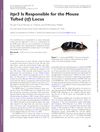
October 2012 in “Journal of Heredity” This study identified the Itpr3 gene as responsible for the tufted hair loss phenotype in the BTBR mouse strain.