 January 2024 in “Inflammation and regeneration”
 This study identified Th22 cells as key effectors in hair regeneration driven by thymosin beta 15, suggesting they could be potential targets for hair regrowth therapies.
 October 2022 in “The American journal of gastroenterology”
 This case report details a patient with myasthenia gravis and a malignant thymoma whose rising liver function tests, initially thought to be related to antibiotic use, were ultimately attributed to thymoma-associated multiorgan autoimmunity.
11 citations
,
January 1973 in “BMJ” This study reported that cortisone, testosterone, and thyroxine replacement therapy increased energy and hair growth, while decreasing cold sensitivity, in the absence of tumor recurrence.
 April 2023 in “The journal of investigative dermatology/Journal of investigative dermatology”
 This study suggests that targeting skin-infiltrated memory phenotype T cells could offer a new therapeutic approach to manage lymphopenia-related diseases like graft-versus-host disease and immune reconstitution inflammatory syndrome.
January 2000 in “Linchuang pifuke zazhi” This case report describes a 58-year-old man with pretibial myxedema and hyperthyroidism, highlighting his cardiac symptoms, exophthalmos, weight loss, and specific dermatological findings over the last four years.
 1 citations
,
May 2006 in “Thyroid Research and Practice”
1 citations
,
May 2006 in “Thyroid Research and Practice” In this study, 56% of patients with hypothyroidism had dry, coarse skin, while weight gain and lethargy were also common complaints.
 1 citations
,
January 2010 in “Türkiye klinikleri tıp bilimleri dergisi”
1 citations
,
January 2010 in “Türkiye klinikleri tıp bilimleri dergisi” This case report describes a man with metastatic thymoma and diffuse pleural dissemination mimicking malignant mesothelioma, who also had alopecia areata without the presence of myasthenia gravis.
April 2023 in “Zenodo (CERN European Organization for Nuclear Research)” In this report, a 35-year-old patient with beta thalassemia experienced thyroid dysfunction following repeated blood transfusions, highlighting that such disorders are common among transfused thalassemia patients.
July 2025 in “Journal of Investigative Dermatology” Androgens reduce THY1 in skin cells, leading to less fat, more fibrosis, and worse healing in males.
1 citations
,
October 2024 in “Journal of the Endocrine Society” In this case report, researchers observed that the monoclonal antibody bevacizumab may worsen hypothyroidism in patients, as seen in a 60-year-old woman with metastatic duodenal carcinoma. The authors suggest that thyroid function should be monitored when using VEGF inhibitor therapies due to potential adverse effects.
2 citations
,
June 2023 in “Clinical and Experimental Neuroimmunology” In this case study, the coexistence of thymoma-associated myasthenia gravis, alopecia areata, and twenty-nail dystrophy in a patient is reported, suggesting thymoma may increase the risk of developing these conditions.
January 2004 in “Laboratory Animal Science and Administration” This study found that the hairless mutant gene in C 57BL/6 mice affects the hair follicle cycle and leads to early thymus degeneration and distinct skin changes.
27 citations
,
November 2000 in “Journal of Veterinary Medicine Series B” This study found that experimentally induced iodine deficiency in growing male lambs led to hypothyroidism, resulting in stunted growth, reduced wool production, and disrupted sexual maturity.
December 2014 in “Journal of Biomedical Research” In a mouse model of peripheral vascular disease, this study found that recombinant thymosin β4 treatment increased expression levels of certain proteins, promoting angiogenesis.
 April 2023 in “World Journal of Advanced Research and Reviews”
 This case report describes common thyroid disorders in a β-thalassemia patient with frequent blood transfusions, emphasizing the need for monitoring thyroid function in such patients.
 2 citations
,
May 2018 in “Journal of The American Academy of Dermatology”
2 citations
,
May 2018 in “Journal of The American Academy of Dermatology” This study examined 15 female patients with hypothyroidism to investigate the characterization of their alopecia and ruled out other causes, using medical histories, and clinical, trichoscopic, and histologic findings.
May 2021 in “Journal of the Endocrine Society” In this case report, an established Hashimoto's thyroiditis patient converted to Graves disease, highlighting the need for regular monitoring and thyroid function tests to distinguish from potential levothyroxine over-replacement.
April 2019 in “Journal of the Endocrine Society” In this case study, the researchers reported that treating a woman with type B insulin resistance using rituximab, dexamethasone, and cyclophosphamide greatly reduced her insulin needs, but her hyperandrogenic state persisted, suggesting ovarian hyperthecosis.
July 2023 in “Indian Journal of Endocrinology and Metabolism” This case study reports that carbimazole therapy led to significant hair regrowth and a drop in thyrotropin receptor antibody levels in an 11-year-old girl diagnosed with alopecia areata and Graves' disease.
13 citations
,
January 2021 in “Journal of Cellular and Molecular Medicine” This review discusses the roles and mechanisms of thymosin β4 in hair follicle growth and development but reports no new experimental findings; the authors emphasize the need for further research on its molecular pathways.
13 citations
,
January 2014 in “Journal of Veterinary Internal Medicine” This case study reports an instance of adult-onset primary hypothyroidism with goiter in a cat, suggesting potential causes such as dietary iodine imbalance, chronic exposure to thyrotoxic substances, or a congenital form with late manifestation.
118 citations
,
December 2003 in “Mechanisms of Ageing and Development” Thymosin β4 helps heal wounds, grow hair, and improve blood vessel formation.
May 2005 in “Cancer Research” This study found that over-expression of thymosin beta-4 in transgenic mice accelerated wound healing and hair growth, but did not affect tumor progression despite stimulating tumor metastasis.
 July 2026 in “Zenodo (CERN European Organization for Nuclear Research)”
 This case report from a pediatric setting highlighted how an 11-year-old with Hashimoto thyroiditis experienced atypical manifestations such as short stature, pubertal issues, and hair loss after starting levothyroxine therapy, underscoring the need for early diagnosis and multidisciplinary care to improve health outcomes.
December 2009 in “생명과학회지” This study found that thymosin β4 is highly expressed in multiple human tissues and may play a role in organ function and angiogenesis through co-localization with VEGF.
 3 citations
,
November 2020 in “Cleveland Clinic Journal of Medicine”
3 citations
,
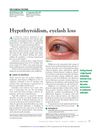
November 2020 in “Cleveland Clinic Journal of Medicine” Eyelash loss can be a sign of thyroid problems.
12 citations
,
December 2022 in “Current Protein and Peptide Science” This review discusses the molecular mechanisms and clinical applications of thymosin β4, highlighting its potential benefits for inflammation, wound healing, tumor metastasis, and other medical conditions but reports no new experimental results.
April 2020 in “Journal of the Endocrine Society” In this case report, successful management of a pituitary macroadenoma was achieved with thyroid hormone therapy, leading to reduced tumor size and improvement in symptoms like galactorrhea and headaches.
 July 2026 in “Zenodo (CERN European Organization for Nuclear Research)”
 In this case report, an 11-year-old girl with hypothyroidism was found to have Hashimoto thyroiditis after presenting with hair loss, short stature, and pubertal disturbances; the study emphasizes the importance of early diagnosis and personalized thyroid hormone therapy for better outcomes.
52 citations
,
January 2003 in “Journal of Investigative Dermatology” This study found that thrombospondin-1 plays a critical role in hair follicle cycle regulation, with deficiency prolonging follicle growth and overexpression delaying it through antiangiogenic effects.