 10 citations
,
September 1997 in “Molecular carcinogenesis”
10 citations
,
September 1997 in “Molecular carcinogenesis” This study found that mirex and TPA promote papilloma formation in CD-1 mouse skin through distinct populations of mutant Ha-ras cells, resulting in additive tumor yields.
 9 citations
,
March 1989 in “The BMJ”
9 citations
,
March 1989 in “The BMJ” Adding diltiazem to a beta blocker can cause dangerously slow heart rates.
 5 citations
,
September 2015 in “Nepalese journal of ophthalmology”
5 citations
,
September 2015 in “Nepalese journal of ophthalmology” This case report highlights an 11-year-old girl with dermatopathia pigmentosa reticularis, identifying associated Salzmann's nodular degeneration of the cornea and emphasizing the need for a multidisciplinary management approach.
 5 citations
,
January 2010 in “International journal of trichology”
5 citations
,
January 2010 in “International journal of trichology” This report describes two cases of alopecia totalis treated with turban psoralen and sunlight exposure, but it provides no clinical outcome results.
 4 citations
,
January 2014 in “RSC Advances”
4 citations
,
January 2014 in “RSC Advances” A new, less toxic and more efficient method to create the anti-baldness compound RU58841 was developed in 2014.
 4 citations
,
March 1989 in “The BMJ”
4 citations
,
March 1989 in “The BMJ” Naproxen is not the cause of hair loss in a child; it's due to a toxic event with expected hair regrowth.
 3 citations
,
December 2019 in “Journal of Cosmetic and Laser Therapy”
3 citations
,
December 2019 in “Journal of Cosmetic and Laser Therapy” This study found that plasma rich in growth factors showed promising results for increasing hair number and thickness in androgenic alopecia patients, with better outcomes after multiple injections.
 2 citations
,
September 2023 in “Curēus”
2 citations
,
September 2023 in “Curēus” This study reported that topical spironolactone improved lid margin vascularity, corneal fluorescein staining, and disease severity scores in patients with ocular graft-versus-host disease, suggesting a potential therapeutic role by enhancing corneal lipid production with minimal adverse effects.
 2 citations
,
April 2018 in “Natural Product Communications”
2 citations
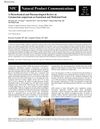
,
April 2018 in “Natural Product Communications” This review summarizes the bioactive compounds and pharmacological functions of Cynomorium songaricum Rupr., emphasizing its potential in developing health-related products, and notes that further research is needed.
 2 citations
,
January 2016 in “Skin pharmacology and physiology”
2 citations
,
January 2016 in “Skin pharmacology and physiology” This study found that seed oil of Caragana korshinskii demonstrated high antifungal efficacy against Trichophyton mentagrophytes in an in vivo guinea pig model of dermatophytosis.
 1 citations
,
June 2023 in “International Journal of Scientific Research in Science and Technology”
1 citations
,
June 2023 in “International Journal of Scientific Research in Science and Technology” The researchers highlighted the nutritional benefits of kiwifruit, noting its high vitamin C content, dietary fiber, and potassium, as well as its wealth of phytochemicals and antioxidants, which may aid immune function, digestion, and potentially reduce chronic disease risk.
 1 citations
,
August 2007 in “Indian Journal of Pediatrics”
1 citations
,
August 2007 in “Indian Journal of Pediatrics” This case report describes a 13-year-old girl with atypical symptoms leading to a delayed diagnosis of HIV infection with fatal disseminated cryptococcosis.
 1 citations
,
March 1989 in “The BMJ”
1 citations
,
March 1989 in “The BMJ” A woman's hair grew back while she was taking sulphasalazine for arthritis.
 December 2025 in “Philippine Journal of Internal Medicine”
 This case report describes a 45-year-old woman with an SLE-SSc overlap syndrome who experienced significant improvement in symptoms after tailored immunosuppressive therapy including prednisone and mycophenolate mofetil.

In this study, researchers identified an elite germplasm of the medicinal plant Eclipta alba, known for its liver disease benefits, with higher growth, yield, and wedelolactone content, suitable for large-scale cultivation to reduce strain on wild populations.
 March 2024 in “Journal of Natural Remedies”
 In this study, an 18-year-old boy with alopecia areata successfully experienced normal and healthy hair regrowth after 4 months using microneedling with cupping, alongside internal herbal medication and topical oil application, as a cost-effective and less invasive alternative to high-cost hair treatments and transplantation.
 March 2024 in “Journal of medicinal plants studies”
 This review comprehensively examines the Hibiscus rosa-sinensis plant, detailing its distribution, physical and chemical properties, bioactive compounds, ethnomedicinal uses, and potential toxicity, providing a broad understanding of its characteristics and health implications.
 November 2023 in “International journal of biology, pharmacy and allied sciences”
 This review highlights scientific information about the medicinal uses and phytochemistry of Musa paradisiaca plant parts, which are traditionally used in human medicine to treat conditions such as diabetes, diarrhoea, hypertension, and ulcers, and exhibit various pharmacological activities including antidiabetic, antioxidant, and wound healing effects.
January 2016 in “Journal of chemical and pharmaceutical research” The study reported that both ethanol and water extracts of pakis munding roots significantly promoted hair growth in male rabbits, showing better results than the marketed hair growth drug minoxidil.
 July 2024 in “Journal of Investigative Dermatology”
 Bioactive peptides improve graft survival and new hair growth.
1 citations
,
April 1936 in “Journal of Experimental Biology” This study found that injecting thymus gland extracts into albino rats significantly accelerated growth and morphological differentiation across generations, including earlier sexual maturation and development of features like hair and teeth.
 1 citations
,
February 2022 in “bioRxiv (Cold Spring Harbor Laboratory)”
1 citations
,
February 2022 in “bioRxiv (Cold Spring Harbor Laboratory)” This study found that a specific fragment of AIMP1 secreted by hair follicle stem cells can stimulate dermal papilla cells and promote hair regrowth.

This study found that Clitocybin A from Clitocybe aurantiaca significantly increased the proliferation of immortalized rat dermal papilla cells, suggesting potential hair growth-promoting effects in a laboratory setting.
September 2026 in “Apollo Medicine” In this case report, researchers observed that a 35-year-old male with alopecia universalis achieved full regrowth of scalp, eyebrow, and facial hair with oral upadacitinib treatment after previous therapies failed to provide lasting relief.
 June 2024 in “JEADV Clinical Practice”
 This study found that among placebo-treated patients in the BRAVE-AA trials, the likelihood of spontaneous hair regrowth in untreated severe alopecia areata was low, with only a small percentage achieving significant scalp, eyebrow, or eyelash hair improvement over 36 weeks.
July 2022 in “Journal of Investigative Dermatology” Arg1+ macrophages may play a role in Alopecia Areata, offering new treatment targets.
3 citations
,
September 2021 in “Bulletin of the Korean Chemical Society” In this study, dimeric peptide derivatives were shown to enhance the proliferation of human follicle dermal papilla cells in vitro, particularly promoting the ERK1/2 pathway, suggesting potential for developing peptide-based treatments for hair regeneration.
February 2026 in “Advanced Science” This study found that the combination of TTNPB and CHIR99021 enhanced the derivation of highly advanced neural stem cells from human pluripotent stem cells, with improved chromatin accessibility and neuroectodermal gene expression, and these cells successfully engrafted in rat hippocampi to ameliorate depression-like symptoms.
 8 citations
,
September 2021 in “EMBO Molecular Medicine”
8 citations
,
September 2021 in “EMBO Molecular Medicine” This study found that a 5-mer peptide called P5 promotes hair growth by activating adiponectin receptor 1, suggesting its potential use as a topical treatment for alopecia.
 555 citations
,
July 2001 in “Genes & Development”
555 citations
,
July 2001 in “Genes & Development” This study found that Tcf3 and Lef1 differently regulate cell differentiation in multipotent skin stem cells, with Tcf3 promoting follicle-like features and Lef1, when modified, promoting sebocyte differentiation.