83 citations
,
August 2018 in “BJOG” This commentary discusses the feasibility and challenges of uterine transplantation for transgender women, emphasizing anatomical, hormonal, and ethical considerations without reporting new clinical results.
 13 citations
,
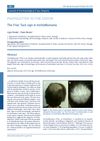
June 2012 in “Journal of Dermatological Case Reports”
13 citations
,
June 2012 in “Journal of Dermatological Case Reports” This report describes an 8-year-old male with trichotillomania, confirmed by trichoscopy showing characteristic hair damage and patterns.
 February 2024 in “Journal of medicinal food”
 This study reports that the β-catenin inhibitor tegatrabetan reduced hair growth and hair follicle numbers in mice, suggesting its potential as a model for developing new hair growth materials.
 September 2024 in “Cureus”
 This case report describes how changing treatment from adalimumab to guselkumab successfully controlled both pustulotic arthro-osteitis and paradoxical skin reactions in a patient with palmoplantar pustulosis.
33 citations
,
December 2005 in “British Journal of Clinical Pharmacology” This study found that the Transdermal Delivery System efficiently delivers testosterone systemically and showed bioequivalent hormone concentrations to a known topical gel in healthy males.
May 2009 in “OPAL (Open@LaTrobe) (La Trobe University)” In this study, a transgenic mouse model suggested that suppressing the expression of the HGPS mutation may reverse disease symptoms, including skin abnormalities, supporting the potential for treatment development.
7 citations
,
March 2004 in “Journal of the American Academy of Dermatology” Tiger tail banding and hair abnormalities are reliable indicators for diagnosing trichothiodystrophy.
1 citations
,
January 2013 This study observed that inducible deletion of the Ugcg gene in mouse epidermis led to a significant reduction in GlcCers and epidermal POS-Cers, causing impaired skin barrier function and delayed wound healing.
 14 citations
,
March 1995 in “Journal of cell science”
14 citations
,
March 1995 in “Journal of cell science” This study found that targeting SV40 T antigen expression to hair follicles in transgenic mice caused abnormal hair structure and hair loss, but did not lead to cell immortalization or tumor formation in follicles.
215 citations
,
November 2000 in “Journal of Investigative Dermatology” This study found that the tetracycline-regulated transcription system effectively controls conditional gene expression in the mouse epidermis, allowing suppression and activation of specific genes with doxycycline.
 November 2023 in “Journal of Investigative Dermatology”
 This study found that γδTregs significantly reduced autoimmune effects in humanized alopecia areata models, suggesting their potential as a novel cell-based therapeutic approach for managing the condition.
 3 citations
,
June 2002 in “Transgenic Research”
3 citations
,
June 2002 in “Transgenic Research” This study suggests that inducible transgenic mice showing hair follicle changes similar to telogen effluvium in humans might serve as a useful model for understanding this type of hair loss.
 1 citations
,
June 2021 in “bioRxiv (Cold Spring Harbor Laboratory)”
1 citations
,
June 2021 in “bioRxiv (Cold Spring Harbor Laboratory)” This study found that in wild-type Arabidopsis plants, root hair growth is suppressed with increased nutrient availability, with RHD6 subfamily genes down-regulated and GTL1 and DF1 genes influencing root hair morphology under these conditions.
 1 citations
,
March 2019 in “Hair transplant forum international”
1 citations
,
March 2019 in “Hair transplant forum international” In this study, no significant differences in cellular stress response or growth capabilities were found between FUE and FUT hair restoration techniques.
44 citations
,
March 1947 in “Endocrinology” This article reviews hair growth patterns in humans and laboratory animals, noting the random distribution of active and inactive hair follicles and differences in regional coordination among animal species, and reports no new results.
 April 2023 in “Journal of Investigative Dermatology”
 This study found that in a mouse model of Gorlin syndrome, constitutive activation of signaling in dermal cells led to abnormal follicular growth, indicating non-epidermal factors may contribute to the disease.
 November 2025 in “Indian Journal of Plastic Surgery”
 In this study, researchers found that using the FUE method, performed by surgeons instead of technicians, allows for more precise follicular unit extraction than the traditional FUT method, potentially improving outcomes and donor area utilization in hair transplantation.
 8 citations
,
July 2010 in “Aesthetic Plastic Surgery”
8 citations
,
July 2010 in “Aesthetic Plastic Surgery” The study concluded that increasing the GSH concentrations in preservation solutions for follicular units doesn't lessen the oxidative stress during cold ischemia and reperfusion in hair transplantation surgery.
 25 citations
,
April 2015 in “Journal of Investigative Dermatology”
25 citations
,
April 2015 in “Journal of Investigative Dermatology” This study found that Gsdma3 mutation in mice allows hair follicles to bypass a typical telogen phase and directly enter the anagen phase, suggesting Gsdma3's role in hair cycle transitions by regulating Wnt signaling.
 September 2024 in “Journal of the American Academy of Dermatology”
 In this study, γδTregs showed potential as a cell-based therapy for alopecia areata by preventing hair loss and promoting hair regrowth in humanized AA models.
 11 citations
,
September 2020 in “OncoTargets and Therapy”
11 citations
,
September 2020 in “OncoTargets and Therapy” This study found that testosterone may promote glioblastoma progression by being converted into dihydrotestosterone, which enhances cell proliferation, migration, and invasion in GBM cell lines.
 7 citations
,
June 2011 in “Movement Disorders”
7 citations
,
June 2011 in “Movement Disorders” A specific gene mutation is linked to a hereditary form of dystonia that responds well to certain medications.
27 citations
,
August 2021 in “Journal of Autoimmunity” This study found that human dermal γδT-cells can act as stress sentinels and potentially trigger autoimmune responses toward stressed hair follicles, resembling features of alopecia areata.
November 2022 in “Journal of Investigative Dermatology” This study found that autologous γdTregs displayed significant protective effects on alopecia areata-affected human scalp hair follicles in both ex vivo and in vivo settings, suggesting potential for future cell-based therapy.
14 citations
,
January 2014 in “Tropical Journal of Pharmaceutical Research” In this study, a hydroalcoholic extract of Urtica dioica L. showed potential for use as an adjunct topical treatment for tinea corporis in guinea pigs infected with Microsporum canis.
January 2016 in “Hair therapy & transplantation” This study found that topical Hair UpTM appeared effective and safe for treating alopecia totalis and alopecia universalis, with high rates of terminal hair regrowth and notable cosmetic acceptability, particularly among minors.
 April 2016 in “Journal of Investigative Dermatology”
 This study found that gypenosides from Gynostemma pentaphyllum increased procollagen synthesis in vitro and reduced periorbital wrinkles by about 14% in a clinical trial with 24 women.
 18 citations
,
April 2010 in “Actas Dermo-Sifiliográficas”
18 citations
,
April 2010 in “Actas Dermo-Sifiliográficas” This review discusses the current procedure for follicular unit hair transplantation, emphasizing its natural and reproducible results, but does not report new clinical findings.
 36 citations
,
October 2000 in “British Journal of Dermatology”
36 citations
,
October 2000 in “British Journal of Dermatology” This study identified a distinct gene near the hairless locus on chromosome 8p that is responsible for hereditary Marie Unna type hypotrichosis in a German family.
9 citations
,
May 2014 in “Clinical Cosmetic and Investigational Dermatology” This study suggests that combining GliSODin(®) Skin Nutrients with tazarotene cream significantly benefits facial fine wrinkles, photodamage, moisture, and elasticity compared to tazarotene alone.