 1 citations
,
March 2024 in “Brain Imaging and Stimulation”
1 citations
,
March 2024 in “Brain Imaging and Stimulation” This study reported that a 3D-printed LED photobiomodulation device is technically and financially feasible, but requires further experimental and clinical testing before being used in human healthcare.
 1 citations
,
January 2024 in “Theranostics”
1 citations
,
January 2024 in “Theranostics” This source reviews the role of exosomes in regenerative medicine, highlighting their ability to mediate cell communication and transport biomolecules to enhance or impair biological functions, with potential applications in tissue repair and regeneration.
 1 citations
,
June 2018 in “Advances in Cosmetic Surgery”
1 citations
,
June 2018 in “Advances in Cosmetic Surgery” PRP might help with hair growth and skin rejuvenation, but more research is needed to prove its effectiveness.
 1 citations
,
May 2018 in “Emergency Nurse”
1 citations
,
May 2018 in “Emergency Nurse” In this article, two case studies of hair tourniquets around digits are discussed, highlighting the condition's potential causes and management strategies, and emphasizing the role of midwives and health visitors in educating expectant mothers to minimize the risk to children.
 1 citations
,
July 2016 in “British Journal of Dermatology”
1 citations
,
July 2016 in “British Journal of Dermatology” Men with a certain type of hair loss often use facial moisturizers, and a specific antibiotic treatment may help another hair condition.
 1 citations
,
January 2016 in “Elsevier eBooks”
1 citations
,
January 2016 in “Elsevier eBooks” This chapter discusses the composition, biocompatibility, and production methods of biomaterials like collagen, chitin, and silk for dermal substitutes, focusing on preclinical and clinical research, but reports no new clinical results.
 1 citations
,
October 2010 in “Series in cosmetic and laser therapy”
1 citations
,
October 2010 in “Series in cosmetic and laser therapy” Mesotherapy is a minimally invasive treatment with potential benefits and risks, requiring standardized practices and further investigation.
 1 citations
,
January 2010 in “Springer eBooks”
1 citations
,
January 2010 in “Springer eBooks” Certain micronutrients may improve hair and nail health, but more research is needed to confirm their benefits.
 1 citations
,
January 2010 in “Elsevier eBooks”
1 citations
,
January 2010 in “Elsevier eBooks” The document concludes that local flaps are effective for reconstructive surgery in the head and neck, offering good skin match and function.
 June 2026 in “International Journal of Bioprinting”
 This review found that 3D bioprinting significantly advances skin tissue engineering by enabling the creation of complex, patient-specific skin structures, though technological and regulatory challenges persist, particularly in areas like scalability and physiological mimicry.
 June 2026 in “Frontiers in Immunology”
 This review synthesizes both traditional and emerging molecular mechanisms of tissue remodeling across different organs, aiming to establish a theoretical basis for precision interventions in pathological conditions, according to the authors.
 May 2026 in “Frontiers in Cell and Developmental Biology”
 In this study, researchers suggest that hair follicle miniaturization in conditions like androgenetic alopecia may result from impaired conversion of quiescent stem cells to progenitor cells, influenced by the follicular niche, its collagen network, and various mechanical constraints.
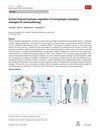
This review highlights that surface mechanical regulation can program macrophage behavior through specific mechanical cues on material surfaces, potentially advancing immunotherapies and regenerative medicine by enabling precise control over macrophage functions.
 February 2026 in “Plastic and Aesthetic Research”
 This narrative review examines advancements in regenerative aesthetic medicine, focusing on injectable modalities like PRP, polynucleotides, and exosomes, but highlights the need for more robust evidence and standardization in clinical applications.
 February 2026 in “Clinical Cosmetic and Investigational Dermatology”
 This study found that mice exposed to low humidity showed altered epidermal gene expression, which was modulated by topical emollient application; this suggests emollients may help manage dry skin in low-humidity environments by affecting specific gene pathways.
 January 2026 in “International Journal of Applied Pharmaceutics”
 This review discusses the integration of nanoparticles with microneedles to improve drug delivery through enhanced stability, bioavailability, and controlled release, noting ongoing challenges with stability, scalability, and safety.
 December 2025 in “Eastern Ukrainian Medical Journal”
 This study reviews current methods for making and using platelet-rich plasma and fibrin, emphasizing the variability in clinical outcomes due to differences in preparation protocols, and calls for standardized guidelines and large-scale studies for better effectiveness in regenerative medicine.
 December 2025 in “Journal of AI”
 This study bibliometrically evaluated 5741 articles on PRP from 1980 to 2024, highlighting Türkiye's contribution and identifying prominent research areas such as orthopedics and wound healing.
 December 2025 in “The American Journal of Medical Sciences and Pharmaceutical Research”
 This study suggests that integrating barber care with medical treatment improves scalp condition and psychological well-being in early stages of hair loss, by enhancing medication efficacy and reducing stress.
 December 2025 in “Frontiers in Nutrition”
 This review suggests that although hydrolyzed collagen peptides with certain supplements may improve skin elasticity and joint function, evidence for collagen's anti-aging and regenerative benefits remains inconsistent.

In this book, the authors provide an accessible overview of platelet concentrates and their dental applications, highlighting their role in tissue healing and regeneration, and reviewing recent studies on their efficacy in periodontal therapy, implant dentistry, and oral surgery.
 November 2025 in “Quality in Sport”
 This review found that hydrolyzed collagen supplementation, particularly marine collagen, improves skin hydration, elasticity, and density while strengthening hair and nails, especially when paired with vitamin C and trace elements; however, more studies are necessary to evaluate long-term efficacy across different sources and demographics.
 October 2025 in “Frontiers in Immunology”
 This study explores the potential of platelet-rich plasma (PRP) as a novel adjuvant therapy for eczema, positing that it may alleviate inflammation, enhance skin barrier function, and reduce recurrence.

This review reports that empirical evidence suggests an overlap between Long Covid, chronic fatigue syndrome, and fibromyalgia, highlighting the need for standardized definitions and rigorous methodologies in related research.

This study found that non-bleeding adverse events associated with NOACs affect multiple organ systems, emphasizing the importance of clinical vigilance. Specific NOACs like dabigatran, apixaban, edoxaban, and rivaroxaban were linked to distinct adverse reactions, including metabolic imbalances, thyroid disorders, and menstrual irregularities.

This study outlines a planned double-blind, randomized controlled trial to assess the efficacy of two different doses of PRP injections for moderate carpal tunnel syndrome, focusing on variations in symptom severity, ultrasound parameters, and nerve electrophysiology, though results are not yet reported.
 January 2025 in “Frontiers in Immunology”
 This case report details a rare instance of a young male with coexisting autoimmune polyendocrine syndrome type 2 and anti-GAD65 antibody-associated stiff person syndrome, where symptoms improved by adding intravenous immunoglobulin therapy, emphasizing the importance of awareness for early diagnosis and treatment.
 October 2024 in “International Journal of Research in Orthopaedics”
 This study found that adolescents carrying the HLA-B27 antigen who engaged in intense physical activity were more likely to develop ankylosing spondylitis, although not all predisposed individuals were affected, indicating other genetic and environmental factors might also play a role.
 July 2024 in “Journal of Rare Diseases”
 This review describes the genetic and phenotypic diversity of Woodhouse-Sakati syndrome, highlighting new DCAF17 gene variants and their varying clinical implications.
This literature review reports that mesenchymal stem cell-derived secretome, including conditioned medium and extracellular vesicles, shows promise as an effective treatment for various diseases in animal and human in-vivo models, with ongoing clinical trials and recommendations for future research discussed.