6 citations
,
March 2007 in “BioTechniques” This study observed that PCR-based genotyping for cre-loxP mice can lead to errors due to cre-mediated recombination in non-target tissues like tails, affecting the detection of lox alleles.
17 citations
,
May 2022 in “Cells and Development” 11 citations
,
June 2024 in “Clinical ophthalmology” This study highlights that Demodex mites, commonly found on human skin, can cause significant eye and skin issues such as blepharitis, rosacea, and dermatitis when present in abnormally high densities, underscoring the need for targeted management strategies.
87 citations
,
November 2002 in “Journal of Investigative Dermatology” 13 citations
,
July 1994 in “PubMed” This study found that TPA treatment induced expression of keratins K6 and K16 in mouse epidermis, with K6 expressed across all cell layers and K16 only in post-mitotic cells.
 3 citations
,
February 2008 in “Basic and clinical dermatology”
3 citations
,
February 2008 in “Basic and clinical dermatology” Telogen Effluvium is a hair loss condition where treatment involves identifying and managing its triggers.
August 2011 in “BIO-PROTOCOL” This protocol paper details methods for live imaging and analysis of dividing germline stem cells in C. elegans and reports no new research findings.
 51 citations
,
May 2021 in “Nature Communications”
51 citations
,
May 2021 in “Nature Communications” This study found that ablating centrosomes in developing epidermis alters keratinocyte division without majorly affecting differentiation, suggesting early epidermal development is driven by high proliferation and cell delamination.
June 2011 in “European Journal of Pediatric Dermatology” This study diagnosed an 11-year-old girl with initial androgenetic alopecia and monilethrix after observing unique hair shaft abnormalities and skin conditions, unlike her affected parents.
2 citations
,
July 2024 in “Journal of Clinical Medicine” In this study, telemedicine using trichoscopy for alopecia areata patients showed high concordance with outpatient trichoscopy in image quality and similar levels of patient satisfaction, indicating its effectiveness for follow-up and continuity of care.
2 citations
,
June 1953 in “Journal of the American Medical Association” This article explores the correlation between alopecia leprotica and Buddhist customs, presenting evidence that leprosy is contracted during infancy or childhood rather than in maturity; it reports no new clinical findings.
8 citations
,
March 2004 in “Mammalian genome” KAP genes are crucial for hair development and show both shared and unique traits in humans, chimpanzees, and baboons.
 1 citations
,
July 2020 in “bioRxiv (Cold Spring Harbor Laboratory)”
1 citations
,
July 2020 in “bioRxiv (Cold Spring Harbor Laboratory)” This study found that centrosome ablation in developing epidermis triggers cell surveillance pathways, resulting in thinner skin and halted hair follicle growth, while later stages of epidermal growth may operate independently of basal progenitor division orientation.
37 citations
,
June 2000 in “Experimental dermatology” This study investigated a spontaneous mutation in mice resulting in hair abnormalities and elevated IgE levels, which resembles human Netherton's syndrome and monilethrix.
 16 citations
,
January 2018 in “Biochemical and Biophysical Research Communications”
16 citations
,
January 2018 in “Biochemical and Biophysical Research Communications” In this study, researchers established five new immortalized human dermal papilla cell lines from a male with androgenetic alopecia, which may serve as valuable tools for hair research.
16 citations
,
January 2018 in “Advances in experimental medicine and biology” This review discusses the diversity of keratins and keratin-associated proteins in wool and hair, noting significant variation in their families, with no new results reported; the authors detail known protein structures without experimental findings.
2 citations
,
February 2025 in “Journal of Investigative Dermatology” In this study, researchers used quantitative fate mapping to investigate how the infundibulum, part of the epidermis, is maintained during adulthood, finding that progenitors maintain this tissue through stochastic cell fate choices, with cells at the bottom providing transient support during hair growth phases.

In this study, researchers observed a high degree of plasticity in somatosensory axons innervating Merkel cells in adult mouse skin, revealing that both epithelial-neural crosstalk and intrinsic neural mechanisms contribute to axonal patterning and remodeling during epithelial homeostasis.
71 citations
,
June 2005 in “Journal of Investigative Dermatology” This study demonstrates that PAD1 and PAD3 are involved in hair follicle differentiation, while PAD1 and PAD2 may play a role in the physiology of sweat glands and arrector pili muscles.
 38 citations
,
July 2019 in “Nature Communications”
38 citations
,
July 2019 in “Nature Communications” This study found that Par3 plays a crucial role in maintaining epidermal homeostasis by regulating Rho/actomyosin contractility and ensuring mitotic accuracy, with potential implications for other self-renewing epithelia.
 September 2023 in “Cutis”
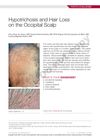
 This study presents a case of a 6-month-old infant girl with hypotrichosis and an alopecic plaque in the occipital region, characterized by broken and dystrophic hairs with follicular papules and perifollicular hyperkeratosis, suggesting a diagnostic consideration.
In this case study, treatment with terbinafine effectively resolved symptoms of tinea capitis in an eight-year-old male, highlighting trichoscopy as a valuable diagnostic tool for this common fungal scalp infection and proposing its integration with clinical data for quicker diagnosis in settings lacking mycological facilities.
October 2025 in “International Journal of Advanced Multidisciplinary Research and Studies” This study found that hairless dog breeds have adapted to maintain normal body and core temperatures through structural changes like a thicker epidermis and the role of melanin in thermoregulation, with genetic mechanisms involving the FOXI3 gene governing hairlessness.
 32 citations
,
December 2014 in “Cold Spring Harbor Perspectives in Medicine”
32 citations
,
December 2014 in “Cold Spring Harbor Perspectives in Medicine” This article reviews the role of polarity proteins in epidermal morphogenesis and homeostasis and discusses how their alteration may contribute to skin disease, but reports no new experimental findings.
 March 2021 in “bioRxiv (Cold Spring Harbor Laboratory)”
 This study found that type 2 immunity, especially involving ILC2 cells, helps maintain skin homeostasis by regulating the proliferation and community stability of hair follicle epithelial cells in the presence of Demodex mites.
September 2017 in “Journal of Investigative Dermatology” Ovol2 is essential for normal skin and hair regeneration.
March 2026 in “Adipocyte” This study identified transcription elongation as a crucial regulatory factor in adipocyte cell fate, showing that the elongation factors Spt4 and Spt6 are essential for proper adipogenic differentiation by aiding RNA polymerase II progression through key adipogenic genes.
April 2021 in “The journal of investigative dermatology/Journal of investigative dermatology” This study found that CTCF is crucial for proper skin and hair follicle development in mice, affecting keratinocyte differentiation and gene expression in keratin loci.
 April 2024 in “Indian dermatology online journal”
 This case report describes a 53-year-old woman with a rare presentation of trichostasis spinulosa on her breast and abdomen, featuring itchy, comedo-like lesions. Dermoscopy revealed diagnostic features that may eliminate the need for a biopsy, highlighting the potential for non-invasive diagnosis in such cases.
 February 1994 in “Archives of Dermatology”
 Telogen effluvium is a condition that causes temporary hair loss.