12 citations
,
May 2013 in “International Journal of Dermatology” This study found that a non-ionic ethosomal carrier system significantly improved the delivery and adsorption of black tea extracts onto hair surfaces in vitro, suggesting its potential as a hair dye and protective agent.
 116 citations
,
August 2010 in “Nature”
116 citations
,
August 2010 in “Nature” Scientists turned rat thymus cells into stem cells that can help repair skin and hair.
 March 2025 in “Journal of Science Natural Science”
 This study successfully synthesized acetyl tetrapeptide-3 on a laboratory scale with over 56% yield and 100% purity, supporting its use in developing hair loss and scalp care products.
118 citations
,
June 1993 in “Journal of Biological Chemistry” This study found that mouse and human protransglutaminase 3 enzymes require calcium-regulated activation for their role in later stages of cell envelope formation in the epidermis and hair follicle.
32 citations
,
January 2000 in “International Journal of Cancer” In this study, the researchers observed significant down-regulation of Transglutaminase-3 expression in esophageal cancer tissues compared to normal tissues, suggesting its alteration is a common event in esophageal cancer development.
 December 2024 in “Medical alphabet”
 This article reviews current knowledge about diffuse telogen effluvium, focusing on its classification, clinical features, causes, and diagnostic and treatment approaches.
7 citations
,
March 2004 in “Journal of the American Academy of Dermatology” Tiger tail banding and hair abnormalities are reliable indicators for diagnosing trichothiodystrophy.
344 citations
,
May 2018 in “EMBO journal” This review discusses the regulation of the MiT-TFE family transcription factors, particularly TFEB, through phosphorylation-mediated subcellular localization and reports no new clinical results.
October 1984 in “Immunology Today” 17 citations
,
September 2022 in “Biomaterials Research” This study found that the film-trigger applicator system enhanced drug delivery efficiency and skin penetration of dissolving microneedles compared to traditional patch systems in both lab and animal models.
 35 citations
,
September 2012 in “PloS one”
35 citations
,
September 2012 in “PloS one” This study found that in Arabidopsis seedlings, tonoplast intrinsic proteins are targeted to the vacuole via at least two pathways, including pathways with differing sensitivity to a chemical inhibitor that affect root hair growth and PIN2 targeting.
January 2007 in “동의생리병리학회지 = Journal of physiology & pathology in Korean Medicine” This study observed that extracts of Biotae Orientalis showed hair growth effects in mice and suggest they may be useful for topical treatment of alopecia areata.

This study found that green tea extract showed more effective wound healing in rabbits with direct fire burns than an antibiotic ointment, particularly improving the skin's normal appearance and recovery rate.
May 2025 in “Texas Digital Library (University of Texas)” In this study, researchers using Arabidopsis thaliana found that adenosine may inhibit root hair growth and stomatal opening, suggesting it plays a signaling role in plants similar to its function in animal cells, potentially revealing a new adenosine-like receptor pathway.
 March 2024 in “CRC Press eBooks”
 In this study, telogen effluvium is characterized as a common condition in women involving sudden hair shedding due to hair follicles prematurely entering the telogen phase, with potential triggers including fever, childbirth, and stress.
37 citations
,
December 2020 in “PLANT PHYSIOLOGY” In this study, the researchers identified a temperature-sensitive mutant in Arabidopsis thaliana, showing disrupted root hair formation and altered responses to plant hormone treatments at elevated temperatures.
 April 2016 in “Journal of Investigative Dermatology”
 This study found that administering botulinum toxin A via Flex-PADs to mouse footpads inhibited sweating similarly to traditional injections, suggesting a promising patient-friendly delivery method for hyperhidrosis treatment.
5 citations
,
July 1996 in “Journal of Cutaneous Medicine and Surgery” This study explains that while trichothiodystrophy and xeroderma pigmentosum share genetic defects, TTD patients primarily exhibit issues in transcription initiation, not the increased skin cancer risk seen in XP.
 November 2021 in “CRC Press eBooks”
 This article addresses the definition, diagnosis, and characteristics of telogen effluvium, a form of diffuse hair loss, but reports no new clinical results.
 11 citations
,
December 2020 in “Notulae botanicae Horti Agrobotanici Cluj-Napoca”
11 citations
,
December 2020 in “Notulae botanicae Horti Agrobotanici Cluj-Napoca” This study found that arbuscular mycorrhizal fungus inoculation and shading improved tea seedlings' growth, nutrient absorption, and stress resistance by enhancing root biomass and regulating phytohormone levels and gene expression.
 March 2012 in “Journal of The American Academy of Dermatology”
 This study found that white females with female pattern hair loss had higher hair density in the occipital scalp area, while Asian females had thicker hair diameters in both frontal and occipital areas.
 July 2005 in “Journal of The American Academy of Dermatology”
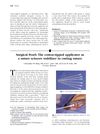
 This article discusses the various uses of the cotton-tipped applicator in dermatologic surgery, highlighting its innovative role as a suture scissors stabilizer, but reports no clinical results.
12 citations
,
August 2001 in “PubMed” This study found that contrast enhanced phototrichogram (CE-PTG) significantly improved detection of various hair types and growth stages in androgenetic alopecia compared to standard PTG and was comparable to biopsy analysis.
January 2026 in “Journal of Advanced Research” This study found that fermentation products from Bacillus sp. TC5 can effectively promote hair regrowth and improve transdermal drug absorption, suggesting their potential as eco-friendly agents in developing cosmeceuticals for hair restoration and skin repair.
May 2024 in “Jurnal Penelitian Farmasi dan Herbal” In this experimental study using male rabbits, researchers found that a 7.5% concentration of green tea leaf ethanol extract hair tonic was nearly as effective in promoting hair growth as the positive control, minoxidil, over a 21-day period.
 November 2024 in “Journal of the European Academy of Dermatology and Venereology”
 In this pilot study, cryotherapy using a device that precisely controls cooling duration improved hair regrowth for patchy alopecia areata when applied for 20 seconds with two freeze-thaw cycles, similar to standard triamcinolone acetonide injections, but not when applied for 10 seconds.
 November 2025 in “Discover Food”
 This study found that a catechins-rich Assam tea extract demonstrated antioxidant effects and hair growth promotion in mice, suggesting its potential as a natural alternative for treating hair loss.
February 2026 in “Journal of Cosmetic Dermatology” In this study, researchers found that combining cryotherapy with triamcinolone injections is equally effective as triamcinolone alone for treating patchy alopecia areata on the scalp and face, with no significant difference in outcomes between the two methods.
January 2014 in “The Journal of Dermatology” This study reports that Korean adolescents with androgenetic alopecia tend to have milder symptoms than adults and a higher prevalence of family history of alopecia.

This study aims to describe the trichoscopic pattern of chemotherapy-induced alopecia and its changes during different phases of chemotherapy.