This study involved using smartphone applications and low-cost trichoscopy devices to assess various hair and scalp conditions, with diagnoses confirmed through detailed imaging during remote consultations and in-person evaluations.
27 citations
,
May 2016 in “Integrative Cancer Therapies” In this study, in vitro and in vivo models showed that chrysin enhanced the efficacy of docetaxel and reduced its adverse effects in non–small cell lung cancer treatment.
17 citations
,
September 2022 in “Biomaterials Research” This study found that the film-trigger applicator system enhanced drug delivery efficiency and skin penetration of dissolving microneedles compared to traditional patch systems in both lab and animal models.
 129 citations
,
November 2005 in “Internal Medicine Journal”
129 citations
,
November 2005 in “Internal Medicine Journal” This article reviews the recognition and management of Staphylococcus aureus toxin-mediated diseases, but it does not present new research findings.
7 citations
,
September 2014 in “Mass spectrometry letters” This study reported that a liquid-liquid extraction method using methyl tert-butyl ether and methylene chloride was most effective for extracting dutasteride and its internal standard from rat plasma.
 May 2024 in “Journal of biomaterials science. Polymer ed.”
 This study found that three-layer dissolving microneedles for delivering Minoxidil showed improved skin drug penetration and reduced irritation risk compared to traditional Minoxidil cream, suggesting a promising alternative for alopecia areata treatment.
198 citations
,
May 2021 in “Advanced Materials” This review discusses triboelectric nanogenerator (TENG) devices for body-integrated electrical stimulation therapy and suggests they may revolutionize personalized healthcare, but it reports no new clinical results.
October 2024 in “Journal of Cutaneous Pathology” In this study of folliculitis decalvans, researchers found that compound follicular structures in scalp biopsies are primarily composed of terminal anagen follicles, surrounded by fibrosis and inflammatory cell infiltrate, which could enhance understanding of this condition.
 2 citations
,
February 2015 in “Journal of Tissue Engineering and Regenerative Medicine”
2 citations
,
February 2015 in “Journal of Tissue Engineering and Regenerative Medicine” This study found that transplanting trichogenous dermal cells significantly enhanced the restoration of in vivo-damaged hair follicles in a nude rat model, with a combination of dermal papilla and sheath cells proving more effective than either cell type alone.
October 1990 in “Pediatric Research” This case report details a severe instance of VDR-II where intravenous calcium infusions, administered nightly, successfully improved clinical, radiological, and biochemical signs of rickets without alopecia despite ineffective calcitriol therapy.
 10 citations
,
June 2011 in “Movement Disorders”
10 citations
,
June 2011 in “Movement Disorders” THAP1 gene changes do not affect DYT1 dystonia; finasteride may help reduce tics and OCD in Tourette syndrome.
 15 citations
,
January 2017 in “Lasers in Surgery and Medicine”
15 citations
,
January 2017 in “Lasers in Surgery and Medicine” In this study, four male patients with extensively photodamaged scalps showed a 60-90% improvement in dyspigmentation, lentigines, and keratosis after a single treatment with the fractionated 1,927 nm thulium fiber laser, with no adverse events observed.
 1 citations
,
July 2021 in “Anais Brasileiros de Dermatologia”
1 citations
,
July 2021 in “Anais Brasileiros de Dermatologia” This study suggests that observing the acute telogen effluvium triad—frontal fringe, temporal recess, and occipital fringe—can aid in diagnosing telogen effluvium during resolution phases, despite challenges like negative pull tests.
 2 citations
,
August 2025 in “Scientific Reports”
2 citations
,
August 2025 in “Scientific Reports” This study analyzed pexidartinib-associated adverse events from FDA data and reported common events such as hepatic issues and systemic reactions. It highlighted sex-specific susceptibilities and reinforced the need for risk mitigation and long-term monitoring in tenosynovial giant cell tumor management.
 August 2018 in “Journal of The American Academy of Dermatology”
 This study found that while both conventional care and teledermatology showed similar clinical response rates for treating actinic keratosis with imiquimod 5% cream, teledermatology was associated with higher treatment failure and local reaction rates.
September 2024 in “Journal of Microbiology and Biotechnology” In this study, the researchers found that their conductive bio-harvesting tonic enhanced hair follicle proliferation and delayed regression with electric stimulation and the antifungal agent 6-pentyl-α-pyrone in both mice and human hair follicle tests.
 5 citations
,
January 2010 in “Medicinal Plants - International Journal of Phytomedicines and Related Industries”
5 citations
,
January 2010 in “Medicinal Plants - International Journal of Phytomedicines and Related Industries” This review discusses the diverse pharmacological activities of T. procumbens, such as hypotensive and hair growth-promoting effects, but reports no new clinical findings.
 October 2019 in “European heart journal”
 This study found that androgen deprivation therapy is associated with an increased risk of acquired long-QT syndrome and Torsades de Pointes, particularly highlighting enzalutamide's greater association with sudden death compared to other therapies.
 4 citations
,
February 2014 in “Journal of the European Academy of Dermatology and Venereology”
4 citations
,
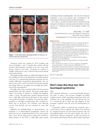
February 2014 in “Journal of the European Academy of Dermatology and Venereology” Early diagnosis of hair tourniquet syndrome saved a baby's toe from being lost.
 3 citations
,
October 2018 in “Experimental and Therapeutic Medicine”
3 citations
,
October 2018 in “Experimental and Therapeutic Medicine” In this study, researchers found that discontinuing tamsulosin for one month before cataract surgery in rats reduces manifestations of intraoperative floppy iris syndrome, suggesting alternative preoperative treatments may be beneficial.
 128 citations
,
August 2015 in “Cell Stem Cell”
128 citations
,
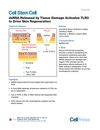
August 2015 in “Cell Stem Cell” The researchers reported that dsRNA from damaged skin activates TLR3, promoting hair follicle regeneration, while TLR3-deficient animals fail to initiate this process, suggesting potential therapeutic approaches for hair neogenesis.
 112 citations
,
July 2008 in “Dermatologic Therapy”
112 citations
,
July 2008 in “Dermatologic Therapy” This review outlines the diagnosis and management of folliculitis decalvans, an inflammatory scalp disorder, and highlights Staphylococcus aureus and immune response deficiencies as key factors in its development.
This study found that P144 (Disitertide) significantly reduced collagen deposition and improved muscle organization in a rabbit model of post-radiotherapy fibrosis, suggesting potential antifibrotic effects.
 November 2024 in “Polymers for Advanced Technologies”
 In this study, a hydrogel wound dressing infused with tannic acid demonstrated excellent antibacterial activity and promoted effective wound healing in rat burn models, leading to wound closure in 17 days and hair regrowth by day 21.
 January 2026 in “Journal of Materials Chemistry B”
 In this study, researchers addressed the limitations of adenosine's practical application in treating inflammation, oxidative stress, and tissue repair due to its poor water solubility and low transdermal permeability. Results are not reported in the abstract.
12 citations
,
September 2015 in “Drug Design Development and Therapy” This study found that the DOX derivative AD198 more effectively inhibited cell viability and induced apoptosis in canine cancer cell lines K9TCC and K9OSA compared to DOX in vitro.
3 citations
,
July 2025 in “Current Issues in Molecular Biology” This review discusses how dental pulp stem cells and their derivatives may accelerate skin wound healing by modulating inflammation, promoting angiogenesis, optimizing extracellular matrix structure, and enhancing tissue formation, with implications for translating these findings into therapies for skin and mucosal repair.
June 2024 in “Lasers in Surgery and Medicine” This study found that the novel dermal cooling system was an effective and safe treatment for reducing pigmentation in benign pigmented lesions in Asian patients, with minimal side effects.
December 2023 in “Ukraïnsʹkij žurnal sučasnih problem toksikologìï/Ukraïnsʹkij Žurnal Sučasnih Problem Toksikologìï” This study found an increase in criminal and accidental thallium (Tl+) poisonings globally, particularly in Ukraine, partly due to online availability, underscoring the need for better control and diagnosis to prevent severe outcomes and potential misuse during ongoing conflicts.
 2 citations
,
June 2026 in “Frontiers in Science”
2 citations
,
June 2026 in “Frontiers in Science” This review examines the potential of regulatory T cell-based therapies to transform treatment across various medical specialties by promoting immune tolerance and tissue repair, but it reports no new clinical results.