 10 citations
,
August 2002 in “Sexualities”
10 citations
,
August 2002 in “Sexualities” This article reviews and critiques Tamsin Wilton's arguments on MTF transsexualism, suggesting her work reaffirms Cartesian dualism rather than dismantling it, and emphasizes the need for continued dialogue in transsex, lesbian, and feminist communities.
October 2023 in “Pharmacoepidemiology and Drug Safety” This study found that in Denmark, dermatology drugs are mostly used as expected, but identified a few unexpected patterns that warrant targeted follow-up to determine if there is inappropriate use.
 19 citations
,
April 2020 in “Psychological Medicine”
19 citations
,
April 2020 in “Psychological Medicine” This study identified three symptom trajectory groups in individuals with PMDD, highlighting variations in symptom severity and duration across the luteal and follicular phases.
 20 citations
,
December 2015 in “Journal of Pharmacopuncture”
20 citations
,
December 2015 in “Journal of Pharmacopuncture” In this study, thread-embedding therapy enhanced hair regrowth in C57BL/6 mice by regulating growth factors associated with hair follicle anagen development and promoting cellular proliferation in hair follicles.
July 2025 in “Clinical Medicine” In this institution-based randomized trial, oral betamethasone mini-pulse therapy for alopecia areata showed a faster therapeutic response compared to oral tofacitinib, as measured by trichoscopic changes and achievement of 50% hair regrowth.
48 citations
,
June 2000 in “Japanese Journal of Cancer Research” This study found that dimethylarsinic acid significantly accelerates skin tumor development in hair follicle-targeted K6/ODC transgenic mice.
11 citations
,
October 2002 in “Pharmacology Biochemistry and Behavior” This study found that formalin-induced pain in rats nearly eliminates testosterone in the brain and spinal cord by likely increasing 5α-reductase activity, but normalizes serum levels after 24 hours.
January 2026 in “British Journal of Dermatology” This study developed a rapid ATP assay that effectively measures microbial populations on the skin and tracks changes after microbiome dysbiosis, with findings suggesting that ethanol-cleansed skin takes longer to recover than tape-stripped skin.
 September 2019 in “The journal of investigative dermatology/Journal of investigative dermatology”
 This study found that deleting all three Tet genes in mice led to shorter hair shafts and altered hair types, with associated changes in gene expression and DNA hydroxymethylation.
 April 2016 in “Journal of The American Academy of Dermatology”
 The study found that Temporal Triangular Alopecia often starts in early childhood, while Folliculitis Decalvans is characterized by tufted hairs and redness around hair follicles.
June 2023 in “Journal of personalized medicine” This study found that dihydrotestosterone treatment may be more beneficial for height in children with 5-α-reductase type 2 deficiency compared to testosterone enanthate, especially in the prepubertal period.
June 2023 in “Clinical Cosmetic and Investigational Dermatology” This report describes a 60-year-old female with pretibial pruritic papular dermatitis who showed significant improvement of skin lesions after one month of treatment with oral pentoxifylline. The authors highlight the unique clinical and histological features of PPPD and propose pentoxifylline as a potential therapy.
1 citations
,
April 2013 in “Journal of Investigative Dermatology” July 2021 in “British Journal of Dermatology” This report describes a boy with ectodermal dysplasias who was genetically diagnosed due to newly discovered TSPEAR gene variants, which have now been associated with this condition.
 30 citations
,
February 2017 in “Histochemistry and Cell Biology”
30 citations
,
February 2017 in “Histochemistry and Cell Biology” This study found that applying TPA to mice accelerated hair follicle regeneration by activating Akt and Wnt/ß-catenin signaling pathways, involving hair follicle stem cell proliferation.
This study found that a short-term treatment with all-trans retinoic acid may effectively stabilize platelet counts in idiopathic thrombocytopenic purpura patients experiencing fluctuations during thrombopoietin receptor agonist therapy.
21 citations
,
December 2005 in “The journal of investigative dermatology/Journal of investigative dermatology” This study demonstrates that T-cell responses in extensive alopecia areata scalp may be aberrantly regulated, with reduced cytokine production but activated phenotype, providing insight into the disease's immune mechanisms.
 1 citations
,
June 2022 in “Jambura Journal of Mathematics”
1 citations
,
June 2022 in “Jambura Journal of Mathematics” This review analyzes the research on production delivery strategies using n-vehicle, highlighting recent developments and suggesting areas for future study, but it reports no new experimental findings.
This study involved using smartphone applications and low-cost trichoscopy devices to assess various hair and scalp conditions, with diagnoses confirmed through detailed imaging during remote consultations and in-person evaluations.
This article lists the clinically important interactions and skin reactions of several drugs and substances, including THA, FK506, tamoxifen, tamsulosin, tartrazine, tea tree oil, temazepam, and temozolomide, but provides no new clinical results.
 April 2016 in “The Journal of Sexual Medicine”
 This report analyzed an FDA adverse event database and aimed to evaluate and describe post-finasteride syndrome potentially related to dutasteride, but it does not report new clinical findings.
January 2016 in “프로그램북(구 초록집)” This study found that combining a thulium laser with intra-perifollicular PDRN injections significantly improved hair thickness but not hair counts compared to mesotherapy and PDRN in patients with pattern hair loss.
 13 citations
,
January 2011 in “International Journal of Trichology”
13 citations
,
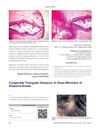
January 2011 in “International Journal of Trichology” CTA is often mistaken for AA but doesn't respond to steroids and may require hair transplantation.
13 citations
,
February 1995 in “Archives of Dermatological Research” In this study, gamma/delta T cells were observed in skin after allergic or irritant reactions to heavy metal salts, suggesting a role in skin defense against these metals.
 May 2014 in “Journal of The American Academy of Dermatology”
 The project aimed to understand how genetic test results affect patients' actions and feelings in dermatology.
 24 citations
,
July 2019 in “Reproductive Medicine and Biology”
24 citations
,
July 2019 in “Reproductive Medicine and Biology” This review discusses the classification and treatment of ejaculatory dysfunction, outlining both pharmacotherapy and behavioral therapy as primary interventions, but does not present new clinical findings.
 November 2024 in “Communities in ADDI (University of the Basque Country)”
 Antisense oligonucleotides show promise for treating Myotonic Dystrophy type I.
January 2026 in “AppliedMath” This study explored a mechanism for making Turing pattern formations more predictable and robust by isolating pattern modes to prevent their sensitivity to initial conditions, which can lead to different outcomes from minor initial changes.
 November 2016 in “Dermatologic Therapy”
 This abstract provides issue information for the Dermatologic Therapy journal's November/December 2016 edition and offers no new study results.

The researchers reported that asynchronous teledermatology effectively diagnosed and managed non-scarring alopecia in 91.3% of cases within the UPMC network, improving access for underserved populations, with high engagement from Black and Asian patients and significant participation from those living outside Pittsburgh.