May 2025 in “OPAL (Open@LaTrobe) (La Trobe University)” The researchers reported that in a mouse model of alopecia areata, tofacitinib treatment influenced disease progression by modulating CD8+ T cell infiltration through the linoleic acid metabolism and magnesium ion pathway, offering insights into potential treatment approaches.
 April 2023 in “Journal of the American Academy of Dermatology”
 This study aimed to evaluate the outcomes of switching between two JAK inhibitors, tofacitinib and baricitinib, in treating alopecia areata, due to the lack of data on their comparative efficacy.
 78 citations
,
March 2017 in “JAMA Dermatology”
78 citations
,
March 2017 in “JAMA Dermatology” Tofacitinib helped regrow hair in people with severe alopecia, but side effects occurred and benefits stopped after treatment ended.
3 citations
,
February 2014 in “Anadolu psikiyatri dergisi” This report describes the first known case of alopecia in a 16-year-old patient associated with quetiapine use, which resolved after stopping the medication.
 11 citations
,
January 2020 in “Dermatologica Sinica”
11 citations
,
January 2020 in “Dermatologica Sinica” This study found that tofacitinib effectively promoted hair regrowth in Asian patients with severe alopecia areata, with 74.3% showing a clinical response.
July 2025 in “International Journal of Trichology” This study reported six pediatric cases of temporal triangular alopecia and highlighted the use of trichoscopy to distinguish it by detecting a distinctive carpet of vellus hair, helping to differentiate TTA from other hair loss conditions.
1 citations
,
February 2023 in “Ibrain” This review discusses the neuroprotective properties of Nigella sativa and its nanoformulations for treating neurodegenerative disorders, without presenting new clinical results.
 5 citations
,
August 2018 in “PubMed”
5 citations
,
August 2018 in “PubMed” This case report documented successful full hair regrowth in an 8-year-old with alopecia universalis after oral tofacitinib treatment, but mild headaches led to discontinuation.
June 2020 in “Zenodo (CERN European Organization for Nuclear Research)” This study suggests that the DNMT3B -579 G>T polymorphism may be a genetic risk factor for colorectal cancer in the Azerbaijani population.
 February 2024 in “PloS one”
 This review concluded that oral tofacitinib and adalimumab are promising treatments for cicatricial alopecia, showing effectiveness in improving signs and symptoms but requiring regular monitoring for adverse effects. The authors emphasize the need for further extensive studies to solidify these findings.
 January 2026 in “Frontiers in Public Health”
 This study observed distinct post-marketing safety signal patterns for baricitinib and tofacitinib in adult AA, influenced by their differing regulatory uses and real-world contexts, and emphasizes the need for future studies to validate these findings.
 November 2022 in “Arab Gulf Journal of Scientific Research”
 This review discusses the potential clinical benefits and functional properties of taurine as a conditionally essential amino acid, noting its presence in energy drinks, but reports no new experimental results.
 48 citations
,
November 2017 in “Journal of the American Academy of Dermatology”
48 citations
,
November 2017 in “Journal of the American Academy of Dermatology” Tofacitinib 2% ointment helped hair regrow in 3 out of 10 patients with alopecia areata, but caused side effects like scalp irritation and raised cholesterol in some.
 October 2023 in “Applied materials today”
 In this study, researchers developed a novel TA-encapsulated microneedle applicator that successfully promoted hair growth and reduced inflammation in a C3H/HeJ mouse model of alopecia areata, potentially offering an improved alternative to existing treatments.
 March 2017 in “Fundamental & Clinical Pharmacology”
 This case study reported an improvement in lower limb edema for a patient with type 2 diabetes mellitus after starting dulaglutide treatment, suggesting a potential role of the drug in sodium retention disorders.
 December 2020 in “TURKDERM”
 This case report describes a 3-year-old boy diagnosed with temporal triangular alopecia, emphasizing the importance of clinical and dermoscopic examination for correct diagnosis due to the condition's rarity and risk of misdiagnosis.
 1 citations
,
July 2019 in “Medicina Clínica (English Edition)”
1 citations
,
July 2019 in “Medicina Clínica (English Edition)” Tofacitinib partially improved hair regrowth in a patient with severe hair loss.
 January 2020 in “bioRxiv (Cold Spring Harbor Laboratory)”
 This study found that the ethyl acetate extract of Semecarpus anacardium leaves demonstrated cytotoxicity against MCF-7 cancer cells and induced apoptosis, suggesting potential as a cancer treatment with fewer side effects.
 2 citations
,
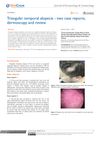
February 2018 in “Journal of dermatology & cosmetology”
2 citations
,
February 2018 in “Journal of dermatology & cosmetology” This article discusses triangular temporal alopecia, highlighting dermoscopy's role in diagnosis and the limited therapeutic options, without reporting new clinical results.
April 2026 in “Case Reports in Dermatology” In this case report, a woman with Graham-Little-Piccardi-Lassueur Syndrome and hidradenitis suppurativa showed significant improvements in both conditions after six months of treatment with tofacitinib, a Janus Kinase inhibitor, with no recurrence or adverse events noted during a two-year follow-up.
 June 2017 in “Journal of the American Academy of Dermatology”
 In this retrospective study, tofacitinib was found to be effective and well-tolerated for treating severe alopecia areata, with 77% of patients achieving a clinical response over 4-20 months, though results were more favorable for patients with less extensive hair loss.
 May 2023 in “International Journal of Trichology”
 In this case report, the researchers described the use of tofacitinib in treating a 14-year-old boy from India with severe alopecia areata, achieving complete hair regrowth within 2 months without serious adverse events, highlighting tofacitinib's potential benefits and safety in adolescent cases.
 November 2023 in “Indian Dermatology Online Journal”
 This study found that tofacitinib was safe and effective for patients with severe or treatment-resistant alopecia areata, alopecia totalis, and alopecia universalis, resulting in significant hair regrowth for most participants.
 August 2022 in “International journal of research in pharmacy and chemistry”
 This review summarizes the chemical composition and pharmacological properties of Teak (Tectona grandis) but presents no new research findings, emphasizing its use in traditional medicine and therapeutic potentials.
 2 citations
,
April 2022 in “Cutaneous and Ocular Toxicology”
2 citations
,
April 2022 in “Cutaneous and Ocular Toxicology” This systematic review reports promising efficacy and safety of Tofacitinib for treating Alopecia Areata in children, though further randomized studies are needed due to the low quality of existing evidence.
3 citations
,
May 2024 in “Indian Journal of Dermatology” In this case report, researchers identified a potential adverse skin reaction, called SDRIFE or Baboon syndrome, caused by the drug tofacitinib in a 19-year-old woman being treated for alopecia subtotalis, leading the authors to recommend discontinuation of the drug.
 1 citations
,
May 2017 in “Journal of the American Academy of Dermatology”
1 citations
,
May 2017 in “Journal of the American Academy of Dermatology” Oral tofacitinib may be an effective and tolerable treatment for some people with severe alopecia areata.

This study found that 23.2% of surveyed dermatologists in Saudi Arabia prescribe Tofacitinib for alopecia areata, with 72.4% reporting its effectiveness, while 47.7% cited unavailability as the main reason for not prescribing.
March 2022 in “Oncology Times” In this study, tebentafusp-tebn improved overall survival in patients with metastatic uveal melanoma compared to standard therapies, despite higher rates of significant adverse events.
November 2024 in “Advances in Pharmacology and Pharmacy” This study validated a UV-spectrophotometric method for accurately detecting Minoxidil and Tofacitinib citrate concentrations in bulk and gel formulations for alopecia areata, showing high recovery rates and indicating the method's suitability for routine analysis.