 January 2023 in “International Journal of Clinical and Medical Education Research”
 This paper discusses prostate cancer diagnosis and treatment controversies and advocates for individualized approaches, reporting no new findings.
 January 2023 in “Journal of men's health”
 This study found a weak positive correlation between dihydrotestosterone levels and C-reactive protein in COVID-19 patients, particularly in those with low testosterone, suggesting potential inflammatory effects.
 October 2022 in “Gadua Journal of Pure and Allied Science”
 In this study, Trichophyton tonsurans and Microsporum canis were identified as the primary causes of tinea capitis, with terbinafine treatment showing the highest cure rate. Non-commercial kits surpassed real-time PCR commercial kits in specificity and sensitivity for diagnosis.
 May 2021 in “Boletín latinoamericano y del Caribe de plantas medicinales y aromáticas”
 This study found that ethanolic extracts of Microsechium helleri showed notable antioxidant, hypoglycemic, and cardioprotective activities, while chloroformic extracts exhibited significant anti-inflammatory effects in experimental models.
 March 2021 in “Indian Journal of Case Reports”
 This case report describes a young adult female with late-stage Vogt-Koyanagi-Harada disease featuring panuveitis, retinal detachment, hearing loss, alopecia, and vitiligo, who was successfully treated in a hospital.
 December 2020 in “International journal of research in ayurveda and pharmacy”
 This review covers hair anatomy, common hair diseases, diagnostic approaches, management, and hair care, but reports no new clinical findings; the authors highlight the importance of proper hair care knowledge.
 July 2018 in “British Journal of Dermatology”
 Hair regrowth was seen in 83% of children with alopecia, immune system plays a role in the condition, and various treatments showed effectiveness for hair and nail disorders.
 December 2016 in “Springer eBooks”
 This review examines the clinical features, causes, diagnosis, and treatment of Chrousos syndrome but reports no new experimental findings on this condition.
 March 2016 in “Indian Journal Of Applied Research”
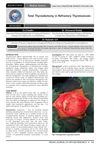
 This report presents a case of refractory thyrotoxicosis where the patient required a total thyroidectomy after resistance to conventional treatments including antithyroid drugs and radioactive iodine.

This article discusses various causes and prevention methods for male pattern baldness but reports no new research findings.
 January 2015 in “Indian Journal of Medical Biochemistry”
 Men with early balding should be checked for metabolic syndrome, as there's a link between the two.
 December 2011 in “Korean journal of veterinary research”
 In this study, a dog with canine pattern alopecia showed improved multifocal alopecia and general hair regrowth after 3 months of melatonin treatment.
 June 2011 in “The Journal for Nurse Practitioners”
 This review discusses different types of hair loss in women and suggests that addressing underlying health issues or stopping trigger medications can restore hair growth without additional intervention, but it reports no new results.
 January 2011 in “Medicina interna de México”
 This article explains the characteristics, diagnosis, and causes of telogen effluvium hair loss but reports no new clinical findings.
 December 2009 in “DergiPark (Istanbul University)”
 This study found that low levels of ferritin and iron were common among women with diffuse hair loss, suggesting these tests could be useful in evaluating such patients.

This study found that standard decontamination procedures may not fully remove external contamination in post mortem hair specimens, complicating the interpretation of drug detection in such samples.
 May 2006 in “Women's Health Medicine”
 This review examines the causes, assessment, and treatments of hirsutism and highlights the need for future research in managing this condition but presents no new research findings.
 April 1998 in “Journal of women's health”
 This article discusses expert responses to hair loss in women but reports no new research findings.
 82 citations
,
February 1989 in “The Journal of clinical endocrinology and metabolism/Journal of clinical endocrinology & metabolism”
82 citations
,
February 1989 in “The Journal of clinical endocrinology and metabolism/Journal of clinical endocrinology & metabolism” This study found that in men with benign prostatic hyperplasia, a 3-month treatment with a long-acting GnRH agonist significantly reduced intraprostatic DHT and 3α-diol levels by about 90% and testosterone by about 75%.
 57 citations
,
February 1983 in “The Journal of clinical endocrinology and metabolism/Journal of clinical endocrinology & metabolism”
57 citations
,
February 1983 in “The Journal of clinical endocrinology and metabolism/Journal of clinical endocrinology & metabolism” This study found that pubic skin fibroblasts respond to androgens, increasing 5α-reductase activity via an androgen receptor-mediated mechanism, suggesting its potential as a marker of androgen action in vitro.
 54 citations
,
April 2019 in “Journal of cellular physiology”
54 citations
,
April 2019 in “Journal of cellular physiology” In this study, miR-218-5p was found to enhance hair shaft growth and positively regulate the Wnt signaling pathway by targeting SFRP2 during skin and hair follicle development.
 52 citations
,
March 2010 in “British Journal of Dermatology”
52 citations
,
March 2010 in “British Journal of Dermatology” This study demonstrated the expression of type 1 interferon-related proteins in inflammatory lesions of alopecia areata, showing a distinct distribution pattern compared to cicatricial alopecia.
46 citations
,
October 2018 in “JCI insight” In this study, the researchers found that treatment with the JAK inhibitor tofacitinib in alopecia areata patients may reduce clonal CD8+ T cell expansions but does not eliminate them entirely, which could contribute to disease relapse.
33 citations
,
October 2006 in “European Journal of Immunology” This study found that CD44 and CD49d together enhance signaling pathways in lymphocytes in mice with alopecia areata, influencing their activation and function.
 28 citations
,
April 2014 in “Hormones”
28 citations
,
April 2014 in “Hormones” This study found that increased serum A4A levels were associated with more severe polycystic ovary syndrome phenotypes and could be a useful marker for biochemical hyperandrogenemia.
 28 citations
,
November 2003 in “The Journal of clinical endocrinology and metabolism/Journal of clinical endocrinology & metabolism”
28 citations
,
November 2003 in “The Journal of clinical endocrinology and metabolism/Journal of clinical endocrinology & metabolism” This study indicates that the normal human prostate is not a major contributor to circulating blood DHT concentrations in androgen-deficient patients receiving testosterone replacement therapy.
 25 citations
,
January 2006 in “British Journal of Dermatology”
25 citations
,
January 2006 in “British Journal of Dermatology” This study found that finasteride decreases DHT/T levels more significantly in the vertex scalp hair than in the occipital hair of patients with male pattern baldness.
22 citations
,
September 2020 in “The journal of investigative dermatology/Journal of investigative dermatology” This review highlights the possible role of T regulatory cells in the immune-related mechanisms of alopecia areata but reports no new clinical findings.
 17 citations
,
July 2003 in “Metabolism-clinical and Experimental”
17 citations
,
July 2003 in “Metabolism-clinical and Experimental” This study found that young women with female-pattern hair loss exhibit increased testosterone production rates while dihydrotestosterone production rates remain within or below the normal range.
 14 citations
,
December 2013 in “Experimental Dermatology”
14 citations
,
December 2013 in “Experimental Dermatology” The T-zone on the face has more androgen receptors and produces more oil than the U-zone.