 August 2023 in “Clinical, Cosmetic and Investigational Dermatology”
 In this article, researchers describe a novel FUE device designed to enhance follicular unit excision surgery by minimizing follicular injury and improving ergonomics with features such as Bluetooth functionality, fingertip touch sensors, and automated operation.
188 citations
,
October 2014 in “Thyroid” This study found that dabrafenib was well tolerated and led to durable responses in patients with BRAF-mutant differentiated thyroid carcinoma, with a median progression-free survival of 11.3 months.
This report details a refined hair transplantation method called direct no-shave follicular unit excision (DNS FUE), which avoids donor-site shaving and minimizes follicular trauma while yielding high patient satisfaction.
21 citations
,
August 2011 in “BMB Reports” This study successfully established an immortalized human dermal papilla cell line that maintains characteristics of original cells without malignant transformation, potentially benefiting hair research.
October 2012 in “Sax's Dangerous Properties of Industrial Materials” January 1988 in “Toxicological Sciences” In this study, a single oral dose of 2,3,4,7,8-pentachlorodibenzofuran in male Fischer rats led to dose-dependent toxicity, resulting in weight loss, hepatotoxicity, and mortality.
 February 2016 in “The journal of allergy and clinical immunology/Journal of allergy and clinical immunology/The journal of allergy and clinical immunology”
 This study reports a novel mutation in the TP63 gene associated with T and B cell lymphopenia in an EEC patient, suggesting that EEC diagnosis should include TREC assay and evaluation for immunodeficiency.
 3 citations
,
May 2025 in “Cell Death and Disease”
3 citations
,
May 2025 in “Cell Death and Disease” This study found that METTL1 is upregulated in papillary thyroid cancer tissues and promotes cancer cell proliferation and metastasis through its tRNA methyltransferase activity.
2 citations
,
May 1985 in “Environmental Health Perspectives” This report examines the mechanisms by which TCDD affects human epidermal and carcinoma cells, aiming to create a risk assessment model for halogenated aromatic compounds, but presents no new clinical results.
 6 citations
,
October 2012 in “Journal of Heredity”
6 citations
,
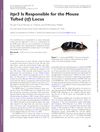
October 2012 in “Journal of Heredity” This study identified the Itpr3 gene as responsible for the tufted hair loss phenotype in the BTBR mouse strain.
 1 citations
,
January 2010 in “Elsevier eBooks”
1 citations
,
January 2010 in “Elsevier eBooks” This review discusses follicular unit transplantation for hair restoration, focusing on crucial aspects such as donor assessment and surgical technique, but reports no clinical results; the authors stress the importance of careful planning and skilled execution.
4 citations
,
July 2024 in “Radiotherapy and Oncology” This study highlights that variations in clinical outcome reporting can undermine the validation of NTCP models for RIA, stressing the need for a standardized and objective scoring system.
July 2024 in “Journal of Investigative Dermatology” PH-762 shows promise in treating skin cancer by effectively targeting and silencing PD-1 in tumors with minimal side effects.
 1 citations
,
October 2022 in “Molecular therapy”
1 citations
,
October 2022 in “Molecular therapy” This study found that betibeglogene autotemcel significantly improved transfusion independence in 89% of patients with transfusion-dependent beta-thalassemia, although the high cost and manufacturing challenges may limit widespread adoption.
 August 2023 in “MPPKI (Media Publikasi Promosi Kesehatan Indonesia) : The Indonesia journal of health promotion”
 In this study, researchers used a UV-Vis Spectrophotometer to qualitatively and quantitatively analyze Dutasteride residues in human plasma, achieving a total recovery rate of 64.992%, and determined that the BTB reagent effectively selected compounds not analyzed in their research.
1 citations
,
August 2016 This study investigated the cytotoxic effects of DHA derivatives on cancer cell lines and found that didocosahexaenoin was the most potent, inducing apoptosis and producing reactive oxygen species in PC3 prostate carcinoma cells.
 April 2007 in “Nature Clinical Practice Urology”
 TICE salvage chemotherapy is effective for treating germ-cell tumors with poor prognosis.
This observational study reviewed thyroid eye disease patients treated with teprotumumab at one center, reporting common side effects like fatigue and dry eye symptoms, with serious adverse events including two cases of blood clots and one pulmonary embolism.
 61 citations
,
April 2014 in “Radiation Research”
61 citations
,
April 2014 in “Radiation Research” This study observed that topically applied RTA 408 reduced the severity of radiation-induced dermatitis in mice, with the highest dose significantly reducing and alleviating skin damage and associated inflammation.
1 citations
,
January 1989 in “Carcinogenesis” This study found that dexamethasone treatment inhibited the inflammatory response and the induction of ornithine decarboxylase activity in mouse skin after TPA application, although the effect on ODC was weaker during the hyperplastic stage.
3 citations
,
August 2024 in “Clinical Cosmetic and Investigational Dermatology” In this study, researchers found that specific treatment parameters disrupted follicles and sebaceous glands, damaging the bacteria Cutibacterium acnes and promoting follicular remodeling, which may improve both inflammatory and noninflammatory acne lesions.
 8 citations
,
March 2020 in “Frontiers in Cell and Developmental Biology”
8 citations
,
March 2020 in “Frontiers in Cell and Developmental Biology” This study developed a DPC cell line by introducing mutant CDK4, Cyclin D1, and TERT, making it a promising tool to study downstream signaling pathways activated by testosterone in androgenetic alopecia.
June 2026 in “JAAD Case Reports” 33 citations
,
October 2006 in “European Journal of Immunology” This study found that CD44 and CD49d together enhance signaling pathways in lymphocytes in mice with alopecia areata, influencing their activation and function.
87 citations
,
August 1974 in “Journal of Investigative Dermatology” January 2022 in “SSRN Electronic Journal” In this case study, a neoadjuvant therapy combining gemcitabine and Disitamab Vedotin proved effective and safe for a muscle-invasive bladder cancer patient with severe renal insufficiency, who could not tolerate platinum-based treatments. The study suggests this regimen may be a viable alternative, pending further research.
This study found that P144 (Disitertide) significantly reduced collagen deposition and improved muscle organization in a rabbit model of post-radiotherapy fibrosis, suggesting potential antifibrotic effects.
September 2025 in “OPAL (Open@LaTrobe) (La Trobe University)” This study found that topical treatment with 7DHC and BM15766 reduced hair growth in mice compared to those treated with Ethanol/DMSO, and hair did not recover after treatment ceased, alongside increased apoptotic cells and decreased expression of specific genes.
January 2011 in “The Chinese Journal of Dermatovenereology” In this study, DPC-hTERT cells were shown to induce hair follicle-like structures expressing specific keratin when co-injected with epithelial cells into nude mice.
2 citations
,
January 2014 in “Journal of Cytology & Histology” In a mouse model, this study found that LAM/TSC cells invaded the uterus and increased angiogenesis, while anti-EGFR antibody and rapamycin effectively reduced cell presence and blood vessel proliferation.