 5 citations
,
February 2019 in “The New England Journal of Medicine”
5 citations
,
February 2019 in “The New England Journal of Medicine” This article discusses the composition and function of the dermal papilla in hair follicles, focusing on its role in hair shaft generation and suggesting that cell loss in this area may contribute to hair loss.
 30 citations
,
January 2021 in “Journal of Clinical Immunology”
30 citations
,
January 2021 in “Journal of Clinical Immunology” This study describes various clinical phenotypes associated with FOXN1 mutations, finding that affected individuals may develop different severities of immunodeficiency based on their genetic mutations.
 8 citations
,
December 2020 in “Scientific reports”
8 citations
,
December 2020 in “Scientific reports” This study examined the genetic basis for the curly hair trait in Mangalitza pigs, finding two specific genetic variants that contribute to this distinctive phenotype through autosomal dominant inheritance.
 June 2025 in “Turkish Journal of Dermatology”
 This study found that patients with acne vulgaris had significantly lower serum paraoxonase 1 (PON1) activity compared to healthy controls, suggesting that oxidative stress might play a role in the condition's development.
 January 2025 in “Iraqi Journal of Science”
 This study found that variations in the genes PDCD4, miR-21, and miR-449b may significantly influence breast cancer progression, with higher PDCD4 serum levels linked to increased breastfeeding.
 June 2026 in “International Journal of Advanced Biochemistry Research”
 In this study, non-dermatophyte moulds, particularly Aspergillus and Penicillium species, were phenotypically characterized in dogs and cats with suspected mycotic dermatitis, revealing their potential role in dermatological disorders among companion animals and emphasizing the importance of conventional mycological identification techniques.
 111 citations
,
October 2008 in “Nature Genetics”
111 citations
,
October 2008 in “Nature Genetics” In their study, Tim Spector and colleagues identified a new genetic association at chromosome 20p11.22 with male-pattern baldness, confirmed by the increased risk when combined with a known androgen receptor gene variant.
 87 citations
,
May 2012 in “PLOS Genetics”
87 citations
,
May 2012 in “PLOS Genetics” This study found that early-onset androgenetic alopecia in individuals of European ancestry is significantly associated with increased odds of Parkinson's disease and is influenced by specific genetic loci, including some linked to reduced fertility.
 41 citations
,
April 2016 in “Journal of experimental botany”
41 citations
,
April 2016 in “Journal of experimental botany” This research suggests that the barley protein RACB supports cell polarity functions rather than interfering with immunity, as it aids nucleus positioning during fungal attack rather than affecting early immune responses.
 13 citations
,
March 2017 in “Genomics”
13 citations
,
March 2017 in “Genomics” This study reported that pathways related to apoptosis, cell proliferation, and WNT signaling might be key drivers of hair loss in androgenetic alopecia, guiding potential targets for therapy development.
 1 citations
,
May 2022 in “bioRxiv (Cold Spring Harbor Laboratory)”
1 citations
,
May 2022 in “bioRxiv (Cold Spring Harbor Laboratory)” This study found that ulcerative colitis is associated with diverse molecular changes and chronic inflammation, with some biomarker levels partially recovering during remission.
 1 citations
,
January 2017 in “Evolutionary studies”
1 citations
,
January 2017 in “Evolutionary studies” This chapter discusses genetic polymorphisms related to phenotypes that differentiate between populations and reports no new results; it highlights the role of DNA technology in understanding human adaptation history.
 May 2019 in “bioRxiv (Cold Spring Harbor Laboratory)”
 This study observed that circulating testosterone affects baseline sex differences in voiding function in C57BL/6J mice, with prostate lobe mass having a lesser impact.
 April 2018 in “bioRxiv (Cold Spring Harbor Laboratory)”
 This study identified a specific genetic variant in the CCHCR1 gene that may contribute to alopecia areata through impaired keratinization, suggesting an alternative mechanism beyond autoimmune causes.
 13 citations
,
December 2020 in “PLoS ONE”
13 citations
,
December 2020 in “PLoS ONE” This study found dependencies between genetic variants and various phenotypes related to fetal and early childhood growth and neurological development in healthy infants, suggesting significant gene candidates for further investigation.
 103 citations
,
March 2015 in “Nature Communications”
103 citations
,
March 2015 in “Nature Communications” This study identified a genetic locus associated with idiopathic scoliosis in females, which might influence spinal gene expression and was previously linked to protection from early-onset alopecia.
 57 citations
,
November 2017 in “Nature Communications”
57 citations
,
November 2017 in “Nature Communications” This genome-wide association study identified 71 genetic loci linked to male pattern baldness, with 30 novel loci, explaining 38% of the risk and suggesting shared pathways with lifespan and cancer traits.
 52 citations
,
October 1999 in “Developmental Dynamics”
52 citations
,
October 1999 in “Developmental Dynamics” This study found that the hairless gene in mice has a more extensive role in development than previously thought, as indicated by its expression in various tissues and associated abnormalities in hr/hr mutants.
 30 citations
,
July 2019 in “Endocrinology”
30 citations
,
July 2019 in “Endocrinology” This review discusses how the HSD3B1(1245C) genotype may impact androgen physiology and the progression of castration-resistant prostate cancer, and does not report new experimental results.
 21 citations
,
January 2018 in “PLoS Genetics”
21 citations
,
January 2018 in “PLoS Genetics” This study found that certain keratin gene mutations associated with pachyonychia congenita are linked to altered enamel structure and increased risk of dental caries.
 2 citations
,
April 2020 in “bioRxiv (Cold Spring Harbor Laboratory)”
2 citations
,
April 2020 in “bioRxiv (Cold Spring Harbor Laboratory)” This article discusses the MendelVar webserver, which integrates Mendelian disease data with GWAS findings to prioritize candidate genes for complex traits and reports no new experimental results.
 April 2026 in “Biomedical Research and Therapy”
 This study found that certain genetic variants, specifically CYB5R1 and IL1A, may be linked to different types of acne scarring, with CYB5R1 associated with atrophic scarring and IL1A with fibrotic scarring, indicating a potential polygenic nature of acne scarring.
 March 2026 in “Nature Communications”
 In this study, researchers conducted a large genome-wide association meta-analysis and found 30 significant genetic loci linked to the risk of dermatophytosis, shedding light on the roles of keratin biology, skin barrier defects, immune dysfunction, and obesity in the disease.
This case report details a child with a specific TNFAIP3 mutation manifesting as a severe SLE/SS phenotype, expanding the known phenotype for this genetic variant.
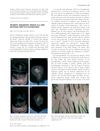 July 2011 in “British Journal of Dermatology”
 Hormone treatment caused hair loss, finasteride helped regrowth.
 January 2022 in “International Journal of Science and Research (IJSR)”
 This review discusses the biochemical and psychological impacts of polycystic ovary syndrome on immune functions against COVID-19 but reports no new clinical results.
 340 citations
,
September 2014 in “PLOS Genetics”
340 citations
,
September 2014 in “PLOS Genetics” This study found that while genetic ancestry affects physical appearance traits in Latin American populations, it accounts for only a modest portion of the observed variation.
 106 citations
,
March 2013 in “Nature Communications”
106 citations
,
March 2013 in “Nature Communications” This study found several microRNA-related genetic variants linked to epithelial ovarian cancer risk, with a notable association at the 17q21.31 region, suggesting potential new susceptibility genes.
 50 citations
,
January 2016 in “The Journal of Clinical Endocrinology and Metabolism”
50 citations
,
January 2016 in “The Journal of Clinical Endocrinology and Metabolism” This study found that miRNA expression profiles in follicular fluid are altered in women with PCOS, with certain miRNAs potentially useful for distinguishing patient subtypes and contributing to understanding PCOS heterogeneity.
 15 citations
,
January 2010 in “Reproduction, Fertility and Development”
15 citations
,
January 2010 in “Reproduction, Fertility and Development” This study found that Han Chinese women carrying the rs6152A allele had a significantly higher risk of developing polycystic ovary syndrome compared to those with the rs6152GG genotype.