2 citations
,
July 2023 in “Cosmetics” In this study, researchers highlighted that while hair lipids are crucial for hair health and protection, surfactants in shampoos and conditioners can partially remove these lipids, potentially affecting hair structure, though the exact mechanisms remain poorly understood and require further investigation.
 1 citations
,
December 2021 in “International journal of research in dermatology”
1 citations
,
December 2021 in “International journal of research in dermatology” This review discusses the evolution of modern shampoos from basic cleansing agents to products with specific therapeutic uses and emphasizes the importance of dermatologists understanding shampoo mechanisms and appropriate selection for scalp and hair health.
 6 citations
,
May 2003 in “PubMed”
6 citations
,
May 2003 in “PubMed” This study found that DNA is present at low levels in human hair shafts, with higher amounts near the root, and that its levels decrease after surfactant washing and colorant treatments.
1 citations
,
November 2023 in “Cosmetics” This study found that washing hair with surfactants reduces the internal density of hair due to cuticle lifting, and suggests that a cuticle-sealing strategy can inhibit this effect and maintain hair homeostasis.
10 citations
,
April 2020 in “Journal of surfactants and detergents” This study found that shampoos with sugar-derived surfactants improved hair cleansing properties, were less cytotoxic, and resulted in easier hair combing compared to formulations containing sodium laureth sulfate.
 September 2025 in “Journal of Surfactants and Detergents”
 In this study, shampoos containing sodium lauroyl methylaminopropionate showed superior coacervate formation and lubrication on wet hair, outperforming other amino acid surfactants and suggesting potential for creating low-irritation, high-performance hair products.
 17 citations
,
July 2019 in “Scientific reports”
17 citations
,
July 2019 in “Scientific reports” This study investigated lipid loss in hair caused by surfactants and found that surface and internal modifications can significantly protect different lipids from depletion, with internal modification preventing 52.0 to 81.3% of lipids in certain groups.
15 citations
,
October 2004 in “Colloids and surfaces. B, Biointerfaces” This study describes the presence of holes in hair fibers, absent in hair follicles, likely forming from daily care actions and removal of extractable substances.
 April 2026 in “Zenodo (CERN European Organization for Nuclear Research)”
 This study found that cationic surfactant-based conditioning systems significantly improve hair combability by forming a stable low-friction film on hair surfaces, reducing friction and enhancing sensory performance compared to standard systems, as confirmed by both instrumental and sensory evaluations.
 April 2026 in “Zenodo (CERN European Organization for Nuclear Research)”
 This study found that cationic surfactant-based conditioning systems significantly reduce friction on hair fibers, improving wet and dry combability by forming a stable film layer on the hair’s surface, as verified by both instrumental and sensory evaluations.
 6 citations
,
January 2000 in “Dermatology”
6 citations
,
January 2000 in “Dermatology” A girl's severely tangled hair couldn't be fixed and had to be cut due to a rare condition called plica neuropathica.
 January 2014 in “University of the Arts London Research Online (University of the Arts London)”
 Certain ingredients can help protect hair color.
 10 citations
,
November 1984 in “Journal of Colloid and Interface Science”
10 citations
,
November 1984 in “Journal of Colloid and Interface Science” The study found that the Marangoni effect causes the uneven wetting of surfactant-coated hair due to the surfactant moving into the water.
 42 citations
,
January 2009 in “Colloids and Surfaces B: Biointerfaces”
42 citations
,
January 2009 in “Colloids and Surfaces B: Biointerfaces” This study found that dimethylpabamidopropyl laurdimonium tosylate, a quaternary ammonium surfactant, adsorbs onto human scalp hair with kinetic and isotherm behaviors fitting specific models, changing hair fiber wettability from hydrophobic to hydrophilic.
 3 citations
,
January 1989 in “Journal of Japan Oil Chemists Society”
3 citations
,
January 1989 in “Journal of Japan Oil Chemists Society” This study examined the effects of six surfactants on hair and scalp, finding varying irritation levels and impacts on protein denaturation and scalp turnover time, with AMT suggested as a good detergent.
 1 citations
,
June 2023 in “ScienceRise Pharmaceutical Science”
1 citations
,
June 2023 in “ScienceRise Pharmaceutical Science” This study explored a computer simulation method for selecting emulsion compositions in dermatology, finding that the PS biocomplex can be effectively used as an emulsifier or co-emulsifier, which streamlines the development process and reduces experimental demands.
 January 1997 in “Elsevier eBooks”
 This chapter describes the functions and purposes of hair care cosmetics, including shampoos, hair growth promoters, and grooming products, without reporting new experimental findings.
 3 citations
,
September 2020 in “Journal of cosmetic dermatology”
3 citations
,
September 2020 in “Journal of cosmetic dermatology” This study found that coconut oil significantly increased the tensile strength of twisted hair fibers due to its ability to penetrate the hair core, in contrast to mineral oil.
 268 citations
,
April 2009 in “International Journal of Pharmaceutics”
268 citations
,
April 2009 in “International Journal of Pharmaceutics” In this study, niosomal formulations enhanced minoxidil skin accumulation compared to commercial and control solutions, suggesting a potential improvement for topical delivery in hair loss treatment.
 67 citations
,
April 2007 in “Journal der Deutschen Dermatologischen Gesellschaft”
67 citations
,
April 2007 in “Journal der Deutschen Dermatologischen Gesellschaft” This article reviews the development and formulation of shampoos, emphasizing their dual role as cosmetic and medicinal products, but presents no new experimental findings.
 44 citations
,
April 2003 in “European journal of pharmaceutical sciences”
44 citations
,
April 2003 in “European journal of pharmaceutical sciences” This study found that targeting the hair follicle can be increased by using lipophilic drugs combined with surfactant solutions and propylene glycol.
 39 citations
,
November 2015 in “Nanomedicine”
39 citations
,
November 2015 in “Nanomedicine” This study found that the developed Finasteride-loaded SMEDDS improved the relative bioavailability of the drug compared to a commercial tablet, offering a promising oral delivery system for glucosteroid analogs.
 4 citations
,
November 2017 in “Journal of Cosmetic Dermatology”
4 citations
,
November 2017 in “Journal of Cosmetic Dermatology” This study found that polyquaternium-68 at pH 9 achieved the greatest hair deposition, while polyquaternium-44 demonstrated the best wash resistance at pH 6.
 3 citations
,
October 2014 in “Pharmaceutical Development and Technology”
3 citations
,
October 2014 in “Pharmaceutical Development and Technology” This study found that an optimized microemulsion for minoxidil with high solubility, permeation flux, and skin deposition can be achieved with specific low and high levels of certain surfactants and co-solvents.
 October 2025 in “Current Pharmaceutical Research”
 This study evaluated a new herbal shampoo made from traditional plants and found it to have effective cleansing properties, moderate foam stability, and environmental safety, suggesting it as a favorable natural alternative to synthetic shampoos.

This study discusses a natural hair care shampoo formulated with ingredients such as Ritha, aloe Vera, and Amla fruit, designed to clean hair, eliminate oil and dandruff, and promote strength, blackness, and growth.

This study suggests that a herbal shampoo made from plant ingredients may be a promising natural remedy for hair fall and dandruff, demonstrating good quality and safety.
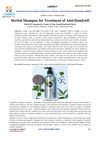 February 2023 in “International Journal of Advanced Research in Science, Communication and Technology”
 In this study, the researchers investigated the effectiveness of shampoo containing herbal extracts, specifically Neem and Tulsi, for managing dandruff and found it may offer benefits compared to synthetic drugs, which often cause side effects.
 September 2019 in “University of Huddersfield Repository (University of Huddersfield)”
 In this study, nanoemulsion formulations were found to significantly enhance the skin retention of the antiseptic agent triclosan, with the optimal mixture being a low surfactant concentration, as demonstrated through quantitative and qualitative analysis using tape-stripping and micro CT scans.
 29 citations
,
November 2013 in “Expert Review of Dermatology”
29 citations
,
November 2013 in “Expert Review of Dermatology” This article reviews potential causes and treatments for sensitive skin and reports no new clinical results; the authors emphasize neurogenic inflammation and cosmetic choices as key factors in managing the condition.