11 citations
,
January 1957 in “Journal of Histochemistry & Cytochemistry” This study demonstrated radiocalcium uptake in skin, eye, cartilage, and mucous glands, with the highest concentration in the hair follicle's keratogenous zone.
22 citations
,
December 2020 in “mSphere” This study identified a fungal sulfotransferase enzyme, FgSULT1, from *Fusarium graminearum*, expanding the sulfotransferase superfamily and offering new biocatalytic methods for producing bioactive sulfates.
 2 citations
,
June 2023 in “Plants”
2 citations
,
June 2023 in “Plants” This paper reviews extraction methods for obtaining polysaccharides from brown macroalgae like Sargassum, highlighting their antiviral, antimicrobial, and antitumoral bioactivities in both in vivo and in vitro studies, while also discussing challenges in research and commercialization of Sargassum-based products.
1 citations
,
October 2023 in “Pharmaceuticals” In this study, researchers investigated GAGs from the marine invertebrate Microcosmus exasperatus, finding that its polysaccharides possess antitumoral properties without affecting anticoagulant activity. The unique composition shows potential for cancer treatment when combined with existing therapies in future studies.
 January 2024 in “CRC Press eBooks”
 This study discusses the potential of microbial exopolysaccharides as safer cosmetic ingredients compared to synthetic chemicals like parabens and BHA, which may cause skin damage and cancer; exopolysaccharides offer benefits like antimicrobial and antioxidative effects without harmful impacts.
31 citations
,
January 2011 in “Journal of Biomaterials and Nanobiotechnology” This paper describes the development of unique hydrogel skin scaffolds from plant-derived polysaccharide mixtures that may offer improved biocompatibility and mechanical properties for use in artificial skin.
49 citations
,
October 2024 in “Frontiers in Immunology” In this review, the authors highlighted the potential of natural polysaccharides from plants, animals, and microbes to modulate immune responses, reduce inflammation, and strengthen the intestinal barrier, suggesting their promising role as immunomodulatory agents in pharmaceutical applications.
September 1978 in “PubMed” This study found that chondroitin sulfate levels were higher than hyaluronic acid in skin and hair follicle samples, with the highest concentration observed in prekeratin of hair follicles and wool fibers.
 305 citations
,
July 2016 in “International Journal of Biological Macromolecules”
305 citations
,
July 2016 in “International Journal of Biological Macromolecules” This review describes the roles of polysaccharides in antitumor, antiviral, and anti-inflammatory activities and introduces methods for their isolation and purification, reporting no new research results.
 July 2026 in “International Journal of Molecular Sciences”
 This review highlights how cyclodextrin-polysaccharide hybrids can advance drug delivery and environmental cleanup by improving the solubility and stability of hydrophobic molecules, serving as promising platforms for biomedical applications and efficient sorbents for wastewater treatment.
 8 citations
,
March 2022 in “Journal of The Taiwan Institute of Chemical Engineers”
8 citations
,
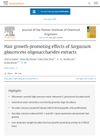
March 2022 in “Journal of The Taiwan Institute of Chemical Engineers” This study found that fucoidan extracts from Sargassum glaucescens, particularly oligo-fucoidans, promoted hair growth and increased related gene expression in human dermal papilla cells and mice models.
1 citations
,
February 2023 in “Tropical Journal of Pharmaceutical Research” This study found that polysulfonic acid mucopolysaccharide may reduce skin scarring in rats by influencing the TGF-β1/Smad signaling pathway.
130 citations
,
December 2022 in “Antioxidants” This review discusses the antioxidant activity of natural polysaccharides, highlighting their potential applications in areas like drug delivery and tissue engineering, but reports no new experimental findings.
7 citations
,
August 2024 in “Marine Drugs” This study found that ultrasonically depolymerized ι-carrageenan from Solieria chordalis yields low-molecular-weight fractions that maintain fibroblast viability and show no cytotoxicity, suggesting potential for safe use in human medicine.
November 2025 in “Preprints.org” This review reports that the monosaccharide composition of polysaccharides significantly impacts their bioactivity, highlighting various roles for glucans, galactans, mannans, fructans, and pectin in immune regulation, antioxidant effects, and other biological functions.
 83 citations
,
July 2008 in “Current Opinion in Chemical Biology”
83 citations
,
July 2008 in “Current Opinion in Chemical Biology” This review discusses the structural and functional advances in understanding sulfotransferases and sulfatases, highlighting new insights into enzyme mechanisms and inactivation by clinically relevant aryl sulfamates, but provides no new experimental results.
 March 2026 in “International Journal of Molecular Sciences”
 This review found that different monosaccharide compositions in polysaccharides from 72 medicinal plants are linked to varying biological activities, with glucans, galactans, mannans, fructans, and pectins showing significant roles in immunomodulation, antioxidant effects, and other health benefits.
10 citations
,
April 2020 in “Journal of surfactants and detergents” This study found that shampoos with sugar-derived surfactants improved hair cleansing properties, were less cytotoxic, and resulted in easier hair combing compared to formulations containing sodium laureth sulfate.
26 citations
,
September 2023 in “Bioengineered” This review article discusses recent progress in the extraction and potential health benefits of oligosaccharides from brown seaweeds, especially focusing on their antimicrobial, anti-inflammatory, and prebiotic properties, and possible applications in managing metabolic syndrome.
11 citations
,
June 2025 in “Polymers” This review reports on recent surfactant-based niosome formulations, including those with polysaccharides, for versatile drug delivery applications such as ocular, oral, and transdermal settings, while discussing their limitations and potential prospects.
22 citations
,
March 2007 in “European journal of pediatrics” This study found that scanning electron microscopy revealed considerable abnormalities in hair morphology in MPS I, II, IIIA, and IIIB patients, potentially related to heparan sulfate accumulation.
January 1995 in “Seoul National University Open Repository (Seoul National University)” This study found that skin sulfhydryl oxidase plays a role in keratinization and may contribute to skin's protective functions, with its expression influenced by irritants and differentiation modifiers.
This study identified ISPP-Rb, a novel immuno-stimulatory complex from Royoporus badius, that significantly activates murine macrophage cells and induces multiple proinflammatory cytokines.
 2 citations
,
May 2023 in “Marine Drugs”
2 citations
,
May 2023 in “Marine Drugs” The researchers reported that marine-derived saccharides, specifically L-fucose and chondroitin sulphate disaccharide, supported skin and hair health by promoting cellular proliferation, enhancing extracellular matrix production, and aiding the hair cycle's growth phase, potentially minimizing aging effects.
75 citations
,
August 2018 in “Plant physiology” In this study, researchers found that increased hydrogen sulfide levels in Arabidopsis disrupted actin dynamics through S-sulfhydration, leading to the depolymerization of actin filaments and inhibited root hair growth.
 8 citations
,
April 2019 in “ACS Biomaterials Science & Engineering”
8 citations
,
April 2019 in “ACS Biomaterials Science & Engineering” This study found that a new SIS-PEG sponge promoted rapid skin defect healing in mice and showed potential for reconstructing reconstituted skin with regenerated hair.
9 citations
,
March 2018 in “Journal of the Formosan Medical Association” In this study, chitosan membranes enhanced melanocyte proliferation and survival by supporting both cell-cell and cell-substrate interactions, unlike polyvinyl alcohol membranes which only facilitated cell-cell interactions.
February 2020 in “The Pharmaceutical Society of Japan” August 2026 in “Materials Technology” This study developed a multifunctional TA-MoS2-SF hydrogel for diabetic ulcer treatment, demonstrating enhanced photothermal bactericidal effects, immune environment remodeling, and fibroblast proliferation, suggesting it may serve as an effective 'antibacterial-immunomodulatory-repair' strategy.
April 2024 in “Molecules/Molecules online/Molecules annual” The researchers reported that sulfated chitosan-containing sponges can modulate macrophage activity in diabetic wounds, reducing inflammation and promoting angiogenesis and tissue regeneration, which may enhance wound healing outcomes.