 83 citations
,
June 2020 in “Materials & Design”
83 citations
,
June 2020 in “Materials & Design” In this study, ACF sponges with 10% fucoidan significantly promoted wound healing and hair follicle regeneration in rats, showing improved hemostatic and antibacterial performance compared to other formulations.
5 citations
,
December 2020 in “International journal of biological macromolecules” This study found that shikimic acid- and maleate-based hair repair agents modified the structure of hair fibers, though they did not increase disulfide bridge content in the hair cortex.
February 1989 in “PubMed” This study found a genetic electrophoretic variant in high-sulfur proteins from human hair, which was more prevalent in the Japanese samples compared to Caucasian samples, suggesting an autosomal inheritance pattern.
 9 citations
,
January 2017 in “Organic Process Research & Development”
9 citations
,
January 2017 in “Organic Process Research & Development” This article describes the efficient synthesis of (S)-N-(2-bromo-6-methoxypyridin-4-yl)-2-hydroxy-2,4-dimethylpentanamide, a novel topical antiandrogen, with high purity and enantiomeric excess but reports no pharmacological results.
 7 citations
,
June 2020 in “Journal of The European Academy of Dermatology and Venereology”
7 citations
,
June 2020 in “Journal of The European Academy of Dermatology and Venereology” This article discusses the role of Minoxidil Sulfotransferase Enzyme (SULT1A1) genetic variants in predicting the response to oral minoxidil for treating female pattern hair loss, without presenting new research findings.
3 citations
,
April 2015 in “Current problems in dermatology” This study focuses on improving the detection and characterization of an enzyme in guinea pig hair follicles that converts arginine to citrulline, highlighting challenges with assay sensitivity and reproducibility.
 16 citations
,
October 2003 in “Journal of applied polymer science”
16 citations
,
October 2003 in “Journal of applied polymer science” This study found that chemically modifying hair with 2-iminothiorane hydrochloride improved the permanence of hair setting without damaging the hair by increasing disulfide bonds.
December 2023 in “Reactions weekly” December 2023 in “Reactions weekly” September 2013 in “Reactions weekly”  June 2026 in “Zenodo (CERN European Organization for Nuclear Research)”
 In this study, researchers developed a plant-based, SLS-free anti-dandruff shampoo with optimal cosmetic properties and antifungal effectiveness, reporting its potential as a safe and biodegradable alternative to synthetic products.
May 2026 in “Inovasi Kesehatan Global” This case report describes a 7-year-old boy with Tinea favosa caused by Trichophyton schoenleinii, treated for 8–12 weeks with oral griseofulvin and ketoconazole cream, leading to recovery from crusts and inflammation but permanent hair loss in some areas.
2 citations
,
October 2011 This study concluded that a compound formulation was effective in improving various clinical symptoms of dermatophytosis, including itching, scaling, and erythema, after 45 days of treatment.
5 citations
,
April 2014 in “Journal of Lipid Research” This study demonstrates a method to noninvasively assess lipid classes in rodent sebum via high-field proton NMR, observing significant lipid reductions in rats treated with an SCD1 inhibitor.
 11 citations
,
May 2010 in “Annals of the Academy of Medicine Singapore”
11 citations
,
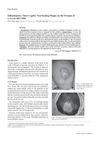
May 2010 in “Annals of the Academy of Medicine Singapore” This case report describes a 4-year-old girl in Singapore with inflammatory tinea capitis, which improved with oral griseofulvin and selenium sulfide shampoo.
23 citations
,
November 1964 in “Journal of Dairy Science” This study found that high molybdenum levels in the diet, especially with added sulfate sulfur, led to symptoms like alopecia and hair color loss in heifers; however, these were corrected by adding copper.
3 citations
,
July 2005 in “DOAJ (DOAJ: Directory of Open Access Journals)” This study found that sodium selenite induced both subacute and chronic selenosis in cow calves, significantly affecting specific haematological parameters, with more pronounced alterations observed in chronic toxicity.
 14 citations
,
December 2013 in “Molecules”
14 citations
,
December 2013 in “Molecules” This study identified a new lignan and 21 known compounds from Asiasarum heterotropoides roots, with two compounds showing potential anticancer activity by influencing NO production, FOXP3 expression, and HIF-1α activity in vitro.
 7 citations
,
January 1982 in “Acta agriculturae Scandinavica”
7 citations
,
January 1982 in “Acta agriculturae Scandinavica” Mink use L-methionine and L-cystine slightly better than natural amino acids for hair growth, but D-methionine is not effective.
75 citations
,
March 2007 in “Journal of Biological Chemistry” This review discusses the complexities and uncertainties in the pathways and mechanisms for disulfide bond formation in multicellular organisms and reports no new experimental findings.
![Integrating Multi-Omics Analyses of Nonomuraea Dietziae to Reveal the Role of Soybean Oil in [(4′-OH)MeLeu]4-CsA Overproduction](/images/assets/0eba9759-3aa4-4a06-a70a-2d9c46be53f3/small/23018.jpg) 1 citations
,
July 2017 in “Microbial Cell Factories”
1 citations
,
July 2017 in “Microbial Cell Factories” This study found that supplementing soybean oil significantly increased the production of the cyclosporine A derivative [(4'-OH)MeLeu]4-CsA by 55.6%, offering potential enhancements for its clinical application.
 33 citations
,
January 2007 in “Pediatric dermatology”
33 citations
,
January 2007 in “Pediatric dermatology” This report describes a 3.5-year-old girl with argininosuccinicaciduria, highlighting congenital trichorrhexis nodosa as a notable feature associated with the disorder.
 4 citations
,
December 2013 in “International Journal of Dermatology”
4 citations
,
December 2013 in “International Journal of Dermatology” This correspondence discusses nasal sporotrichosis in children and does not report any clinical results.
1 citations
,
October 2022 in “The American Journal of Gastroenterology” This case study describes a 29-year-old woman whose severe liver injury was primarily attributed to chronic arsenic exposure, highlighting the importance of recognizing metal toxicity in patient care.
January 2011 in “Zhongguo xin yao zazhi” This study developed a new method for synthesizing finasteride that eliminates the need for expensive and toxic chemicals, achieving high purity and a 24.2% yield.
 May 2021 in “The FASEB Journal”
 This study presents the crystal structure of human SRD5A2 with finasteride and reveals insights into its enzyme catalysis and inhibition mechanisms, which may inform drug development.
This study observed that antifungal treatment in fungal asthma patients led to a significant decrease in oral corticosteroid use, though the clinical importance remains unclear due to potential confounders.
 16 citations
,
October 1994 in “The Journal of Steroid Biochemistry and Molecular Biology”
16 citations
,
October 1994 in “The Journal of Steroid Biochemistry and Molecular Biology” Two non-steroidal antiandrogens, RU 58841 and RU 56187, form a common metabolite at different rates, which may influence their effects; RU 56187 could be used for prostate cancer treatment and RU 58841 for acne treatment.
27 citations
,
June 2017 in “Expert opinion on investigational drugs” This review discusses ongoing and past trials for novel acne treatments, focusing on topical agents with potential sebosuppressive, antimicrobial, or anti-inflammatory effects, without reporting new clinical results.
51 citations
,
August 2015 in “Cochrane library” This systematic review reports that there is currently no evidence supporting methotrexate for maintaining remission in ulcerative colitis; further large-scale trials are needed to assess its efficacy and safety.