 28 citations
,
August 2015 in “Journal of Drug Targeting”
28 citations
,
August 2015 in “Journal of Drug Targeting” This study found that a novel proniosomal gel formulation of CoQ10 improved antioxidant levels and provided better skin protection against UV radiation compared to a conventional CoQ10 gel in animal models.
28 citations
,
October 2014 in “Pharmaceutical Biology” This study documented 80 plant species used as traditional cosmetics in parts of South West Nigeria, preserving orally transmitted information on these practices.
 28 citations
,
March 2014 in “International Journal of Nanomedicine”
28 citations
,
March 2014 in “International Journal of Nanomedicine” This study developed lipid nanoparticles for delivering minoxidil and finasteride to the dermis and hair follicles, showing stability and a desired prolonged release, though with low skin penetration levels.
 25 citations
,
January 1983 in “Analyst”
25 citations
,
January 1983 in “Analyst” Method measures minoxidil in tablets accurately and easily.
 17 citations
,
June 2012 in “Journal of experimental zoology. Part B, Molecular and developmental evolution”
17 citations
,
June 2012 in “Journal of experimental zoology. Part B, Molecular and developmental evolution” This review explores theories on the evolution of hair from synapsid scales and glands, proposing mechanisms supported by comparative studies, but reports no new experimental findings.
 16 citations
,
January 2012 in “Asian pacific Journal of Tropical Biomedicine”
16 citations
,
January 2012 in “Asian pacific Journal of Tropical Biomedicine” This study found that a 2% polyherbal phyto-complex cream containing aqueous extracts of Trichosanthes cucumerina and Abrus precatorius effectively promoted hair growth in preclinical tests, comparable to minoxidil 2%.
14 citations
,
November 2019 in “Materials” This study found that nanodiamonds of various sizes can penetrate different layers of murine skin in vitro, reaching hair follicle niches, and may be suitable for multimodal imaging applications.
 14 citations
,
August 2018 in “Journal of Pharmaceutical and Biomedical Analysis”
14 citations
,
August 2018 in “Journal of Pharmaceutical and Biomedical Analysis” This study found that finasteride maintained chemical and physical stability in various excipient mixtures, which may guide the development of stable topical delivery systems.
 12 citations
,
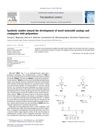
February 2010 in “Tetrahedron Letters”
12 citations
,
February 2010 in “Tetrahedron Letters” This article describes the synthesis of novel polyamine-modified minoxidil analogs and conjugates to potentially enhance minoxidil's biological activity, selectivity, and water solubility, but reports no new biological results.
 12 citations
,
January 2010 in “Pediatric Health”
12 citations
,
January 2010 in “Pediatric Health” This review discusses treatment strategies for PCOS, focusing on using insulin-sensitizing medications alongside weight reduction and exercise to improve hyperinsulinemia and hyperandrogenism, and reports no new results.
 12 citations
,
January 1988 in “YAKUGAKU ZASSHI”
12 citations
,
January 1988 in “YAKUGAKU ZASSHI” This study found that Polygonum multiflorum and Panax japonicum extracts could promote hair regrowth in mice, suggesting potential use as hair tonics.
 11 citations
,
February 1989 in “Journal of veterinary medicine. Series A”
11 citations
,
February 1989 in “Journal of veterinary medicine. Series A” This study observed that congenital hypotrichosis in crossbred cattle is linked to short, curly, dilute-color hair, potentially due to color dilution mutants in European breeds.
 10 citations
,
June 2014 in “Journal of Pharmacy and Pharmacology”
10 citations
,
June 2014 in “Journal of Pharmacy and Pharmacology” This study found that antiandrogenic compounds in Curcuma aeruginosa, including germacrone, degrade rapidly at high temperatures but are more stable when solubilized in PEG-40.
 9 citations
,
July 2021 in “Journal of Natural Medicines”
9 citations
,
July 2021 in “Journal of Natural Medicines” This review summarizes research finding over 150 new molecules with various biological activities from traditional herbal medicines studied in China, Mongolia, Uzbekistan, and Bangladesh.
9 citations
,
September 2016 in “Forensic science international” In this study, Thai scalp hair exhibited some age and sex variations in hair area, which may aid forensic and anthropological investigations.
 9 citations
,
January 1989 in “Sen'i Gakkaishi”
9 citations
,
January 1989 in “Sen'i Gakkaishi” This study found that moisture sorption properties of wool and hair fibers from various animals were similar, despite different structural features, with sorbed water being more ordered than liquid water.
6 citations
,
January 1981 6 citations
,
November 1977 in “International Journal of Legal Medicine” Human hair contains a substance that shows blood group A activity.
 5 citations
,
March 2020 in “Cell and Tissue Banking”
5 citations
,
March 2020 in “Cell and Tissue Banking” This study found that injecting a mixture of epidermal stem cells and dermal papilla cells can induce hair follicle regeneration and well-ordered epidermis formation in mice.
5 citations
,
January 2016 in “BLDE University Journal of Health Sciences” This study observed that Kasisa Bhasma is safer and less toxic than Shodhita Kasisa, particularly at higher doses, when administered to experimental rats.
5 citations
,
August 1981 in “Archives of Dermatology” This paper examines the potential autoimmune basis of alopecia areata, but reports no new clinical results; the focus is on analyzing complement levels and macrophage migration inhibition factor in patients.
 4 citations
,
February 2012 in “Chinese Science Bulletin”
4 citations
,
February 2012 in “Chinese Science Bulletin” In this study, overexpression of the MtAnn3 gene in Medicago truncatula roots was associated with altered root hair growth polarity in a calcium-free environment.
 4 citations
,
January 1994 in “Yakugaku zasshi”
4 citations
,
January 1994 in “Yakugaku zasshi” In this study, EPC-K, a compound with antioxidant and moisturizing effects, was found to decompose significantly under certain conditions, impacting its stability in quasi drug hair-growing products.
 3 citations
,
January 1994 in “Journal of Society of Cosmetic Chemists of Japan”
3 citations
,
January 1994 in “Journal of Society of Cosmetic Chemists of Japan” This study found that a hair tonic increased hair growth and reduced resting hair ratios in men with alopecia.
2 citations
,
November 2021 in “Journal of Clinical Psychopharmacology” This article provides no new research results, focusing instead on International Consortium for Mood and Psychotic Disorder Research's topics and types of collaborations.
 2 citations
,
October 2007 in “Kafrelsheikh Veterinary Medical Journal”
2 citations
,
October 2007 in “Kafrelsheikh Veterinary Medical Journal” This study examined the morphological features of buffalo lips, finding that their structure includes distinct layers of skin, muscle, connective tissue, and glands.
 2 citations
,
January 2006 in “Durham e-Theses (Durham University)”
2 citations
,
January 2006 in “Durham e-Theses (Durham University)” This study found that solid-state NMR combined with X-ray techniques provided critical insights into the structure and solvation of finasteride polymorphs, identifying gaps in existing patent characterizations.
 2 citations
,
January 1994 in “Journal of S C C J”
2 citations
,
January 1994 in “Journal of S C C J” This study found that objective measurements of hair growth, such as hair growth rate and diameter, can provide a more accurate evaluation of androgenic alopecia than subjective grading alone.
 1 citations
,
July 2022 in “Plant Cell, Tissue and Organ Culture (PCTOC)”
1 citations
,
July 2022 in “Plant Cell, Tissue and Organ Culture (PCTOC)” This study identified that the biosynthetic pathways for coumestans in Eclipta prostrata are derived from acetate and shikimate pathways, while phenylpropanoid biosynthesis is exclusively from the shikimate pathway.
1 citations
,
July 2017 in “Microscopy and Microanalysis” In this study using C57BL/6 mice, researchers found that iron oxide nanoparticles permeated skin primarily through hair follicles and sebocytes, with absorption increasing over time.