43 citations
,
February 1999 in “Biochemical Journal” This study found that transgenic mice overexpressing the SSAT gene under a metallothionein promoter suffered delayed hair loss and were highly sensitive to polyamine analogues, which led to significant liver changes and mortality.
 May 2025 in “Anadolu Kliniği Tıp Bilimleri Dergisi”
 This study found that in male patients with androgenic alopecia, individuals with certain glutathione S-transferase gene polymorphisms exhibited higher oxidative stress and lower antioxidant capacity, although differences were not statistically significant, and oxidative stress appeared to increase with the progression of alopecia stages.
 2 citations
,
January 2011
2 citations
,
January 2011 This study developed and validated a UV spectrophotometric method for accurately measuring finasteride and tamsulosin in solutions and tablets, demonstrating good sensitivity and precision.
 22 citations
,
December 2017 in “Dermatologic Surgery”
22 citations
,
December 2017 in “Dermatologic Surgery” This study found that both intralesional PRP and topical tretinoin were effective and safe for treating striae distensae, with PRP being more effective and yielding higher patient satisfaction.
75 citations
,
August 2018 in “Plant physiology” In this study, researchers found that increased hydrogen sulfide levels in Arabidopsis disrupted actin dynamics through S-sulfhydration, leading to the depolymerization of actin filaments and inhibited root hair growth.
September 2009 in “Hair transplant forum international” This article reports that the ISHRS has formed a committee to register hair restoration outcomes in patients with cicatricial alopecia and other hair diseases, without presenting new research findings.
This study found that scalp care using micro-needle therapy was effective in improving hair density and thickness in middle-aged women with menopausal symptoms compared to a control group.
 18 citations
,
November 2008 in “Disease-a-Month”
18 citations
,
November 2008 in “Disease-a-Month” This study developed a multifunctional injectable hydrogel that effectively provided hemostasis and accelerated healing of infected skin wounds, demonstrating significant potential for clinical wound dressing applications.
January 2022 in “Skin Pharmacology and Physiology” This study demonstrated higher STAT3 gene expression in scalp tissue affected by androgenetic alopecia, but found no significant link with hair loss severity.
 15 citations
,
June 2019 in “Journal of Neuroendocrinology”
15 citations
,
June 2019 in “Journal of Neuroendocrinology” This study found that isoallopregnanolone reduced stress-induced tic-like behaviors and sensorimotor gating deficits in a mouse model of Tourette syndrome, suggesting potential therapeutic properties comparable to existing treatments like haloperidol and finasteride.
 8 citations
,
July 2018 in “Analytical sciences”
8 citations
,
July 2018 in “Analytical sciences” This study reported that derivatization with 5-butylpicolinic acid improved the sensitivity for detecting testosterone and DHT in saliva using LC-ESI-MS/MS, with minimal interference from the saliva matrix.
 May 2003 in “Hair transplant forum international”
 This review discusses the use of strontium in hair restoration, noting its effectiveness for managing post-operative itching but does not present new clinical results.
July 2025 in “Clinical Case Reports” In this case report, a 17-year-old male with a specific TRPS1 gene mutation presented with sparse, soft hair, short thumbs and toes, misaligned teeth, and distinctive bone abnormalities in the fingers and toes as observed through X-ray analysis.
January 2011 in “Linchuang pifuke zazhi” 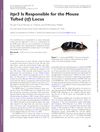 6 citations
,
October 2012 in “Journal of Heredity”
6 citations
,
October 2012 in “Journal of Heredity” This study identified the Itpr3 gene as responsible for the tufted hair loss phenotype in the BTBR mouse strain.
February 2026 in “Australasian Journal of Dermatology” This study developed a handheld card to simplify the calculation of the SALT score for assessing alopecia areata severity, noting that while it accelerates the process, formal validation against existing methods is still needed.
 2 citations
,
July 2011 in “AFRICAN JOURNAL OF BIOTECHNOLOGY”
2 citations
,
July 2011 in “AFRICAN JOURNAL OF BIOTECHNOLOGY” This study identified genetic variations in the DSG4 gene among sheep, revealing valuable markers for assessing their impact on wool traits.
 February 2016 in “The journal of allergy and clinical immunology/Journal of allergy and clinical immunology/The journal of allergy and clinical immunology”
 This study reports a novel mutation in the TP63 gene associated with T and B cell lymphopenia in an EEC patient, suggesting that EEC diagnosis should include TREC assay and evaluation for immunodeficiency.
16 citations
,
August 2021 in “Tumor Biology” This review discusses the dual role of the TMPRSS2 gene in coronaviral lung infection and prostate cancer, cautioning against TMPRSS2 inhibitors for early prostate cancer due to potential pro-inflammatory effects.
9 citations
,
April 2013 in “Journal of Chromatography B” This study developed and validated a sensitive LC-MS/MS method for quantifying tamsulosin in human serum, achieving high analyte recovery and demonstrating applicability in clinical research for benign prostatic hyperplasia.
1 citations
,
September 1994 in “Hair transplant forum international” This document summarizes the proceedings of the Second Annual Meeting of the International Society of Hair Restoration Surgery, held in Toronto, and includes no new clinical results.
September 2017 in “ics.org”  21 citations
,
November 2010 in “Talanta”
21 citations
,
November 2010 in “Talanta” This study reported the development of a novel and reliable liquid chromatographic method to measure testosterone and epitestosterone in human urine, offering sensitive detection for doping control.
In an outpatient cardiology center, this study found that introducing the AHA/ACC ABI screening protocol significantly increased the frequency of ABI ordering by 31.6% for symptomatic patients.
January 2014 in “Reactions Weekly”  2 citations
,
January 2001 in “Dermatologic Surgery”
2 citations
,
January 2001 in “Dermatologic Surgery” This study concluded that poliglecaprone 25 sutures may result in less postoperative discomfort and narrower scar formation compared to metal staples in hair transplantation donor site closures.
June 2014 in “Reactions Weekly” 32 citations
,
July 2017 in “Oncotarget” This study found that intermittent treatment with FTI lonafarnib and sulforaphane may be a promising therapeutic approach for children with Hutchinson-Gilford progeria syndrome, as it improved the cellular phenotype.
May 2026 in “Reactions Weekly”