 40 citations
,
April 2014 in “Genes & Development”
40 citations
,
April 2014 in “Genes & Development” The researchers reported that in mice, prolactin signaling in the skin epithelium inhibits hair follicle stem cell activation, promoting quiescence during periods of high serum prolactin like pregnancy and lactation.
 March 2021 in “bioRxiv (Cold Spring Harbor Laboratory)”
 This study found that the absence of Hif-p4h-2 in specific mouse skin cells disrupted hair follicle development, leading to hair loss due to irregular keratin formation and pathway signaling.
28 citations
,
December 2015 in “Journal of biological chemistry/The Journal of biological chemistry” This study found that prostasin's proteolytic activity is necessary for normal hair follicle development in mice, but not for interfollicular epidermal development.
 9 citations
,
January 2021 in “International Journal of Medical Sciences”
9 citations
,
January 2021 in “International Journal of Medical Sciences” This study found that Sox10 may play a role in early hair follicle development and cycling, as it is expressed in specific regions of the hair follicle during different phases of the hair cycle in mice.
 6 citations
,
December 2011 in “Nature”
6 citations
,
December 2011 in “Nature” This study found that the circadian clock regulates the activation and heterogeneity of hair follicle bulge stem cells, affecting tissue homeostasis and tumorigenesis risk in mouse skin.
January 2012 in “DigtalCommons @ Texas Medical Center Library (Texas Medical Center)” This study found that Stat3 deletion in certain skin cells led to increased differentiation and altered stem cell behavior, suggesting its significant role in skin tumor development and keratinocyte migration.
8 citations
,
October 2024 in “Developmental Cell”  14 citations
,
June 2017 in “Immunity”
14 citations
,
June 2017 in “Immunity” This study found that skin-resident Treg cells regulate hair follicle stem cell proliferation and differentiation through the Jag1-Notch signaling pathway, influencing hair regeneration.
 January 2007 in “The Year book of dermatology”
 Researchers successfully isolated and identified key stem cells in human hair follicles, which could help develop new skin and hair treatments.
 November 2025 in “Stem Cell Reviews and Reports”
 The error in figures didn't affect the study's results or conclusions.
 April 2023 in “Journal of Investigative Dermatology”
 This study found that in a mouse model of Gorlin syndrome, constitutive activation of signaling in dermal cells led to abnormal follicular growth, indicating non-epidermal factors may contribute to the disease.
 4 citations
,
February 2022 in “Frontiers in molecular biosciences”
4 citations
,
February 2022 in “Frontiers in molecular biosciences” This study revealed that chronic restraint stress in mice led to significant alterations in metabolic pathways and gene expression associated with hair growth inhibition, using metabolomics and transcriptomics analyses.
 April 2023 in “The journal of investigative dermatology/Journal of investigative dermatology”
 This study found that inhibiting the Mitochondrial Pyruvate Carrier in human hair follicles ex vivo activated the integrated stress response, affecting cell proliferation and metabolism.
37 citations
,
January 1993 in “Journal of Investigative Dermatology” 25 citations
,
July 2015 in “EMBO Reports” This study suggests that mouse lineage specification during pre-implantation development involves distinct timing and mechanisms for trophectoderm and inner cell mass differentiation, challenging existing models.
 December 2023 in “Biointerface Research in Applied Chemistry”
 This study used molecular docking to identify stiripentol as a potential new inhibitor of the SRD5A2 enzyme, which is targeted for treating androgen-related diseases; however, in vivo trials are needed to validate its efficacy.
9 citations
,
May 2014 in “BMC medical genetics” In this case report, the authors suggest that a novel enhancer element's translocation near the TRPS1 gene may contribute to the TRPS phenotype, expanding understanding of the syndrome's genetic basis.
 15 citations
,
December 2015 in “PLoS ONE”
15 citations
,
December 2015 in “PLoS ONE” This study found that human adult dermal fibroblasts can express markers typically associated with neural cells, suggesting potential pitfalls in relying on immunophenotyping alone for cell identity verification.
3 citations
,
July 2017 in “Endogenous locus-driven H-Ras G12V expression induces senescence-like phenotype in primary fibroblasts of the Costello syndrome mouse model” This study found that mouse hair follicle stem cells in a quiescent state exhibit greater chromatin dynamics and de-differentiation potential, suggesting higher cell fate plasticity compared to their proliferative or differentiated counterparts.
September 2019 in “The journal of investigative dermatology/Journal of investigative dermatology” This study identified a novel G207E STING mutation causing a distinct phenotype involving alopecia, photosensitivity, and thyroid dysfunction, and suggests that common polymorphisms in TMEM173 and IFIH1 may influence disease presentation.
 6 citations
,
October 2012 in “Journal of Heredity”
6 citations
,
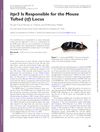
October 2012 in “Journal of Heredity” This study identified the Itpr3 gene as responsible for the tufted hair loss phenotype in the BTBR mouse strain.
 November 2022 in “Journal of Investigative Dermatology”
 This study found that "early" transit amplifying cells, marked by CD271, are the first keratinocyte stem cell progenitors with distinct features, playing a significant role in early epidermal differentiation and regeneration.
 June 2017 in “Journal of The American Academy of Dermatology”
 LED light helps hair follicle cells grow and prevents them from dying by activating certain cell pathways.
 April 2018 in “The journal of investigative dermatology/Journal of investigative dermatology”
 The authors concluded that Lrig1-positive stem cells are essential for sebaceous gland formation in mice, as their ablation led to temporary sebaceous gland disappearance without affecting hair growth.
 January 2026 in “Stem Cell Research & Therapy”
 This study found that targeting the AR/miR-128-3p/IGF-1 pathway with ASLNC168501 shows potential for treating androgenetic alopecia by restoring hair follicle stem cell function and promoting hair regeneration.
21 citations
,
March 2015 in “Neurological Sciences” This study reports that a novel frameshift mutation in the HTRA1 gene in a CARASIL pedigree led to reduced HTRA1 protein and increased TGF-β1 expression, potentially causing severe CARASIL and peripheral small arterial disease.
July 2025 in “Journal of Investigative Dermatology”  April 2019 in “Journal of Investigative Dermatology”
 This study found that BRG1 is crucial for keratinocyte migration during skin wound healing, as its suppression impairs wound closure by inhibiting migration without affecting cell proliferation or apoptosis.
 25 citations
,
January 2014 in “Annals of Dermatology”
25 citations
,
January 2014 in “Annals of Dermatology” Sfrp2 increases during hair follicle catagen phase and slows keratinocyte growth.
5 citations
,
May 2023 in “Frontiers in Cell and Developmental Biology” This study used single-cell techniques and lineage tracing to reveal that integrin α6 expression in neural crest cells can differentiate them into Schwann cells, melanocytes, and fibroblasts in skin, identifying integrin α6 as a potential marker for these derivatives.