 July 2016 in “Cancer Research”
 This study found that male pattern baldness was associated with an increased risk of skin cancer at the head and neck, particularly affecting the scalp.
 April 2016 in “Journal of The American Academy of Dermatology”
 In this study, exposure to ARBs, ACE inhibitors, and thiazides was associated with an increased risk of various skin cancers, including melanoma and nonmelanoma types, highlighting potential clinical implications for antihypertensive treatment choices.
January 2016 in “DOAJ (DOAJ: Directory of Open Access Journals)” This study demonstrates that collagen XVII is crucial for normal glomerular development, is present in normal colon epithelia, and plays a role in carcinogenesis in colorectal and squamous cell cancers.
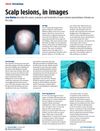 January 2015 in “Independent Nurse”
 Different scalp conditions can lead to hair loss or tumors, with treatments varying from creams to surgery; early detection is crucial.
 October 2014 in “Aktuelle Dermatologie”
 This study reports that elderly men with baldness and comorbid conditions experienced persistent scalp erosions following topical treatment with imiquimod or diclofenac, suggesting alternative therapies should be considered for this group.
 May 2014 in “Journal of The American Academy of Dermatology”
 Patients with nonmelanoma skin cancers are most bothered by fear of progression, appearance concerns, and having cancer.
This study reported an incidence of lichen planus of 0.16% among patients, with the classical type being most common, and found associations with various immune-mediated diseases and rare cases of malignant transformation.
May 2007 in “Hair transplant forum international” This abstract suggests that sun damage may thin scalp tissue, potentially affecting hair transplant outcomes due to increased risk of necrosis or poor growth.
 September 1961 in “Archives of Dermatology”
 This correspondence questions the assertion in a 1961 article that lichen sclerosus et atrophicus does not lead to carcinoma, citing a case contrary to the author's claim.
2 citations
,
March 1997 in “Veterinary Dermatology” This case report describes multiple skin tumors in an 11-year-old Doberman Pinscher with color dilution alopecia, but it remains unclear if the condition increases risk for such tumors.
January 2002 in “Linchuang pifuke zazhi” This report describes an unusual case of proliferating trichilemmal cyst with trichoepitheliomatous change in a young woman, differing from its typical presentation in elderly women.
 27 citations
,
August 2014 in “Wiley interdisciplinary reviews. Developmental biology”
27 citations
,
August 2014 in “Wiley interdisciplinary reviews. Developmental biology” This review highlights similarities in the development of thymus and skin epidermis, reporting no new results; the authors emphasize shared molecular mechanisms despite different embryonic origins.
July 2024 in “Journal of Investigative Dermatology” INTASYL is a promising, adaptable RNAi technology for treating skin cancers.
198 citations
,
November 1989 in “The Journal of Cell Biology” This study reported that K14 expression patterns and keratin filament organization in human skin's hair follicles differ from those in the epidermis, indicating distinct differentiation programs.
41 citations
,
July 1994 in “Journal of Dermatological Science” This review examines the differentiation potential of epithelial cells from various sources in hair follicle formation, concluding that complex interactions are required for hair-specific characteristics, which were achieved in vivo but not in vitro.
21 citations
,
February 1988 in “Toxicology” This study found that high doses of TCB caused severe toxicity in cotton top marmoset monkeys, with clinical and histological changes similar to those in humans and other primates exposed to PCBs.
4 citations
,
July 1979 in “Journal of the American Academy of Dermatology” This study describes "alarm reaction" histologic changes in pilosebaceous structures, including regression of hair matrix and alterations in sebaceous glands, affecting follicular and sebaceous gland morphology.
 3 citations
,
December 2020
3 citations
,
December 2020 This study investigated the interdigital glands in sheep, highlighting their apocrine sweat glands' ultrastructural characteristics and positive lectin reaction, but reported no new clinical results.
2 citations
,
September 2020 in “Pakistan Journal of Zoology” This study observed that red sindhi cattle have variations in skin structure between age and sex groups, with more developed skin appendages in adults and a higher density of sweat glands in younger cattle.
June 2019 in “International journal of dermatology and venereology” This review discusses the hedgehog signaling pathway's role in cutaneous tumors and hematological disorders, highlighting its potential as a therapeutic target, but reports no new clinical findings.
 April 2018 in “Journal of Investigative Dermatology”
 The researchers reported that in nonmelanoma skin cancers, the expression of osteopontin splice variants is significantly higher compared to normal skin, with OPN-a elevated in basal cell carcinoma more than OPN-c.
 October 2013 in “Journal of Investigative Dermatology”
 Collagen VII helps skin heal and stay strong, sirolimus may lower skin cancer risk in kidney transplant patients, high-molecular-mass hyaluronan helps naked mole rats resist cancer, dermal γδ T cells aid in hair growth in rodents, and overexpression of IL-33 in mouse skin causes itchiness, offering a model for studying allergic inflammation treatments.
January 2009 in “Repositório Científico do Instituto Politécnico de Viseu (Instituto Politécnico de Viseu)” This case study found that a skin lesion in a Samoyed dog did not match any single known follicular cyst or neoplasm type described in the literature.
 12 citations
,
March 2011 in “Journal of pathology”
12 citations
,
March 2011 in “Journal of pathology” In this study, activation of oncogenic K-ras in a mouse model caused the oral mucosa to rapidly progress from squamous hyperplasia to carcinoma within 14 days, demonstrating its acute sensitivity.
 114 citations
,
February 2012 in “International Journal of Dermatology”
114 citations
,
February 2012 in “International Journal of Dermatology” This review examines the dermatologic effects of tobacco use and nicotine, noting potential benefits and drawbacks for various skin conditions, but reports no new clinical results.
 5 citations
,
May 2013 in “The American Journal of Dermatopathology”
5 citations
,
May 2013 in “The American Journal of Dermatopathology” This article discusses the classification and characteristics of infundibular squamous cell carcinoma and highlights the ongoing debate about its differentiation from other carcinoma types, reporting no new clinical results.
 4 citations
,
August 2017 in “International journal of molecular sciences”
4 citations
,
August 2017 in “International journal of molecular sciences” This study observed two cases of pigmented epithelioid melanocytoma suggesting potential differing origins: one from a hair follicle's outer root sheath and another from an intradermal nevus.
 2 citations
,
May 2023 in “Cancer medicine”
2 citations
,
May 2023 in “Cancer medicine” This review reports that KRT80 is overexpressed in various cancers, enhancing cancer cell proliferation, invasiveness, and migration, suggesting it as a potential therapeutic target, though more clinical studies are needed to fully understand its role in cancer prognosis.
June 2026 in “Experimental Dermatology” This review explores the roles of laminin-332 in skin function, highlighting its involvement in epidermal cohesion, stem cell maintenance, wound healing, and potential in genetic therapies for junctional epidermolysis bullosa.
 November 2022 in “The journal of investigative dermatology/Journal of investigative dermatology”
 This study found that hemoglobin α is upregulated in epidermal keratinocytes after UV exposure and may function as an antioxidant, particularly for hair follicle stem cells.