 2 citations
,
September 2012 in “Asian Journal of Pharmaceutical Analysis”
2 citations
,
September 2012 in “Asian Journal of Pharmaceutical Analysis” This study developed and validated a second derivative spectrophotometric method for accurately estimating tamsulosin and finasteride in bulk and pharmaceutical formulations.
8 citations
,
January 1968 This study found that high concentrations of dimethyl sulfoxide are needed to cause significant swelling in hair fibers, though the swelling is reversible, unlike the effects on skin.
 1 citations
,
March 2022 in “bioRxiv (Cold Spring Harbor Laboratory)”
1 citations
,
March 2022 in “bioRxiv (Cold Spring Harbor Laboratory)” This study examined wool traits in Angora rabbits using low-coverage whole genome sequencing, identifying six QTLs and a gene, FGF10, linked to fiber growth and diameter, suggesting a cost-effective approach for complex trait analysis in genomic breeding.
 April 2024 in “arXiv (Cornell University)”
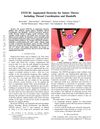
 In this study, the researchers developed an advanced robotic system called STITCH for performing suture tasks, which completed an average of 2.93 sutures autonomously and 4.47 sutures with human intervention in physical trials.
1 citations
,
January 2004 in “China Surfactant Detergent & Cosmetics” This study found that tea-seed saponin modified silicone polymer quaternary ammonium salt significantly improves hair conditioning performance in both dry and wet states when used in shampoo formulations.
 4 citations
,
September 2024 in “BMC Cancer”
4 citations
,
September 2024 in “BMC Cancer” In this prospective phase II clinical trial, researchers are investigating whether adding dutasteride to combined androgen blockade can improve the response rate and clinical outcomes for patients with androgen receptor-positive recurrent or metastatic salivary duct carcinoma.
July 2026 in “Journal of the American Academy of Dermatology” 546 citations
,
February 2008 in “PLANT PHYSIOLOGY” This study found that overexpression of OsPHR2 in rice leads to increased phosphate accumulation and root architecture changes even under phosphate-sufficient conditions.
30 citations
,
October 2020 in “Frontiers in Plant Science” In this study, the combination of arsenic toxicity and hypoxia in Arabidopsis thaliana altered root development through stress-specific root growth phenotypes and changes in phosphate starvation response, energy metabolism, and redox signaling.
25 citations
,
February 2023 in “Aesthetic Surgery Journal” This review concludes that current clinical and preclinical evidence does not indicate oncologic safety concerns linked to photobiomodulation therapy for skin rejuvenation, including no clear evidence of increased cancer risk.
17 citations
,
January 2020 in “Molecules” This study found that 42% of red yeast rice dietary supplements did not list monacolin concentrations on their labels, and only half of those that did contained the declared amounts.
 June 2025 in “Current Issues in Molecular Biology”
 In this laboratory study, Cucumis melo var. makuwa leaf extract significantly reduced DHT-induced apoptosis in human dermal papilla cells by modulating androgen receptor activity and gene expression, suggesting potential as a therapy for androgenetic alopecia.
 February 2026 in “Phycology”
 This review highlights the potential of microalgae as sustainable sources for nutraceuticals and cosmeceuticals, emphasizing their applications in functional foods, dietary supplements, and cosmetics for roles such as anti-aging and photoprotection in alignment with sustainability principles.
October 2025 in “JCI Insight” In a mouse model, this study found that an ethanol-based rosemary extract speeds up wound healing and reduces scarring by activating the TRPA1 nociceptor in sensory neurons, with carnosic acid identified as a key component.
July 2025 in “Food Safety and Health” This study used metabolomics to identify distinctive metabolic and phenolic profiles in American ginseng (Panax quinquefolius) from various regions, revealing specific biomarkers that can help differentiate between ginseng from Northeast China, Shandong, and the United States.
9 citations
,
January 2023 in “Journal of Clinical Medicine” This study presents a validated questionnaire, the FFA-QLI, which effectively assesses and differentiates the quality of life impact among patients with frontal fibrosing alopecia, showing greater sensitivity in identifying severe cases than the DLQI.
 2 citations
,
September 2018 in “Journal of Separation Science”
2 citations
,
September 2018 in “Journal of Separation Science” This study demonstrated that using finasteride impurity as a non-isotopically labeled internal standard in paper spray ionization–mass spectrometry can effectively and efficiently measure finasteride tablet dissolution, achieving results comparable to high-performance liquid chromatography.
 February 2026 in “Pharmaceuticals”
 This study introduced the KRDQN predictive framework, which outperformed existing methods in predicting adverse drug reactions and provided interpretable insights into drug mechanisms, aiding pharmacovigilance and clinical decision-making.
 17 citations
,
June 2011 in “The journal of investigative dermatology/Journal of investigative dermatology”
17 citations
,
June 2011 in “The journal of investigative dermatology/Journal of investigative dermatology” This study observed that mice with a Cx43 mutation exhibited slower and asynchronous hair regrowth with severe cuticle weathering, mimicking aspects of hair phenotype in some ODDD patients.
 April 2019 in “Journal of Investigative Dermatology”
 This study reported that mSKPs and DMSCs share similarities in biological characteristics but exhibit distinct transcriptome profiles, with mSKPs being more immune-related and DMSCs more associated with differentiation and disease pathways.
10 citations
,
September 2021 in “American Journal of Medical Genetics Part A” This study on Qatari patients with Woodhouse-Sakati syndrome highlights the high incidence and diverse clinical presentation due to a specific genetic variant, emphasizing early diagnosis for effective management.
 March 2025 in “Advanced Materials”
 This study developed a novel hydrogel dressing, QL@MAB, which facilitates accelerated healing of infected diabetic wounds in rats by offering prolonged drug release, water retention, and adaptive drug delivery in response to high glucose levels in the wound environment.

This study found that sericin dressing containing collagen hydrolysate significantly reduced wound healing time and improved scar quality compared to commercial dressing in split-thickness skin graft donor sites.
 1 citations
,
June 2022 in “Jambura Journal of Mathematics”
1 citations
,
June 2022 in “Jambura Journal of Mathematics” This review analyzes the research on production delivery strategies using n-vehicle, highlighting recent developments and suggesting areas for future study, but it reports no new experimental findings.
 4 citations
,
November 2017 in “Journal of Cosmetic Dermatology”
4 citations
,
November 2017 in “Journal of Cosmetic Dermatology” This study found that polyquaternium-68 at pH 9 achieved the greatest hair deposition, while polyquaternium-44 demonstrated the best wash resistance at pH 6.
23 citations
,
October 2021 in “AAPS PharmSciTech”  October 2019 in “International journal of contemporary medical research”
 This study observed that skin diseases had a small to moderate impact on patients' quality of life at a primary healthcare setting, suggesting the need for better training and medication availability for healthcare professionals.
 1 citations
,
July 2024 in “International Journal of Biological Research”
1 citations
,
July 2024 in “International Journal of Biological Research” This study found that a high percentage of pediatric sickle cell disease patients have parents from medium-high socioeconomic status, indicating that the educational background of parents did not influence the disease's prevalence.
 May 2022 in “Pakistan Journal of Medical and Health Sciences”
 This study reported that among dermatology patients at Sir Syed Hospital Qayyumabad, acne and other dermatoses were most frequent, with seasonal variations influencing their prevalence.
 March 2026 in “Mendeley Data”
 In this study, researchers developed an open-source browser-based tool to enhance the reproducibility and accuracy of SALT score calculations from scalp photos, aimed particularly at assessing partial regrowth in alopecia areata patients on JAK inhibitor therapy.