 6 citations
,
November 1996 in “Archives of Dermatology”
6 citations
,
November 1996 in “Archives of Dermatology” This case report describes a 29-year-old Japanese-Paraguayan man who experienced a relapse of leprosy 14 years after initial treatment, presenting with severe pain and skin lesions but no sensory impairment.
 18 citations
,
July 2018 in “Skin appendage disorders”
18 citations
,
July 2018 in “Skin appendage disorders” This review discusses trichoscopic features of hair disorders in individuals with dark skin phototypes and reports no new clinical results; the authors emphasize the need for more specific diagnostic criteria for these populations.
1 citations
,
January 2007 in “AIP conference proceedings” This study used phase contrast hard x-ray microscopy to capture detailed images of healthy human hair, revealing distinct structures such as the medulla, cortex, and cuticular layer.
 11 citations
,
October 2019 in “Journal of Cancer Immunology”
11 citations
,
October 2019 in “Journal of Cancer Immunology” This article discusses the role of external beam radiotherapy as a primary treatment method for cancer and reports no new clinical findings.
 6 citations
,
January 1998 in “Journal of Investigative Dermatology”
6 citations
,
January 1998 in “Journal of Investigative Dermatology” This study found that oxybenzone is very stable under light exposure, contradicting previous findings of its oxidation to semiquinone after solar irradiation.
12 citations
,
October 2001 in “British Journal of Ophthalmology” This paper suggests intralesional cidofovir as a potentially effective treatment for SCC with no systemic toxicity observed, but surgical excision remains the standard for its curative outcomes and thorough evaluation.
19 citations
,
May 2008 in “Applied spectroscopy” This study found that human hair cuticle and cortex have different protein structures, with beta-sheet and disorder configurations in the cuticle and alpha-helical structures in the cortex.
 4 citations
,
May 2022 in “Frontiers in Medicine”
4 citations
,
May 2022 in “Frontiers in Medicine” The authors concluded that trichoscopic examination can be useful for diagnosing syphilitic alopecia in patients with idiopathic alopecia, though the findings are nonspecific and further studies are needed.
28 citations
,
November 2009 in “Journal of Structural Biology” This study found that the molecular structure of hair is more sensitive to synchrotron X-ray radiation than its supramolecular architecture, indicating potential concerns for biological analyses using such radiation.
7 citations
,
January 2003 in “Journal of cosmetic and laser therapy” This study concluded that the Spa Touch system effectively retards hair regrowth, functioning like a "light razor" for quick and cost-effective epilation.
 August 2024 in “Biophysics Reviews”
 This study explores the physical properties of hair from various wild mammalian species using polarized light microscopy, aiming to correlate these properties with the internal structures such as the medulla, cortex, and keratin cuticle.
 2 citations
,
July 2015 in “The Open Dermatology Journal”
2 citations
,
July 2015 in “The Open Dermatology Journal” This review summarizes the main trichoscopic findings for diagnosing common hair and scalp disorders, but reports no new clinical results.
5 citations
,
January 2012 This review covers the basic principles of forensic hair analysis, including how chemical substances get incorporated into hair, and emphasizes its applications in disease diagnosis, without providing new experimental results.
September 2023 in “Journal of the American Academy of Dermatology” January 2026 in “International Journal of Cosmetic Science” This study identifies key attributes—luminosity, structural integrity, and vitality—that define hair vibrancy, providing insights to guide the development of hair products that align with consumer expectations.
June 2024 in “British Journal of Dermatology” This study reported a gap between podiatrists' frequent encounters with suspicious pigmented foot lesions and their lack of formal melanoma detection training, highlighting a need for improved education and referral pathways.
 September 2023 in “Journal of The American Academy of Dermatology”
 This review discusses the use of Raman spectroscopy to evaluate drug penetration in alopecia treatments and suggests it may be a promising tool for enhancing the effectiveness of laser-assisted drug delivery.
 9 citations
,
February 2004 in “Clinical and Experimental Ophthalmology”
9 citations
,
February 2004 in “Clinical and Experimental Ophthalmology” This report documents the second known case of Castleman's disease in the lacrimal gland, diagnosed in an 84-year-old woman through histological examination after excising a left upper lid mass.
 4 citations
,
January 2016 in “Case reports in dermatological medicine”
4 citations
,
January 2016 in “Case reports in dermatological medicine” This case report describes a novel dermoscopic finding of blue-grey dots in a target pattern around yellow dots and follicles in radiation-induced alopecia following cerebral angiography with fluoroscopy.
 19 citations
,
July 2006 in “Acta crystallographica”
19 citations
,
July 2006 in “Acta crystallographica” This study determined that previous reports mistakenly identified different polymorphs of furosemide and finasteride, which are actually identical, due to incomplete data collection in single-crystal X-ray diffraction analysis.
44 citations
,
September 2016 in “American Journal Of Pathology” This study identified a subpopulation of neural crest-derived progenitor cells in human corneal endothelial tissue from normal and Fuchs endothelial corneal dystrophy donors, which may have potential for future cell therapy development.
1 citations
,
June 2023 in “Skin Research and Technology” This study found that two shampoos with different dyeing methods had varying abilities to dye hair and impact hair health, suggesting that individuals should select hair color shampoos based on their personal needs.
1 citations
,
October 2022 in “Biomedicines” This study found that Prdm1 is crucial for whisker development in mice, affecting multiple signaling pathways and possibly playing a role in primates' evolutionary loss of vibrissae.
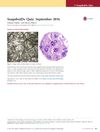 August 2016 in “Journal of Investigative Dermatology”
 This quiz based on a Journal of Investigative Dermatology article reports no new clinical results but serves as an educational tool for diagnosing scalp conditions, including scalp psoriasis and psoriatic alopecia.
14 citations
,
September 2016 in “Journal of Photochemistry and Photobiology B Biology” This study observed that mercury-lamp irradiation may cause cleavage of disulfide bonds in keratins of white hair, leading to the formation of thiols in laboratory settings.
December 2025 in “EXPERIMENTAL & CLINICAL MEDICINE GEORGIA” This study describes Pseudopelade of Brocq as a rare and enigmatic scarring alopecia characterized by irregular hair loss patterns on the scalp, requiring exclusion of other conditions like lichen planopilaris and discoid lupus erythematosus for a specific diagnosis.
 April 2017 in “Journal of Investigative Dermatology”
 This study found that retinoic acid and a retinol complex formulation showed different permeation and compound localization in a skin equivalent model, with unique lipid changes observed with only the retinol formulation.

This review discusses the use of hair microscopy in diagnosing hair-related conditions, highlighting techniques and common applications, but presents no new experimental results.
4 citations
,
May 2024 in “Rapid Communications in Mass Spectrometry” This study demonstrated that GP derivatization improves mass spectral analysis of spironolactone and its metabolites by reducing in-source fragmentation and enhancing signal clarity, laying the groundwork for future advancements in reaction optimization and quantitative assay development.
 1 citations
,
October 2017 in “ecancermedicalscience”
1 citations
,
October 2017 in “ecancermedicalscience” This study observed that the molecular structure of keratins in hair fibres' discrete transition zone differs in breast cancer patients, with altered lipid ester absorption bands reverting post-cancer removal.