 11 citations
,
October 2011 in “Allergologia et immunopathologia”
11 citations
,
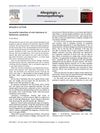
October 2011 in “Allergologia et immunopathologia” A girl with Netherton syndrome was able to eat wheat without allergies after a special treatment.
 December 2025 in “Journal of Food Innovation, Nutrition, and Environmental Sciences”
 This study evaluated the effects of sun drying and solar drying on Chaya leaves, finding that solar drying better preserves chlorophyll and phytochemicals while maintaining comparable nutritional quality to sun drying, suggesting its adoption could improve shelf life and maintain quality in areas without refrigeration.
March 2016 in “Journal of Pharmacological Sciences” This discussion reviews the shift in pharmaceutical strategy towards evidence-based and structure-guided drug development, highlighting ongoing challenges and efforts in computer-aided drug design without presenting new clinical results.
 1 citations
,
January 2013 in “MedChemComm”
1 citations
,
January 2013 in “MedChemComm” This study characterized the SARM PF-05314882, finding it demonstrates anabolic activity in rats with minimal effects on the prostate, seminal vesicles, and luteinizing hormone levels.
 March 2024 in “Birth defects research”
 This correspondence comments on a 2023 study by Nagaoka et al. regarding the maternal–fetal safety of an aqueous extract of Casearia sylvestris leaves in rats, but it does not provide new results or data.
December 2023 in “JSFK (Jurnal Sains Farmasi Klinis)/JSFK (Jurnal Sains Farmasi dan Klinis)” This study found that a hair tonic formulated with 0.3% cocoa bean extract demonstrated the best physical stability and effectively promoted hair growth in mice, with results comparable to a positive control when used twice daily for two weeks.
5 citations
,
January 2006 in “food preservation science” The study concludes that shoots and leaves of Japanese persimmon 'Saijo' contain high levels of total ascorbic acid and polyphenols, making them suitable for health foods, with foliating leaves offering the highest polyphenol content.
 March 2025 in “Research Square (Research Square)”
 This study explored the potential of the lysate and lipoteichoic acid from Lactiplantibacillus plantarum APsulloc 331261 to improve scalp seborrheic dermatitis by modulating inflammatory and lipogenesis pathways in vitro, suggesting potential as a natural treatment option.
 3 citations
,
March 2016 in “Phytotherapy Research”
3 citations
,
March 2016 in “Phytotherapy Research” In laboratory tests, this study found that a novel natural composition targeting 5-alpha reductase and inflammatory pathways reduced disease-related markers in androgenetic alopecia and benign prostatic hyperplasia more effectively than finasteride.
50 citations
,
December 2022 in “Food Chemistry Advances” This review discusses diosgenin's potential benefits for several chronic diseases and emphasizes extraction and quantification techniques, but reports no clinical findings.
 August 2025 in “Nutrients”
 This study found that Ageratum conyzoides extract enhanced hair growth in mice and human follicle cells, showing potential for hormonal modulation, pathway activation, and antioxidant protection; however, further clinical studies are needed to confirm efficacy in humans.
November 2025 in “Plant Foods for Human Nutrition” 
This study found that pectin lyase-modified red ginseng extract (GS-E3D) may promote hair growth by enhancing antioxidant and anti-inflammatory effects, proliferating hair dermal papilla cells, and inhibiting 5α-reductase activity.
This trial will compare the effectiveness of spironolactone to doxycycline for treating acne in adult females, potentially offering an alternative to antibiotics and isotretinoin.
This case study describes a 30-year-old woman with ACTH-independent Cushing's syndrome from adrenal carcinoma, who showed significant health improvement and normalized tests 18 months after left adrenalectomy.
2 citations
,
September 2025 in “Frontiers in Endocrinology” This review critically evaluates the evidence for SARMs' tissue selectivity and suggests their clinical benefits over traditional androgens are not yet well-supported by robust evidence, underscoring the need for further head-to-head trials.
 January 1953 in “The Lancet”
 Cortisone may help hair regrow by altering the local environment, with regrowth starting 3-4 weeks after treatment, but its use is not widely recommended.
 May 2026 in “AAPS PharmSciTech”
 This study found that PEGylated LUT-Aspasomes significantly improved neuroprotective effects in stressed rats, enhancing spatial memory, reducing depressive-like behavior, and preserving hippocampal architecture better than free luteolin. Additionally, it increased brain delivery and stability, suggesting potential for treating stress-related neurobehavioral disorders.
 January 2021 in “Journal of cosmetology & trichology”
 This study assessed Ageratum conyzoides gel's efficacy in reducing hair loss and improving quality of life in adults with pattern baldness, finding that it decreased temporal recession and improved hair-related distress scores, with a significant reduction in 5α-reductase expression and PGD2 release in vitro.
 November 2020 in “Journal of The American Academy of Dermatology”
 This study investigated the use of spironolactone in patients with estrogen-dependent cancers, aiming to determine if it is linked to increased cancer recurrence risk, but results are not reported.
In this phase 2 trial, STS01 1% significantly improved hair regrowth in patients with mild to moderate patchy alopecia areata compared to placebo, with a manageable skin irritation side effect profile.
289 citations
,
May 2003 in “Journal of Investigative Dermatology” This study demonstrates that human skin is capable of steroid hormone synthesis, but its role in androgenic skin disorders like acne and alopecia is yet to be clarified.
 13 citations
,
February 2019 in “Journal of Microencapsulation”
13 citations
,
February 2019 in “Journal of Microencapsulation” This study focused on designing a niosome formulation that encapsulates pumpkin seed oil for topical use, achieving high entrapment efficiency and stability over three months.
December 2019 in “theses.fr (ABES)” This research found that human adipose stem cells maintained their immaturity and potential to differentiate into beige adipocytes in an endothelial growth medium, correlating with increased SOX2 expression linked to beige and brown adipocyte activation.
3 citations
,
February 2025 in “Frontiers in Food Science and Technology” This perspective proposes a new classification system for "superfoods" to better align them with environmental and social sustainability goals, emphasizing plant-based sources over animal-based ones due to lower greenhouse gas emissions and deforestation impacts.
![The Synthesis of (−)-4-Methyl-8-Chloro-Trans-1,2,3,4,4a,5,6,10b-Octahydrobenzo-[f]-Quinolin-3-One-[3-14C] (LY300502-14C) via a Circuitous Route](/images/assets/73bab8dc-bdf0-45e3-8ef7-73d0d4b93cb1/small/21074.jpg) 3 citations
,
October 1994 in “Journal of Labelled Compounds and Radiopharmaceuticals”
3 citations
,
October 1994 in “Journal of Labelled Compounds and Radiopharmaceuticals” This synthesis report details the successful development of a C-14 labeled isotopomer of LY300502, a 5α-reductase inhibitor, through a multi-step radiochemical process.
2 citations
,
October 2012 in “Experimental Dermatology” This study found that, despite the unchanged total level of 18-MEA, deletion of the Sox21 gene disrupts its attachment to the hair cuticle, increases cholesterol sulphate levels, and differentially affects ceramide composition.
 100 citations
,
March 2006 in “Journal of biological chemistry/The Journal of biological chemistry”
100 citations
,
March 2006 in “Journal of biological chemistry/The Journal of biological chemistry” This study found that cystatin M/E strongly inhibits human cathepsin V and cathepsin L via distinct non-overlapping sites, suggesting an important role in human epidermal differentiation and hair follicle morphogenesis.
 August 2014 in “PLOS ONE”
 Hair loss is linked to eating less soy, having lower blood vanadium, and a specific genetic variation in Taiwanese communities.
 January 2025 in “Investigative and Clinical Urology”
 This study found that after 12 weeks of taking the trial product SHPro®, participants reported improvements in prostate symptom scores and erectile function, with confirmed safety.