January 1962 in “Archives of Dermatology” This case report describes a 5-year-old girl with lipoid proteinosis, characterized by a raspy voice, thinning scalp hair, and recurrent crusted lesions leading to pock-like scars.
 February 2024 in “Australasian journal of dermatology”
 This study found that in atrophic acne scars, inflammation infiltrates the pilosebaceous unit over time, affecting resident stem cells and hindering the normal regeneration of the epidermis and adnexal structures, leading to scarring.
 5 citations
,
September 2016 in “Dermatologic Therapy”
5 citations
,
September 2016 in “Dermatologic Therapy” This paper reports three cases of hair transplantation using Feily's method, which showed unusual long-lasting dark areas on the scalp, suggesting more than 24 hours of caution might be needed to prevent necrosis.
 November 2001 in “Dermatologic Surgery”
 This study concluded that effective and safe alopecia reduction surgery is possible when specific surgical techniques are used, minimizing complications.
 24 citations
,
October 2007 in “Clinical and experimental dermatology”
24 citations
,
October 2007 in “Clinical and experimental dermatology” This case report describes two men with acne keloidalis nuchae who experienced successful outcomes with excision followed by secondary intention healing, resulting in good cosmetic results and minimal recurrence.
 August 2023 in “ACS applied materials & interfaces”
 In this study, researchers developed an innovative wound healing patch combining electrical and chemical components, which effectively guided recovery in animal scald models by promoting collagen deposition and the regeneration of skin structures.
 30 citations
,
November 2013 in “Journal of The American Academy of Dermatology”
30 citations
,
November 2013 in “Journal of The American Academy of Dermatology” This study reported that patterns of fibrosis identified through elastin staining may help distinguish specific forms of primary cicatricial alopecia in biopsy specimens, with certain patterns suggesting particular diagnoses.
 December 1989 in “The Journal of Dermatologic Surgery and Oncology”
 New techniques and findings in dermatologic surgery show improved pain management, safer liposuction, better hair transplantation, and effective treatments for skin conditions.
 11 citations
,
June 2008 in “Dermatologic Surgery”
11 citations
,
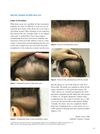
June 2008 in “Dermatologic Surgery” Transplanting chest hair into scalp scars may effectively treat wide donor scars in hair restoration.
 12 citations
,
February 2014 in “PLoS ONE”
12 citations
,
February 2014 in “PLoS ONE” This study observed high expression of mTOR pathway effectors in fibrous papules and TSC-associated angiofibromas, suggesting that topical rapamycin might be an effective treatment for fibrous papules.
 36 citations
,
September 1999 in “Toxicologic pathology”
36 citations
,
September 1999 in “Toxicologic pathology” This study suggests that hairless dogs' skin shows sensitivity to topical corticosteroids, highlighting their potential as a model for studying the efficacy and adverse effects of these treatments on skin.
18 citations
,
April 1989 in “Clinics in Dermatology” This study found that using an argon gas-based system for intralesional cryotherapy significantly reduced keloid scar volume, improved scar quality, and resulted in low recurrence rates after 12 months.
 12 citations
,
July 2011 in “European Journal of Dermatology”
12 citations
,
July 2011 in “European Journal of Dermatology” The authors concluded that VSCAPSI, a videodermoscopy-based assessment tool, provides evidence for early diagnosis, differential diagnosis, follow-up, and screening of scalp psoriasis.
 10 citations
,
January 2007 in “Dermatologic Surgery”
10 citations
,
January 2007 in “Dermatologic Surgery” The study reported that using polyamide hair fiber implants may be an effective adjunctive treatment for scalp scars, with most patients experiencing no complications.
 March 2022 in “The Journal of Family Practice”
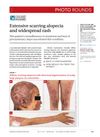
 Following treatment plans is crucial to prevent worsening skin and hair conditions.
 October 2024 in “Dermatology Practical & Conceptual”
 The researchers recommend considering porokeratosis as a possible diagnosis for scalp lesions since accurate identification is crucial for management and new treatments like topical cholesterol/lovastatin show promising potential for treating porokeratosis.
 2 citations
,
January 2022 in “Journal of Cutaneous and Aesthetic Surgery”
2 citations
,
January 2022 in “Journal of Cutaneous and Aesthetic Surgery” This study suggests the mechanical effect of injecting a solution is more important than the solution's nature in treating atrophic acne scars, with UBM sonography proposed for objective assessment.
 February 2024 in “Journal of Cellular and Molecular Medicine”
 In this study using rat models, researchers developed a Pluronic@F-127 hydrogel to deliver the flavonoid pectolinarin, finding it accelerates wound healing and reduces scar formation by enhancing cell migration, proliferation, and antioxidant activity.
May 2018 in “Dermatologic Surgery” This article describes the Dermatologic Surgery journal, which publishes comprehensive, peer-reviewed information on cosmetic and reconstructive skin surgery, but offers no new research findings.
November 2021 in “International Journal of Pharma and Bio Sciences” This article reviews the role of inflammation in scarring alopecia and reports no clinical findings; the authors note a need for further research into its etiology and pathogenesis.
1 citations
,
March 2023 in “Anais Brasileiros de Dermatologia” March 2026 in “Journal of Investigative Dermatology” Early diagnosis and tailored treatment are crucial to prevent permanent hair loss and support self-esteem in children with scarring alopecia.
May 2026 in “IOSR Journal of Dental and Medical Sciences” This study evaluated the use of automated microneedling therapy for managing facial scars, finding significant improvement in scar size and vascularity with minimal complications, particularly between the second and third treatment sessions, and achieving good to excellent patient satisfaction in two-thirds of participants.
June 2021 in “The Journal of Family Practice” This case report discusses a 69-year-old woman with alopecia areata who presented with a growing lesion on her hand, raising diagnostic considerations during her appointment for scalp steroid injections.
This chapter reviews scalp and facial reconstruction techniques and includes updated illustrations, but it reports no new experimental findings.
 November 2022 in “PubMed”
 This study found that inadequate thickness of deep dermal tissue in pigs is a key factor leading to fibrosis, with fibrosis likely serving a compensatory function for skin thickness.
April 2024 in “Veterinary Science and Medicine Journal” In this study, researchers describe the causes and treatment of scabiosis in cats, identifying mites Sarcoptes scabiei and Notoedres cati as the culprits and detailing a therapeutic regimen including ivermectin, diphenhydramine, nutritional supplements, and sulfur shampoo that resulted in improved symptoms and hair regrowth.
 44 citations
,
March 1991 in “International Journal of Dermatology”
44 citations
,
March 1991 in “International Journal of Dermatology” This article presents two cases of tinea capitis in postpubertal individuals highlighting the importance of early treatment to prevent scarring and permanent hair loss; it reports no new clinical results.
 4 citations
,
October 2008 in “International Journal of Dermatology”
4 citations
,
October 2008 in “International Journal of Dermatology” This case report highlights a rare presentation of hair-thread tourniquet syndrome in a two-year-old child, emphasizing that prompt identification and removal of the constricting fiber is crucial for successful treatment and prevention of tissue damage.
 August 2026 in “Cellular and Molecular Life Sciences”
 This study investigated the role of the glycoprotein Thy-1 in hypertrophic scar formation using a murine model, finding that Thy-1 knockdown reduced scar size and encouraged functional regeneration by influencing the p38MAPK signaling pathway under high-tension conditions.