September 2025 in “Toxins” Botulinum toxins show promise in treating various conditions, but more research is needed for hair and scalp disorders.
July 2025 in “International Journal of Pharmacy and Pharmaceutical Science” This review discusses the preparation and benefits of a botanical hair mask gel made from flaxseed, fenugreek, and rice water, highlighting its effectiveness in promoting scalp health, hair regeneration, and minimizing damage from chemical hair products, as reported by this source.
 May 2025 in “International Society of Hair Restoration Surgery”
 This study suggests that exosomes derived from mesenchymal stem cells may promote hair growth and improve skin health by enhancing dermal papilla cell proliferation and modulating inflammation and oxidative stress.
 October 2014 in “Aktuelle Dermatologie”
 This study reports that elderly men with baldness and comorbid conditions experienced persistent scalp erosions following topical treatment with imiquimod or diclofenac, suggesting alternative therapies should be considered for this group.
 January 2014 in “Journal of Investigative Dermatology”
 Proteins like aPKC and PDGF-AA, substances like adenosine and ATP, and adipose-derived stem cells all play important roles in hair growth and health, and could potentially be used to treat hair loss and skin conditions.
 November 2025 in “Zenodo (CERN European Organization for Nuclear Research)”
 This article explores the potential of Hair Booster by Dantura Botanics, a micronutrient formulation aimed at restoring the biochemical environment needed for hair regeneration, and describes clinical observations suggesting that significant scalp degeneration can be reversed when follicles receive adequate micronutrients, according to this study.
 November 2025 in “Zenodo (CERN European Organization for Nuclear Research)”
 In this study, authors argue that Hair Booster by Dantura Botanics supports hair regeneration by addressing internal biochemical deficiencies without relying on conventional hormonal or chemical treatments, and it is part of a broader micronutrient-based, terrain-corrective model for reversing scalp degeneration.
 16 citations
,
February 2010 in “Journal of the European Academy of Dermatology and Venereology”
16 citations
,
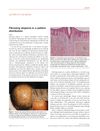
February 2010 in “Journal of the European Academy of Dermatology and Venereology” This article is a letter to the editor about fibrosing alopecia in a pattern distribution and reports no new research findings.
 15 citations
,
December 2011 in “Journal of the European Academy of Dermatology and Venereology”
15 citations
,
December 2011 in “Journal of the European Academy of Dermatology and Venereology” In this study, severe diffuse hair loss in patients with systemic lupus erythematosus was associated with distinct clinical, dermoscopic, and histopathological features, which improved alongside treatment of the underlying condition.
 31 citations
,
July 2015 in “Clinical, Cosmetic and Investigational Dermatology”
31 citations
,
July 2015 in “Clinical, Cosmetic and Investigational Dermatology” This article discusses the challenges and possible solutions in hair restoration surgery, focusing on donor hair availability, hair survival, and concealing surgical evidence, and reports no new clinical results.
 26 citations
,
October 2012 in “Dermatologic Clinics”
26 citations
,
October 2012 in “Dermatologic Clinics” This article reviews recent advancements in hair transplantation techniques, particularly follicular unit transplantation, and suggests an expansion of its applications beyond male pattern hair loss, but reports no new results.
 11 citations
,
July 2017 in “Regenerative Medicine”
11 citations
,
July 2017 in “Regenerative Medicine” This study found that the patch assay effectively reconstituted mature hair follicles using culture-expanded human fetal cells and may serve as a method to assess cell trichogenicity.
 11 citations
,
August 2013 in “Facial Plastic Surgery Clinics of North America”
11 citations
,
August 2013 in “Facial Plastic Surgery Clinics of North America” This review discusses the history and challenges of hair follicle regeneration using follicular fragments and dissociated cells, without presenting new clinical results.
 8 citations
,
April 2018 in “Facial Plastic Surgery”
8 citations
,
April 2018 in “Facial Plastic Surgery” This article reviews techniques for achieving natural-appearing hair restoration results in women and reports no new research findings.
 5 citations
,
July 2018 in “Experimental Dermatology”
5 citations
,
July 2018 in “Experimental Dermatology” In this study, researchers developed a relatively simple punch assay for regenerating hair follicles using mouse or human cells, finding efficient hair formation with mouse cells but low efficiency with human cells on reconstituted human skin.
 March 2025 in “Plastic & Reconstructive Surgery Global Open”
 This study reported that participants applying topical human platelet exosome extract serum experienced significant improvements in hair volume, density, scalp coverage, and overall hair health compared to a placebo, and no adverse effects were observed.

This study concluded that phytotherapy offers a potentially effective and safer alternative to conventional treatments for androgenetic alopecia by reducing hair loss progression without the usual adverse effects.

This study found that stem cell therapy before follicular unit extraction may improve hair restoration outcomes on scarred scalp tissue.
February 2014 in “아시안뷰티화장품학술지” This review discusses various natural extracts, such as peppermint, rosemary, wild cultivated ginseng, and others, for their potential hair growth promotion effects and calls for further exploration into combinations with fewer side effects.

This article discusses a novel device for applying mediums to human and animal tissues and reports no new clinical results, focusing on its potential for precise applications and enhanced cell transplants.
 June 2012 in “Expert Review of Dermatology”
 Japanese researchers created new hair follicles from human cells that grew hair when put into mice, and other findings showed a link between eye disease severity and corneal thickness, gene mutations affecting hearing and touch, and the safety of the shingles vaccine for adults over 50.
 June 2001 in “Proceedings of SPIE”
 The authors concluded that low energy laser therapy may serve as a useful complementary treatment for skin diseases such as lichen planus, infectious finger pulpits, scalp alopecia, and crural ulcers.
15 citations
,
November 2012 in “Archives of Ophthalmology” This description of dystrophy hypotrichosis associated with juvenile macular dystrophy provides an overview of this rare disorder characterized by short hair from birth and progressive loss of central vision but reports no new findings.
 January 2024 in “Elsevier eBooks”
 The authors concluded that increasing regulatory T cells in patients with alopecia areata may improve hair follicle regeneration by reducing autoimmune responses, suggesting a potential new therapeutic approach since current treatments are often ineffective with high relapse rates.
 January 2024 in “Burns and trauma”
 In a rat scalp expansion model, this study found that activating autophagy with rapamycin enhanced skin regeneration during tissue expansion by increasing expanded skin area, epidermis and dermis thicknesses, cell proliferation, angiogenesis, and other regenerative factors, whereas blocking autophagy reversed these effects.
 September 2007 in “PubMed”
 This study observed that subcutaneously implanted mixtures of human hair follicle cells in nude mice resulted in the formation of hair follicle-like structures, suggesting potential for hair regeneration.
 2 citations
,
April 2010 in “The Open Dermatology Journal”
2 citations
,
April 2010 in “The Open Dermatology Journal” This review discusses the development and role of corneodesmosin in skin and hair follicle integrity, highlighting findings from mouse models and its connection to genetic diseases, with no new experimental results included.
 September 2023 in “Biomedical Optics Express”
 This study used non-invasive imaging techniques to assess hair follicle characteristics in AGA mice, revealing delayed hair shaft alternation and growth stages, as well as testosterone-induced follicle miniaturization, offering potential methods for evaluating AGA on human scalps in vivo.
 23 citations
,
June 2015 in “Journal of Tissue Engineering and Regenerative Medicine”
23 citations
,
June 2015 in “Journal of Tissue Engineering and Regenerative Medicine” This study demonstrated that a 3D air–liquid culture system using Wnt-CM-treated cells can induce hair regeneration in nude mice and may facilitate large-scale preparation for hair loss treatment.
 80 citations
,
June 2008 in “Biomaterials”
80 citations
,
June 2008 in “Biomaterials” This study found that poly(ethylene-co-vinyl alcohol) membranes support the self-assembly of dermal papilla cells into compact spheroidal microtissues capable of inducing new hair follicles, suggesting potential for large-scale production for hair follicle regeneration.