 11 citations
,
December 2010 in “Archives of Dermatology”
11 citations
,
December 2010 in “Archives of Dermatology” This abstract provides no research results, focusing instead on navigation and subscription details for JAMA Dermatology content access.
May 2022 in “Голова и шея.” This study identified distinct differences between mature and immature hypertrophic scars of the head and neck, with immature scars showing higher TGF-β expression and more pronounced inflammatory reactions.
11 citations
,
August 2021 in “Aging” This study found that TGF-β2 may enhance collagen expression and spheroid formation in human dermal papilla cells, which could improve their hair inductivity and maintenance.
 December 2025 in “Frontiers in Nutrition”
 This review suggests that although hydrolyzed collagen peptides with certain supplements may improve skin elasticity and joint function, evidence for collagen's anti-aging and regenerative benefits remains inconsistent.
July 2025 in “Journal of Investigative Dermatology” 7 citations
,
March 2025 in “Free Radical Biology and Medicine” This study discusses how redox imbalance, specifically through reduced Insulin-like Growth Factor-1 mediated by the transcription factor JunB and sphingolipid metabolism changes, contributes to skin aging by depleting stem cell pools and altering the extracellular matrix, ultimately impacting skin integrity and function.
37 citations
,
January 2022 in “Frontiers in Genetics” This study found that dermal sheath stem cell characteristics are lost with aging in humans, affecting skin rejuvenation and structure, and identified specific proteins like Activin A influencing keratinocyte and fibroblast activity.
 38 citations
,
December 2012 in “Journal of Cutaneous Pathology”
38 citations
,
December 2012 in “Journal of Cutaneous Pathology” This review discusses the significance of elastic tissue staining in dermatopathology, particularly for diagnosing primary elastic tissue disorders and other skin conditions, but reports no new clinical results.
23 citations
,
July 2020 in “Aging Cell” In this study, researchers found that glycan profiles in epidermal stem cells differed between young and old mice, suggesting these changes may serve as molecular markers for aging.
March 2007 in “Journal of Plastic Reconstructive & Aesthetic Surgery” A new method was developed to create better skin models for healing and reconstruction.
 20 citations
,
December 2010 in “JEADV. Journal of the European Academy of Dermatology and Venereology/Journal of the European Academy of Dermatology and Venereology”
20 citations
,
December 2010 in “JEADV. Journal of the European Academy of Dermatology and Venereology/Journal of the European Academy of Dermatology and Venereology” This study found that selective downregulation of CD200 in the bulge area might contribute to unusual bulge involvement in a subset of alopecia areata cases.
 77 citations
,
July 2013 in “Best Practice & Research in Clinical Obstetrics & Gynaecology”
77 citations
,
July 2013 in “Best Practice & Research in Clinical Obstetrics & Gynaecology” This review discusses the impact of menopause-related oestrogen deficiency on skin ageing and suggests that oestrogen use may improve collagen and skin elasticity, but it reports no clinical trial results.
 September 2023 in “Clinical anatomy”
 This study examined the subcutaneous structures in forehead creases using cadavers and observed that dense fibrous structures connecting the dermis to the frontalis muscle, as well as specific epidermal and dermal characteristics, may contribute to the formation of these creases.
January 2011 in “Leather Science and Engineering” This study found that rabbit skin histology revealed changes in collagen and elastic fibers after soaking, dehairing, and tanning processes, impacting fiber tightness and fur removal.
8 citations
,
February 2005 in “International Journal of Cosmetic Science” The study found that applying Bifidobacterium-fermented soy milk extract to human skin significantly reduced the decline in skin elasticity, suggesting its potential as a cosmetic ingredient to prevent skin aging.
 December 2025 in “Russian Journal of Skin and Venereal Diseases”
 In this study, researchers found that patients with non-scar alopecia exhibited thinner hair sacs and root sheaths compared to a control group, with significant thinning observed in cases of alopecia areata.
 14 citations
,
September 2015 in “Ophthalmic plastic and reconstructive surgery”
14 citations
,
September 2015 in “Ophthalmic plastic and reconstructive surgery” This case report concludes that the presence of distinctive histiocytic responses in a Cambodian woman's eyelid lipogranulomas suggests surreptitious silicone injections despite her denial of prior procedures.
66 citations
,
June 1997 in “The Laryngoscope” This article discusses advancements in managing the aging brow and forehead, reporting on a tailored problem-specific approach using both innovative technologies and traditional surgeries, but provides no new clinical results.
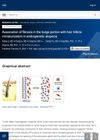 February 2021 in “Journal of The American Academy of Dermatology”
 This study observed that fibrosis occurs in the bulge region of hair follicles affected by androgenetic alopecia and is correlated with the hair miniaturization process.
December 1972 in “Archives of Dermatology” This report describes a case of scarring alopecia in a 7-year-old girl, highlighting the presence of inflammation without true sclerosis despite normal bone age and negative fungal tests.
January 2025 in “Aesthetic Surgery Journal Open Forum” This study investigated a fat grafting technique (MID BACK) to enhance back muscle definition in patients undergoing liposculpture, reporting no adverse events and only minor complications, suggesting the method is safe and effective for improving muscular contours and correcting spinal asymmetries.
1 citations
,
March 2007 in “DOAJ (DOAJ: Directory of Open Access Journals)” This study reported that appendices disorders, primarily acne and androgenic alopecia, were the most common skin diseases among patients in Sari, Mazandaran, North of Iran.
 April 2026 in “Open MIND”
 This review article discusses the aesthetic impacts of GLP-1 medications like Ozempic (semaglutide), including "Ozempic Face," skin sagging, and loss of lean mass, and explores potential recovery methods such as biostimulators, HIFU, endolaser, and PRP.
This chapter reviews secondary soft tissue revision surgeries for residual defects in patients with orofacial clefts, highlighting the various aesthetic issues and their surgical management after reaching skeletal maturity.
July 2020 in “Experimental Dermatology” This discussion of age-related changes in female scalp hair follicles reports no new results, highlighting the structural transformations that may contribute to thinning hair in women as they age.
 8 citations
,
October 2017 in “Dermatologic surgery”
8 citations
,
October 2017 in “Dermatologic surgery” This review emphasizes aesthetic principles for achieving a masculine look in male periorbital rejuvenation, specifically focusing on the upper eyelid, lower eyelid, lateral canthus, and brow, but reports no new clinical results.
 April 2025 in “bioRxiv (Cold Spring Harbor Laboratory)”
 In this study, aged mice showed better regenerative skin outcomes than young mice, linked to a specific fibroblast subpopulation and enhanced signaling interactions that promote regeneration. EREG treatment improved young mice's skin regeneration, suggesting potential for scarless therapies.
20 citations
,
June 2014 in “Pharmaceutical research” This study found that combining Aliaxin® Global Performance with Viscoderm® Skinkò E improved hydration and appearance of nasolabial folds more effectively than using Aliaxin® Global Performance alone.
 3 citations
,
May 2011 in “Practice nursing”
3 citations
,
May 2011 in “Practice nursing” As skin ages, it gets thinner, paler, and more wrinkled, and protection and care like sunblock and moisturizers are important.
1 citations
,
February 2023 in “Tropical Journal of Pharmaceutical Research” This study found that polysulfonic acid mucopolysaccharide may reduce skin scarring in rats by influencing the TGF-β1/Smad signaling pathway.