 March 2024 in “Chinese Chemical Letters”
 In this study, researchers demonstrated that zero valence fluorescent gold nanoclusters can be biosynthesized in damaged skin and inhibit hair follicle regeneration by affecting the NFκB inflammatory response pathway, suggesting potential as a treatment for hypertrichosis related to skin injury.
 37 citations
,
August 2016 in “Clinical, Cosmetic and Investigational Dermatology”
37 citations
,
August 2016 in “Clinical, Cosmetic and Investigational Dermatology” This article discusses central centrifugal cicatricial alopecia, highlighting its prevalence, potential genetic factors, and management challenges, but reports no new clinical conclusions and calls for further research.
26 citations
,
March 2023 in “Food Science and Biotechnology” 9 citations
,
October 2024 in “Food Science and Biotechnology”  13 citations
,
June 2020 in “Scientific reports”
13 citations
,
June 2020 in “Scientific reports” In this study, melatonin administration enhanced various cellular and structural features of the scrotal skin in Soay rams, including increased thickness, cell count, and gland activity.
 November 2015 in “European journal of dermatology/EJD. European journal of dermatology”
 This report describes a 55-year-old African woman with a 4-year history of frontotemporal alopecia and total eyebrow loss, who experienced scalp itching and had unsuccessfully undergone hair transplantation.
 58 citations
,
November 2012 in “PLoS ONE”
58 citations
,
November 2012 in “PLoS ONE” This study found that dermal fibroblast cultures, especially those with higher alpha-smooth muscle actin expression, can be used to produce skin-derived precursor cells, unlike human hair follicle dermal papilla cultures.
 7 citations
,
December 2015 in “Experimental Dermatology”
7 citations
,
December 2015 in “Experimental Dermatology” The study found that Sh-Polypeptide 9, a biomimetic peptide, enhances endothelial tubulogenesis and VEGF production more effectively than minoxidil, particularly at low concentrations, suggesting potential for hair follicle vascularization.
 62 citations
,
November 2009 in “Aging Cell”
62 citations
,
November 2009 in “Aging Cell” Hedgehog signaling helps keep hair follicle stem cells the same in both young and old human skin.
 38 citations
,
January 2006 in “Journal of Cellular Biochemistry”
38 citations
,
January 2006 in “Journal of Cellular Biochemistry” This study reported the successful isolation of epithelial stem cells from mouse embryonic skin using a simple culture method, with the cells showing the potential to differentiate into multiple cell types.
 17 citations
,
February 2015 in “Cell Death and Disease”
17 citations
,
February 2015 in “Cell Death and Disease” This study found that inhibiting AP1 transcription factor activity in the suprabasal epidermis of mice alters keratinocyte gene expression, reducing barrier integrity and mimicking human keratoderma.
 17 citations
,
September 2014 in “PLoS ONE”
17 citations
,
September 2014 in “PLoS ONE” This study found that SK2 channels in sensory terminals of rat muscle spindles and hair follicles may play a crucial role in modulating mechanosensory transduction by influencing receptor potentials through Ca2+-activated K+ currents.
 8 citations
,
March 2014 in “American Journal of Pathology”
8 citations
,
March 2014 in “American Journal of Pathology” This study found that hairless mice with homozygous mutations developed significantly more aggressive basal cell carcinomas and a heightened inflammatory response to UVB exposure compared to their haired littermates.
 3 citations
,
February 2022 in “Frontiers in cell and developmental biology”
3 citations
,
February 2022 in “Frontiers in cell and developmental biology” This study found that the circular RNA circCOL1A1 influences the formation of superior-quality brush hair in white goats by regulating hair follicle stem cell behavior and interacting with the miR-149-5p/CMTM3/AR axis.
 1 citations
,
October 2022 in “Scientific reports”
1 citations
,
October 2022 in “Scientific reports” This study found that nestin-expressing progenitor cells, capable of becoming ORS keratinocytes, are present in both developing and adult mouse hair follicles.
 1 citations
,
April 2018 in “Journal of Investigative Dermatology”
1 citations
,
April 2018 in “Journal of Investigative Dermatology” In this study, OEA was found to significantly enhance sebaceous lipogenesis and potentially reduce inflammation in human sebocytes, suggesting it as a promising candidate for treating skin dryness.
 January 2026 in “Frontiers in Medicine”
 In this study, PP-PTKL exhibited antioxidant, anti-inflammatory, and pro-melanogenic effects in laboratory settings, suggesting its potential role in preventing or treating hair greying. Further animal and human studies are needed to verify these findings.
 April 2024 in “The Indonesian Biomedical Journal”
 This study found that non-vitiliginous melanocyte stem cells from vitiligo patients were unaffected by the disease and could effectively differentiate into melanin-producing melanocytes, suggesting their potential for use in cellular therapy for vitiligo repigmentation.
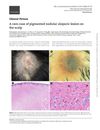
This study reported the case of a 30-year-old man with a bluish-grey scalp nodule that developed over a previously stable hairless plaque, revealing histopathological features consistent with epithelioid cell nests and spindle-shaped dermal melanocytes embedded in collagen.
 September 2023 in “Curēus”
 This source discusses the complexity of cancer research, emphasizing that despite extensive studies, a comprehensive understanding of metastatic progression and therapeutic development remains elusive, and underscores the importance of animal models in breast cancer research.
 June 2023 in “British Journal of Dermatology”
 This study reports a unique case of coinheritance of BRCA2 and CYLD pathogenic variants in a man with metastatic malignant cylindroma, suggesting that recognizing such genetic profiles in rare conditions can provide new treatment options, including the potential use of therapies targeting BRCA deficiency.
 March 2022 in “Indian Journal of Animal Research”
 In this study, canine hair follicle stem cells were shown to be multipotent, capable of differentiating into various cell types like adipocytes in vitro.
 April 2020 in “Journal of animal research”
 In this study, researchers identified hair follicle stem cells in the bulge region of canine hair follicles, suggesting potential applications for future translational research.
 April 2018 in “Journal of Investigative Dermatology”
 This study found that kaempferol increased the proliferation potential of basal epidermal cells in three-dimensional skin models by enhancing integrin expression and altering cell morphology.
 April 2018 in “Journal of Investigative Dermatology”
 This study found that Mentha suaveolens aqueous extract activated Nrf-2 and increased detoxifying enzyme expression in keratinocytes, providing protection against oxidative stress without cytotoxicity.
 April 2018 in “Journal of Investigative Dermatology”
 This study found that claudins CLDN1 and CLDN3 are crucial for maintaining proper hair follicle structure in mice, and their dysregulation may lead to telogen hair loss.
 April 2018 in “Journal of Investigative Dermatology”
 This study found that acne lesions and nonlesional skin in mild-to-moderate acne patients showed significant Th17-skewing and increased antimicrobials, suggesting systemic targets like IL-17/IL-23/IL-36 could be therapeutic.
 April 2018 in “Journal of Investigative Dermatology”
 This study found that elevated STAT5 levels are linked to improved hair-inducing capabilities in human dermal papilla cells, and reducing STAT5 impairs hair follicle induction.
 April 2018 in “Journal of Investigative Dermatology”
 This study found that treating human dermal fibroblast cells with ginsenoside Rd increased the expression of mRNA associated with the dermal-epidermal junction, suggesting potential as an anti-aging cosmetic ingredient.
 April 2018 in “Journal of Investigative Dermatology”
 This study found that TGFbeta is a key pathway causing age-related loss of dermal fat's antimicrobial function, suggesting that targeting TGFBR might help restore skin defense against infections in older age.