Search
for
Sort by
Research
480-510 / 1000+ resultsresearch Testosterone replacement in the setting of Finasteride therapy: a therapeutic dilemma
research Gilles de la Tourette syndrome – A treatable condition?
This review discusses treatment options for tics in Gilles de la Tourette syndrome, highlighting existing therapies and potential future advancements, but reports no new clinical findings.
research Angiogenic effects of recombinant thymosin β4 in a mouse hindlimb ischemia model
In a mouse model of peripheral vascular disease, this study found that recombinant thymosin β4 treatment increased expression levels of certain proteins, promoting angiogenesis.
research 54022 Pooled Safety Assessments from the Multinational Phase 3 THRIVE-AA1 and THRIVE-AA2 Trials of Deuruxolitinib in Adult Patients with Moderate to Severe Alopecia Areata
Deuruxolitinib is generally safe for treating alopecia areata.
research Activation of TRPV4 Induces Exocytosis and Ferroptosis in Human Melanoma Cells
This study found that TRPV4 activation induced massive exocytosis and cellular changes associated with ferroptosis in melanoma cells, highlighting a potential role for TRPV4 in mediating these processes.
research 75893 Long-term efficacy, complete scalp hair regrowth and normal body hair/nails in adolescents with severe alopecia areata (AA) receiving ritlecitinib up to 3 years in the ALLEGRO clinical trials
Ritlecitinib helps adolescents with severe alopecia areata regrow scalp hair and normalize body hair and nails.

research A Comparative Study on the Application of Robotic Hair Restoration Technology Versus Traditional Follicular Unit Excision in Male Androgenetic Alopecia
This report describes ARTAS, a robotic hair transplant technology with advanced mechanical and recognition capabilities, which has gained popularity in China since 2016 due to its ease of use and efficient hair follicle harvesting.
research Scalp, eyebrow, and eyelash hair regrowth with continued ritlecitinib treatment among patients with alopecia areata without target efficacy response at Week 24: post hoc analysis of the ALLEGRO phase 2b/3 study
This study found that some patients with alopecia areata who did not respond to ritlecitinib treatment by Week 24 achieved a positive response with continued therapy by Week 48, with tolerable side effects.

research Fatal Toxic Epidermal Necrolysis Associated with Minoxidil
Minoxidil can cause deadly skin reaction; monitor patients closely.
research Pattern of short-term adverse effects in patients undergoing low-dose radioactive iodine therapy
This study found that low-dose radioactive iodine therapy for hyperthyroidism and thyroid cancer produced short-term adverse effects like loss of taste, xerostomia, and hair loss, which were self-limiting.

research Ruxolitinib Rescues Multiorgan Clinical Autoimmunity in Patients with APS-1
This study describes the positive effects of the JAK inhibitor ruxolitinib in treating autoimmune manifestations in three patients with autoimmune polyendocrine syndrome type-1 over a period of at least 30 months, with excellent tolerance and no adverse events observed.
research Acneiform eruptions caused by an epidermal growth factor receptor-tyrosine kinase inhibitor ZD 1839
This study discusses two cases of acneiform skin eruptions associated with the use of the EGFR inhibitor ZD1839 in prostate cancer treatment, emphasizing the need for dermatologists to be aware of potential skin reactions.

research Clinically Significant Axial Shortening in Myopic Children After Repeated Low-Level Red Light Therapy: A Retrospective Multicenter Analysis
In this study, more than 25% of children experienced axial length shortening greater than 0.05 mm/year following repeated low-level red-light therapy.

research Robotic Hair Restoration
This review highlights that robotic hair transplantation reliably and efficiently extracts follicular units with transection rates comparable to manual methods, potentially allowing more physicians to offer hair restoration without needing additional staff, and notes ongoing software advancements that could enhance aesthetic results.
research title.alternative
This study found that supraphysiological doses of testosterone alter endothelial relaxation pathways in hypertensive rats, with varied contributions from nitric oxide, prostanoids, and endothelium-derived hyperpolarizing factors, influenced by estrogen and dihydrotestosterone levels.
research Fox-Fordyce Disease
This report describes a case where topical 0.1% tretinoin cream successfully controlled Fox-Fordyce disease in a 21-year-old woman.
research The innervation of the mystacial pad in the adult rat studied by anterograde transport of HRP conjugates
This study observed that innervation of the mystacial pad in rats by fine-caliber axons is more extensive and complex than previously described, with distinct differences in labeling patterns depending on the tracer and survival time.
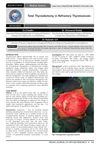
research TOTAL THYROIDECTOMY IN REFRACTORY THYROTOXICOSIS
This report presents a case of refractory thyrotoxicosis where the patient required a total thyroidectomy after resistance to conventional treatments including antithyroid drugs and radioactive iodine.

research Botryococcus terribilis Ethanol Extract Exerts Anti-inflammatory Effects on Murine RAW264 Cells
This study found that Botryococcus terribilis ethanol extract significantly reduced inflammation markers in LPS-stimulated RAW264 cells, potentially via Axl inhibition and alteration of immune-related gene expression.
research The use of NDYAG laser combined with pulsed light in the treatment of rosacea
This study reported that using a Cutera Xeo laser with specific probes may help treat rosacea symptoms like diffuse facial erythema and telangiectasias, with some risks like bruises and hypopigmentation.

research Alopecia: Association with Resistance to Thyroid Hormones
This study reports a novel TRbeta gene mutation associated with resistance to thyroid hormone syndrome, which may contribute to various forms of alopecia in the affected family members.
research Natural Transplants, Hair Transplantation Clinic. Hair Transplant Surgery near Riviera Beach Call (844) 327-4249.
research Population exposure–response analysis of the effect of ritlecitinib on eyebrow assessment and eyelash assessment in patients with alopecia areata
In this study, the researchers evaluated the exposure-response relationship of ritlecitinib on eyebrow and eyelash regrowth and concluded that the established models justify selecting a 50 mg dose for patients with severe alopecia areata, while highlighting differing efficacy among evaluation methods.

research Six-year Retrospective Review of Drug Reaction with Eosinophilia and Systemic Symptoms
This study examined 27 DRESS patients diagnosed in Thailand, identifying phenytoin, allopurinol, and nevirapine as common causes, with a 3.7% mortality rate and systemic corticosteroids being a common treatment.
research A Method to Monitor Dutasteride in Rat Plasma Using Liquid-Liquid Extraction and Multiple Reaction Monitoring: Comparisons and Validation
This study reported that a liquid-liquid extraction method using methyl tert-butyl ether and methylene chloride was most effective for extracting dutasteride and its internal standard from rat plasma.
research Research landscapes and knowledge structure of cardiac xenotransplantation: A bibliometric analysis
In this study, a bibliometric and science-mapping analysis revealed that cardiac xenotransplantation research is expanding rapidly, with significant collaboration primarily among institutions in the United States, Europe, and East Asia, and a focus on gene-edited donors and clinical trial readiness.
research How useful is ritlecitinib in alopecia areata?
Ritlecitinib helps regrow hair in alopecia areata and is safe for long-term use.
research How useful is ritlecitinib in alopecia areata?
Ritlecitinib helps regrow hair in alopecia areata and is safe for long-term use.
research ‘Ritlecitinib: unveiling hair regrowth for alopecia areata’
In this review, the authors highlight the FDA approval of Ritlecitinib, the first oral treatment specifically for moderate to severe alopecia areata in patients aged 12 and older, marking a significant advancement in managing this condition.