232 citations
,
January 2002 in “Mechanisms of development” This study reports that the differential expression patterns of three retinaldehyde dehydrogenases suggest a regulated need for retinoic acid synthesis in various organs during late mouse organogenesis.
 22 citations
,
January 2009 in “Medical mycology”
22 citations
,
January 2009 in “Medical mycology” In this case report, researchers identified Arthroderma vanbreuseghemii as the cause of a familial fungal infection, which was successfully treated with itraconazole and topical terbinafine cream.
37 citations
,
June 2004 in “Human molecular genetics online/Human molecular genetics” This study suggests that the HCR risk allele within the PSORS1 locus may contribute to psoriasis susceptibility by altering gene expression related to skin structure and differentiation, although these changes alone might not result in clinical symptoms.
September 2023 in “Journal of the American Academy of Dermatology” 147 citations
,
October 2021 in “Cancer Communications” This study found that the novel anti-HER2 antibody RC48 demonstrated promising activity and manageable safety in patients with HER2-overexpressing, advanced gastric or gastroesophageal junction cancer after at least two prior chemotherapy lines.
 8 citations
,
August 2011 in “Journal of Medicinal Food”
8 citations
,
August 2011 in “Journal of Medicinal Food” In this study, D-004 did not affect androgen-dependent development in rats exposed in utero, while finasteride caused significant changes in male offspring's androgen-dependent tissues.
 January 1999 in “Journal of the European Academy of Dermatology and Venereology”
 RAPK is a rare skin disorder with pigmented spots, mainly on hands and feet, starting in youth.
 4 citations
,
January 2014 in “RSC Advances”
4 citations
,
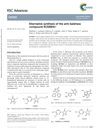
January 2014 in “RSC Advances” A new, less toxic and more efficient method to create the anti-baldness compound RU58841 was developed in 2014.
 April 2018 in “Journal of Investigative Dermatology”
 This study found that NDRG1 expression increases during the proliferation of infantile hemangioma and may positively regulate its growth, while FOXO1 downregulation plays a role in its pathogenesis.
 76 citations
,
September 1992 in “Endocrinology”
76 citations
,
September 1992 in “Endocrinology” This study details the isolation and characterization of the human type II 5 alpha-reductase gene, which may play a role in male pseudohermaphroditism, prostate cancer, and benign prostatic hyperplasia.
4 citations
,
August 2025 in “Plant Cell & Environment” This study found that the plant-growth-promoting bacteria Azospirillum brasilense enhances root hair development by increasing auxin levels and activating specific transcription factors, highlighting key signaling pathways involved in this process.
July 2024 in “Reactions Weekly” 16 citations
,
July 1996 in “Journal of Investigative Dermatology” March 2015 in “Institutional Repositories DataBase (IRDB)” 26 citations
,
January 2005 in “PubMed” This study reports that RU 58841-myristate, a new antiandrogen prodrug formulated with solid lipid nanoparticles, shows potential for targeting hair follicles in preclinical laboratory settings.
 1 citations
,
May 2019 in “Cytotherapy”
1 citations
,
May 2019 in “Cytotherapy” This study found that digital droplet PCR (ddPCR) outperformed qPCR in detecting replication competent lentivirus in CAR-T products by offering better sensitivity, specificity, and reproducibility, making it a reliable and rapid method for ensuring patient safety.
This study found that mutations in the TMPRSS6 gene affect the ability of matriptase-2 to inhibit hepcidin, which may impact the molecular pathogenesis of iron-refractory iron-deficiency anemia.
3 citations
,
February 2018 in “Experimental and Molecular Medicine/Experimental and molecular medicine” This study suggests that hair loss disorders like Marie Unna hereditary hypotrichosis may result from mutations that disrupt post-transcriptional regulation of HR protein expression by PCPB2 interacting with Hr mRNA.
 November 2024 in “SKIN The Journal of Cutaneous Medicine”
 This study reports that ritlecitinib was prescribed to a diverse group of patients, including adolescents and adults with and without prior treatment for Alopecia Areata, in the first three months after FDA approval, potentially expanding care options for this condition.
 35 citations
,
October 2017 in “Trends in Molecular Medicine”
35 citations
,
October 2017 in “Trends in Molecular Medicine” This research suggests that targeting the HIF-1α pathway via PHD inhibitors may enable regeneration similar to amphibians in mammals, potentially fast-tracking regenerative therapies from mice to humans.
 30 citations
,
October 2020 in “Nature Communications”
30 citations
,
October 2020 in “Nature Communications” This study provides the first crystal structure of the human SRD5A2 enzyme, revealing key insights into its function and inhibition which may aid future drug development.
42 citations
,
January 2015 in “Polskie Archiwum Medycyny Wewnętrznej” This study found that certain gene polymorphisms, specifically MTHFR 677CC and GGH 401TT and CT genotypes, were associated with fewer adverse effects from methotrexate in rheumatoid arthritis patients.
36 citations
,
August 2016 in “The Plant cell” This study found that downregulating PI3K in common bean severely impaired symbiosis with beneficial microorganisms, indicating an essential role for autophagy-related processes in these mutualistic interactions.
16 citations
,
April 2021 in “Plant Signaling & Behavior” This study found that in Arabidopsis, the MYB30-EIN3 module plays a role in adapting root hair development to phosphate deficiency, potentially enhancing phosphate uptake from soil.
November 2006 in “評価・診断に関するシンポジウム講演論文集” This study found that KSR1 is essential for v-Ha-ras-mediated skin tumor formation in mice but not for MT-driven mammary tumor genesis, suggesting its potential as a therapeutic target in Ras/MAPK signaling.
In this study, introducing the rat OTC gene into spf-ash mice led to increased OTC activity and normalized hair growth and biochemical markers like urinary orotic acid and serum citrulline, partially correcting the symptoms of OTC deficiency.
4 citations
,
June 2024 in “Journal of Cosmetic Dermatology” In this study, fractional radiofrequency treatment was found to be effective, safe, and well-tolerated for patients with erythematotelangiectatic rosacea, with high satisfaction rates.
4 citations
,
June 2020 in “DOAJ (DOAJ: Directory of Open Access Journals)” This case report describes a 30-year-old woman diagnosed with both Rhupus and Rowell syndromes, and details her presentation and treatment plan, without reporting specific treatment outcomes.
February 2026 in “Figshare” 1 citations
,
January 2025 in “Clinical Cosmetic and Investigational Dermatology” This study found that specific inflammatory factors, including decreased SCF, MIP-1β, and MCP-1, and increased SDF-1α and HGF, have causal relationships with rosacea, highlighting potential targets for further research into disease mechanisms.