39 citations
,
February 2024 in “Small” This review discusses the evolution and development of smart and multifunctional microneedles, highlighting their potential future importance in medical applications, but it reports no new experimental results.
April 2023 in “Journal of Investigative Dermatology” RNase L suppresses regeneration in mammals.
16 citations
,
January 2021 in “BMC Genomics” This study found that high wool-producing Wan Strain Angora rabbits had higher hair follicle density and identified potential regulatory long noncoding RNAs that may influence this trait.
January 2005 in “Psychoneuroendocrinology” In this study, finasteride altered the expression of nine proteins in the rat nucleus accumbens, suggesting new therapeutic targets and mechanisms for its effects on neuropsychiatric conditions.
23 citations
,
June 1992 in “PubMed” This study found that RAR-gamma 1 mRNA is present in multiple skin layers and structures, suggesting a role in maintaining and differentiating normal epidermis and skin appendages.
44 citations
,
January 2023 in “New Phytologist” This study found that low temperature triggers root hair elongation in Arabidopsis thaliana through a FERONIA-ROP2-TORC signaling pathway, also activated by nitrogen deficiency.
19 citations
,
June 2010 in “Journal of acupuncture and meridian studies” This study found that emodin from Polygonum multiflorum showed 5alpha-reductase inhibitory activity, which was more potent than alizarin but less potent than riboflavin.
2 citations
,
November 2004 in “Blood” In this study, researchers reported that the Pinkie mutation in mice, affecting RXRa activity, leads to skewed Th1 development and suggests RXRa's role in Th2 differentiation, impacting immune responses.
July 2021 in “Plastic and reconstructive surgery. Global open” This study identified specific genes involved in radiation-induced fibrosis in skin, capsule, and muscle tissues of breast cancer patients, offering insights that may help improve mitigation strategies for these side effects.
 February 2021 in “Dermatological reviews”
 In this study, a specially adapted nonablative radiofrequency device significantly increased hair growth measures in most patients with androgenetic alopecia, including hair count and density.
 1 citations
,
September 2016 in “Journal of Dermatological Science”
1 citations
,
September 2016 in “Journal of Dermatological Science” This study found that FGF18 signaling helps protect hair follicles from radiation damage by maintaining the resting phase and supporting stem cell survival, potentially reducing radiation-induced hair loss.
 June 2022 in “Journal of Dermatology Research”
 This study found that 448-kHz Capacitive-Resistive Electrothermal Therapy led to a significant increase in hair density in women with Female Pattern Hair Loss, likely due to stimulated proliferation of dermal papilla cells.
2 citations
,
May 2024 in “BMC Genomics” This study analyzed the genetics of the patchiness phenotype in New Zealand rabbits and found that the gene KRT82, with identified SNPs in its promoter, may serve as a potential biomarker for breeding these rabbits.
3 citations
,
December 2024 in “Journal of Animal Physiology and Animal Nutrition” In this study, researchers found that reducing FGF20 expression in dermal papilla cells of fine-wool sheep impedes the growth and differentiation of hair follicle stem cells, providing insights into wool trait improvement and regenerative medicine applications.
June 2025 in “Journal of Ultrasound in Medicine” This study reports that high-frequency ultrasound can characterize frontal fibrosing alopecia by assessing dermal atrophy, hair follicle changes, and subclinical inflammation.
 18 citations
,
February 2010 in “Odontology”
18 citations
,
February 2010 in “Odontology” This report describes Rabson-Mendenhall syndrome cases in two siblings and briefly reviews the literature, highlighting insulin receptor gene mutations as the underlying cause.
114 citations
,
January 2016 in “Current topics in developmental biology/Current Topics in Developmental Biology” This review discusses the diverse roles of Frizzled proteins in developmental and homeostatic processes and reports no new experimental findings.
January 2007 in “Chinese Journal of Pharmaceuticals” This study used NMR spectroscopy and other techniques to fully assign the proton and 13C spectra of the 5α-reductase inhibitor finasteride.
November 2024 in “Journal of Investigative Dermatology” In this study, researchers investigated changes in ribosomal RNA modifications associated with stress-induced cellular senescence in human skin cells, identifying potential biomarkers and targets for interventions to mitigate skin aging.
 April 2026 in “Zenodo (CERN European Organization for Nuclear Research)”
 In this study, researchers conducted an exploratory re-analysis of miRNA dysregulation and aging-related target enrichment in female pattern hair loss using data from public GEO dataset GSE106780. The findings are preliminary and should be interpreted as candidate-level results due to the small sample size.
This study found that RXR and RAR proteins were detectable in normal human skin, suggesting they may play a role in epidermal cell differentiation and hair and gland physiology.
 April 2026 in “Zenodo (CERN European Organization for Nuclear Research)”
 This paper provides an auditable companion package for their exploratory re-analysis of miRNA dysregulation and target enrichment in female pattern hair loss cases, focusing on candidate-level results from a public dataset comparison between affected individuals and healthy controls.
55 citations
,
November 2010 in “Journal of Allergy and Clinical Immunology” This study found that the TLR3 L412F genetic variant is associated with severe viral infections, especially CMV, and immune dysfunction in a subgroup of chronic mucocutaneous candidiasis patients.
 December 2024 in “Veterinary Sciences”
 In this study of Zhexi Angora rabbits, researchers found that the fine-wool group exhibited lower fiber diameters and a higher hair follicle density than the coarse-wool group, and they identified key candidate genes potentially regulating wool quality through RNA-seq and genome resequencing techniques.
 1 citations
,
March 2022 in “bioRxiv (Cold Spring Harbor Laboratory)”
1 citations
,
March 2022 in “bioRxiv (Cold Spring Harbor Laboratory)” This study examined wool traits in Angora rabbits using low-coverage whole genome sequencing, identifying six QTLs and a gene, FGF10, linked to fiber growth and diameter, suggesting a cost-effective approach for complex trait analysis in genomic breeding.
 May 2022 in “Indian Journal of Animal Research”
 This study found that melatonin receptor genes play a key regulatory role in the development of goose skin feather follicles during embryonic development.
4 citations
,
March 2024 in “Cells” This study found that the microRNAs oar-miR-23b and oar-miR-133 inhibit the proliferation and migration of sheep dermal fibroblasts, impacting the development of hair follicles in superfine wool sheep by targeting the genes TGFβ2 and NOTCH1.
 39 citations
,
July 2015 in “British Journal of Dermatology”
39 citations
,
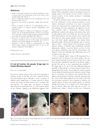
July 2015 in “British Journal of Dermatology” This article discusses the pseudo 'fringe sign' in frontal fibrosing alopecia, highlighting that it is not solely related to traction, and it reports no new clinical results.
23 citations
,
August 2017 in “Genome” This study identified several genes and signaling pathways, such as Wnt and MAPK, involved in fur development in Chinchilla rex rabbits, providing insights into skin and hair follicle growth.
6 citations
,
March 1996 in “Journal of Investigative Dermatology”